The Palace, the Rumor Mill, and the Politics of Misinformation
WASHINGTON — The White House has survived British arson, decades of renovation, and the slow churn of history. But in recent weeks, it has become the centerpiece of a different kind of controversy: one that blends presidential power, legal ambiguity, and a parallel information ecosystem increasingly untethered from verifiable fact.
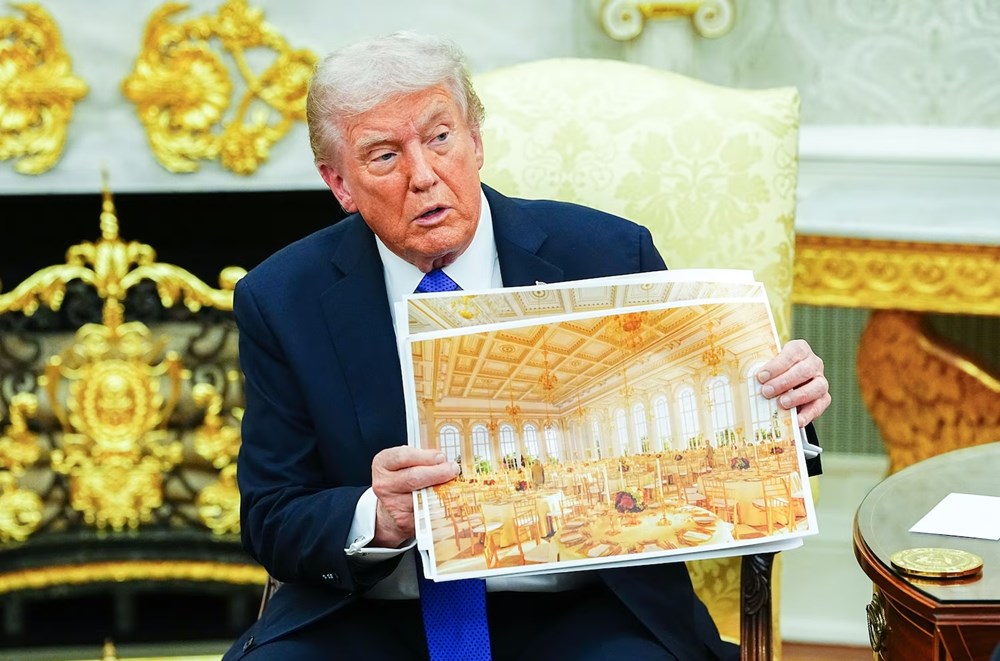
Former President Donald Trump’s announcement that he intends to tear up parts of the East Wing to construct what he has described as a “grand, gilded ballroom” has drawn criticism not only for its symbolism, but also for its legality. At the same time, a separate viral narrative — falsely claiming that Melania Trump has “fled” the White House in response to newly exposed Jeffrey Epstein files — has flooded social media platforms, underscoring how quickly distorted stories can eclipse reality.
The two controversies are distinct. Yet together they reveal something deeper about the current political moment: a presidency that blurs the line between public office and personal ambition, and a media environment in which rumor often travels faster than fact.
A White House or a Palace?
Mr. Trump’s proposed ballroom renovation, announced in late July, is framed by him as a long-overdue improvement to what he portrays as an outdated presidential residence. The project, initially estimated at $200 million and now reportedly closer to $250 million, is to be funded, according to Mr. Trump, by private donors.
That assertion alone has raised alarms among legal scholars and former government ethics officials.
Federal law, most notably the Anti-Deficiency Act — first enacted in the 19th century and amended repeatedly — prohibits the executive branch from obligating or spending funds on government projects without explicit congressional authorization. While the White House has undergone renovations before, those projects were typically funded through appropriations approved by Congress or through tightly regulated preservation funds.
“This is not a gray area,” said one former Office of Management and Budget official, speaking on condition of anonymity. “You cannot simply decide to rebuild part of the White House because wealthy donors are willing to pay for it. The building belongs to the American people, not the president.”
The symbolism has proven just as controversial as the legal questions. Critics argue that transforming part of the White House into a lavish ballroom reinforces concerns that Mr. Trump views the presidency less as a temporary stewardship and more as a personal dominion — a theme echoed by commentators who describe his governing style as increasingly monarchic.
Enter Melania Trump — and a False Narrative
Against this backdrop, a different story has gained enormous traction online: claims that Melania Trump has “fled” the White House after the release of “horrific” Epstein-related documents.
There is no evidence this is true.
No major news organization has reported that Mrs. Trump left the White House in response to newly exposed files. No documents released in the ongoing unsealing of Epstein-related court records accuse her of wrongdoing. And there has been no credible reporting suggesting a sudden rupture between the former first lady and her husband tied to those disclosures.
What is real is more nuanced — and far less sensational.
What the Reporting Actually Shows
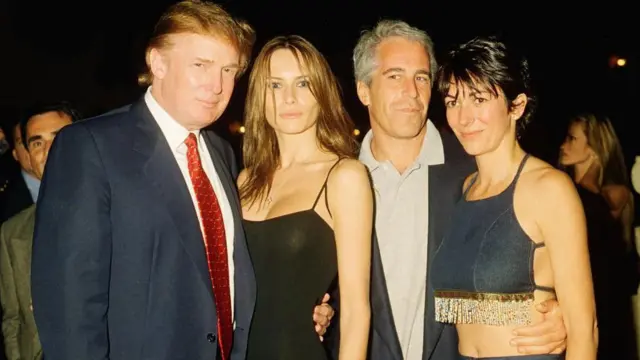
According to reporting by NBC News, CNN, People magazine, and The Washington Times, Mrs. Trump has been aggressively pushing back against claims that Jeffrey Epstein introduced her to Donald Trump in the 1990s. She has instructed her legal team to demand retractions from individuals and outlets making that claim, which she considers defamatory.
Those efforts have yielded results. Several public figures and media entities have walked back statements or issued clarifications after receiving legal threats. In at least one instance, her attorneys reportedly threatened lawsuits seeking damages exceeding $1 billion — a figure that, regardless of whether it would ever be realized, sends a clear deterrent message.
Mrs. Trump has not been accused in any court filing or official document of participating in Epstein’s crimes. Her legal posture reflects reputational defense, not crisis response.
At the same time, multiple outlets have confirmed that during a potential second Trump term, Mrs. Trump plans to split her time between Washington, New York, and Palm Beach, rather than reside full-time at the White House.
Again, this is not new.
During Mr. Trump’s first term, Mrs. Trump remained in New York for months after the inauguration, citing her son Barron’s schooling. Even after moving to Washington, she maintained a limited public schedule and avoided many traditional first lady roles.
In other words, the behavior now being framed online as “fleeing” is consistent with a long-standing pattern.
How the Story Got Twisted
The false narrative emerged through a familiar formula in the modern attention economy.
First, take real events: the release of Epstein documents that name powerful figures, and Melania Trump’s documented legal efforts to stop defamatory claims.
Next, remove context and add implication: suggest that new “horrific files” specifically expose her, even though they do not.
Then, attach emotional action: fleeing, running, escaping.
Finally, present it all as breaking news.
The result is a story that feels plausible, dramatic, and morally satisfying — particularly to audiences already inclined to believe the worst about the Trump family.
“This is not misinformation by accident,” said a media studies professor at Columbia University. “It’s misinformation by design. The facts are just close enough to reality to pass a quick sniff test, especially on social media.”
Why It Resonates
Mrs. Trump’s relative silence contributes to the phenomenon. She rarely gives interviews, avoids sustained public explanation, and maintains a deliberate distance from political commentary. That creates an information vacuum — one easily filled by speculation.
The Epstein scandal itself magnifies the effect. As more names of wealthy and powerful individuals emerge from court records, the public expectation of collateral revelations grows. Every associated figure becomes a potential suspect in the public imagination, regardless of evidence.
And in a polarized media environment, the incentive structure rewards outrage, not accuracy.
The Larger Implication
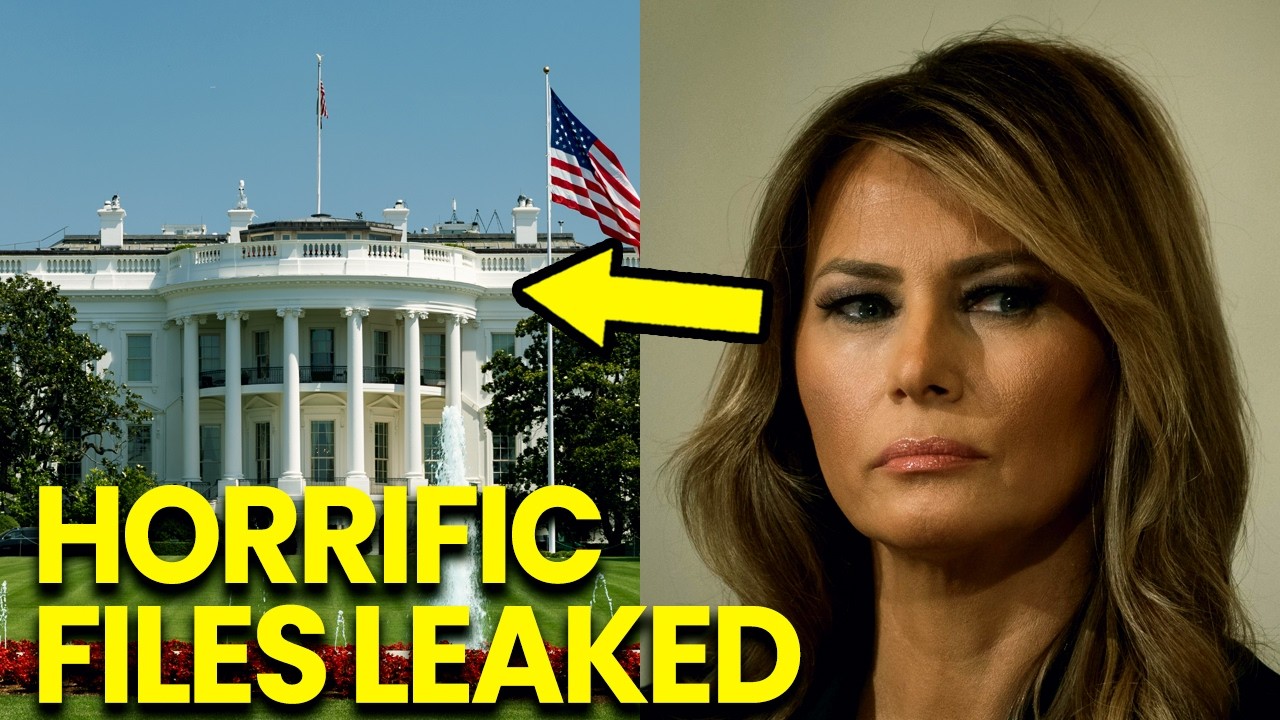
The Melania Trump rumor cycle is not just about one false claim. It is emblematic of a broader breakdown in how political information circulates.
When viral narratives overshadow verified reporting, public understanding erodes. When dramatic falsehoods outperform sober facts, trust collapses further. And when every story is framed as a bombshell, real accountability becomes harder, not easier.
Ironically, the true stories unfolding — about executive power, legal limits, and the personalization of public institutions — are significant enough without embellishment.
The White House does not need to become a palace to raise constitutional concerns. And Melania Trump does not need to be falsely implicated in scandal to illustrate how modern misinformation works.
Truth, as ever, is less theatrical. But it matters more.