A Recording, a Reckoning, and a Presidency Under Siege
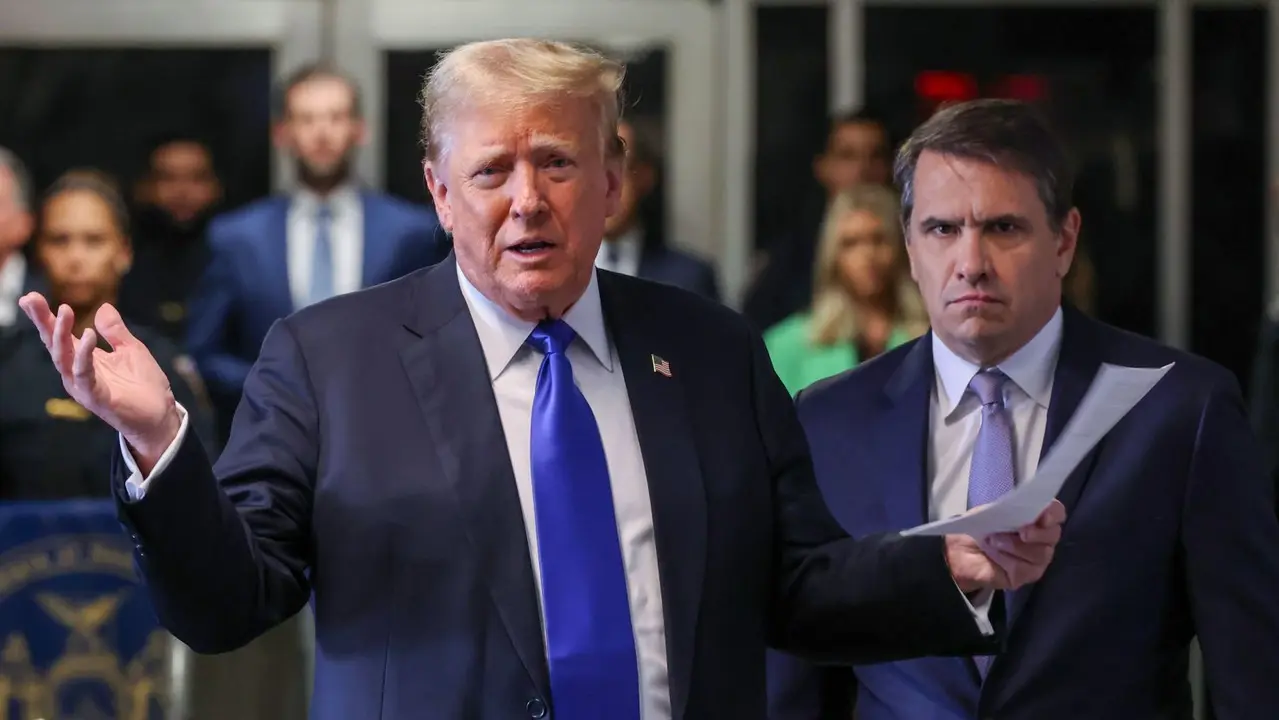
WASHINGTON — For years, Donald J. Trump and his lawyers have insisted that the controversy over classified documents found at his private properties was overblown, politically motivated, or simply misunderstood. The former president, they argued, possessed an almost mystical authority to declassify documents at will, even after leaving office. He had done nothing wrong, they said. There was no crime, no intent, and no case.
That argument, already strained, may now be irreparably broken.
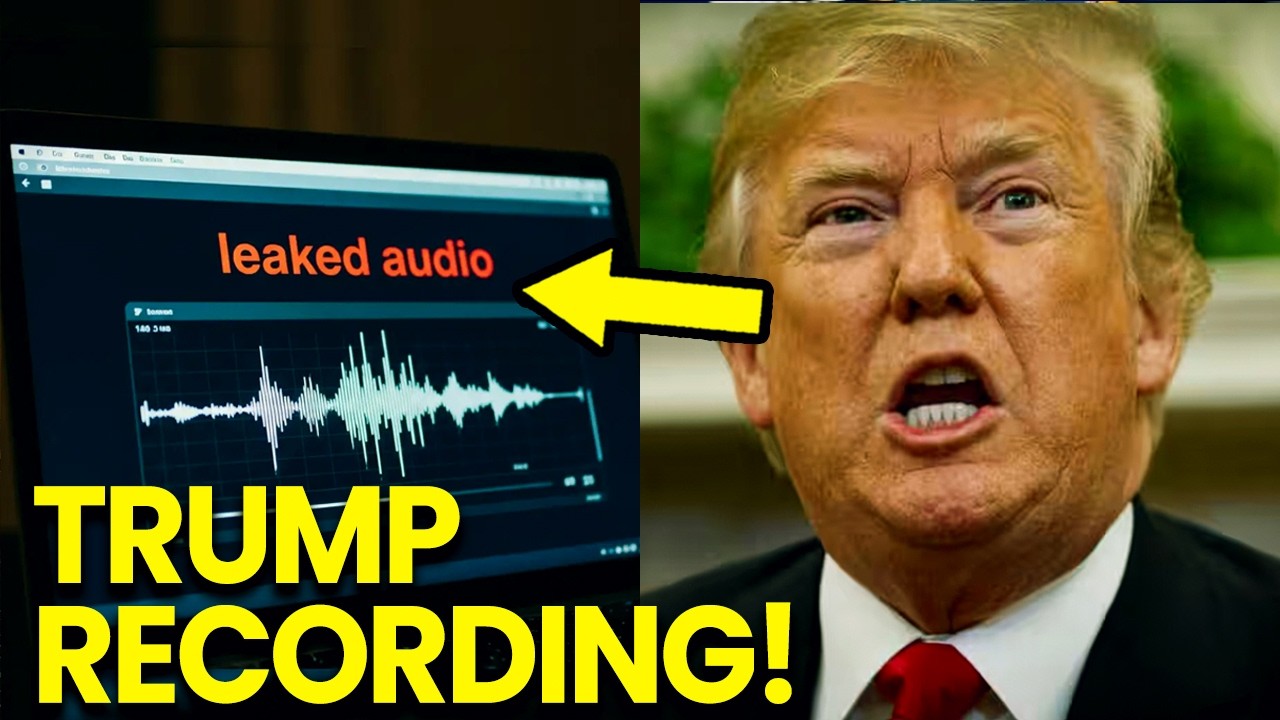
In a federal courtroom, prosecutors recently played an audio recording from 2021 in which Mr. Trump is heard acknowledging that he no longer had the power to declassify sensitive government documents because he was no longer president. On the tape, recorded at his Bedminster, New Jersey, golf club months after he left office, Mr. Trump discusses a Pentagon plan related to a potential military strike on Iran — a document he describes as “still secret.” At one point, he begins to say that he could have declassified it “as president,” before stopping himself. An aide can be heard responding with alarm: “Now we have a problem.”
The implications of the recording are profound. It is not hearsay, not secondhand testimony, and not an inference drawn by prosecutors. It is Mr. Trump’s own voice, captured on tape, acknowledging both the classified status of the documents and his lack of authority over them. For Special Counsel Jack Smith, who is leading the investigation into Mr. Trump’s handling of classified materials, the recording represents something prosecutors rarely obtain in high-level cases: direct evidence of knowledge and intent.
“This is a smoking gun,” said one former federal prosecutor familiar with classified information cases. “It goes straight to the heart of the defense.”
A Pattern Comes Into Focus
The recording does not exist in isolation. It arrives amid a cascade of legal developments that are tightening around Mr. Trump, who is now serving a second term as president. In a separate federal investigation into efforts to overturn the 2020 election, Mark Meadows, Mr. Trump’s former White House chief of staff, has reportedly testified under immunity. His cooperation has raised alarms within Mr. Trump’s political orbit, particularly given Meadows’s central role during the post-election period.
Chris Christie, the former New Jersey governor and a onetime ally of Mr. Trump who is now one of his Republican rivals, described the situation starkly in a recent television interview.
“If the person you call the ‘next James Baker’ is testifying about what you knew and when you knew it,” Mr. Christie said, “then Donald Trump is in very, very big trouble.”
Other former Trump lawyers have also begun cooperating with prosecutors. Jenna Ellis has pleaded guilty in a related state case and agreed to testify. Sidney Powell and Kenneth Chesebro have provided testimony as well. Together, these developments suggest a broader unraveling — one in which members of Mr. Trump’s inner circle are no longer willing, or able, to shield him.
The End of a Defense Strategy
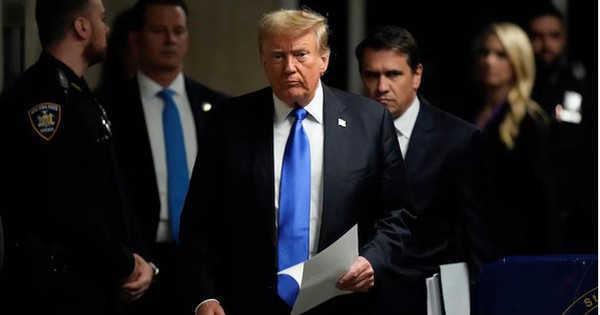
For months, Mr. Trump’s legal defense relied on two core claims: that he had declassified the documents while president, and that he did not knowingly retain or mishandle classified material. The Bedminster tape undermines both.
In the recording, Mr. Trump explicitly acknowledges that the documents remain classified. He also demonstrates awareness that he no longer has the authority to change that status. This directly contradicts the notion, often repeated by his allies, that declassification could occur through an unspoken or undocumented mental process.
In reality, declassification follows a formal procedure involving written orders, agency notifications, and recordkeeping. Mr. Trump, who served four years in the Oval Office, would have been well aware of this process. On the tape, he appears to recognize precisely that fact.
“This isn’t about a technicality,” said a former national security official. “This is about someone who knew the rules, knew he no longer had power, and kept the documents anyway.”
Intent and Obstruction
Perhaps most damaging for Mr. Trump is what the tape reveals about intent — a crucial element in prosecuting crimes related to national defense information. Prosecutors must show not only that classified documents were mishandled, but that the defendant did so knowingly and willfully.
Here, Mr. Trump appears to do that work for them.
He discusses the contents of the documents. He acknowledges their sensitive nature. He shows them to individuals without security clearance, including a writer or journalist. And when he realizes the legal implications of what he is saying, he stops short — a moment that prosecutors argue reveals consciousness of guilt.
The tape also strengthens allegations of obstruction of justice. Investigators have gathered evidence suggesting that after federal authorities sought the return of classified materials, Mr. Trump directed aides to move boxes, conceal documents, and resist compliance. If prosecutors can link that behavior to prior knowledge that the documents were classified — as the tape suggests — the case escalates significantly.
“That’s when this stops being negligence and starts looking like a cover-up,” said another former Justice Department official.
An Unprecedented Moment
The political implications are equally extraordinary. Never before has a sitting president faced open-court evidence showing that he knowingly retained classified military documents after leaving office and shared them with unauthorized individuals. The United States has weathered scandals before, but this combination — a recorded admission, a cooperating inner circle, and an incumbent president — places the country in uncharted territory.
Republicans in Congress now face a stark choice. Some have already dismissed the recording as a distraction or an attack by political enemies. Others, privately, are said to be deeply uneasy.
“You can’t explain this away with slogans,” said one Republican strategist. “At some point, you have to answer the basic question: Is this acceptable behavior for a president?”
Public opinion remains polarized, but even some longtime supporters of Mr. Trump have expressed discomfort with the facts emerging from the case. Legal analysts note that while political loyalty can blunt the impact of many scandals, audio evidence tends to be uniquely powerful.
“People believe their own ears,” said a veteran trial lawyer. “Once you hear it, you can’t unhear it.”
What Comes Next
The legal process is far from complete. Motions will be filed, arguments will be made, and Mr. Trump’s lawyers will continue to challenge the admissibility and interpretation of the tape. But the trajectory of the case has unmistakably shifted.
Prosecutors now possess what they lacked before: a direct window into Mr. Trump’s state of mind. Judges weighing questions of immunity, executive privilege, or intent will do so with this recording in the background. Juries, if and when they hear it, will be asked to decide whether a former — and current — president knowingly violated the law.
For Mr. Trump, the stakes could not be higher. For the country, the moment is sobering.
A democracy built on the rule of law depends on the idea that no one — not even the president — is above it. Whether that principle holds in this case will shape not only Mr. Trump’s future, but the boundaries of executive power for generations to come.