Germany Roasts Donald Trump in Satirical Opera and Carnival Floats
Germany has never been shy about political satire, but this year, artists and carnival designers have placed Donald Trump at the center of their sharpest cultural commentary yet. From a surreal opera in Hamburg to provocative carnival floats in Mainz and Cologne, German creatives are using humor, absurdity, and spectacle to critique the former U.S. president.
The result is a wave of political satire that has drawn international attention — and sparked debate about the role of art and mockery in confronting political power.
“Monsters’ Paradise” Premieres in Hamburg
The opera Monsters’ Paradise premiered last week in Hamburg, offering a surreal and exaggerated portrait of a fictional ruler widely interpreted as a parody of Donald Trump.
Created by composer Olga Neuwirth and librettist Elfriede Jelinek, the production features a gluttonous “President King” ruling from a gilded office complete with lavish décor, a conspicuous red button, and a refrigerator stocked with cola. The narrative unfolds through fantastical characters, including two pun-loving vampires named Vampy and Bampy, and a giant lizard dubbed “Gorgonzilla” — a playful nod to Godzilla.
The opera blends absurdist humor with political commentary, skewering populism, celebrity culture, and the influence of tech billionaires. Analogues of high-profile technology executives appear in musical numbers praising power and wealth.
Neuwirth explained in interviews that satire serves an essential democratic function. “People in power are often afraid of being laughed at,” she said. “Humor can challenge authority in a way that political argument sometimes cannot.”
The production has already scheduled a broader European tour, suggesting sustained public interest in politically themed performance art.
Germany’s Carnival Tradition Embraces Political Satire
While the opera offers high-art commentary, Germany’s annual carnival season brings satire to the streets.
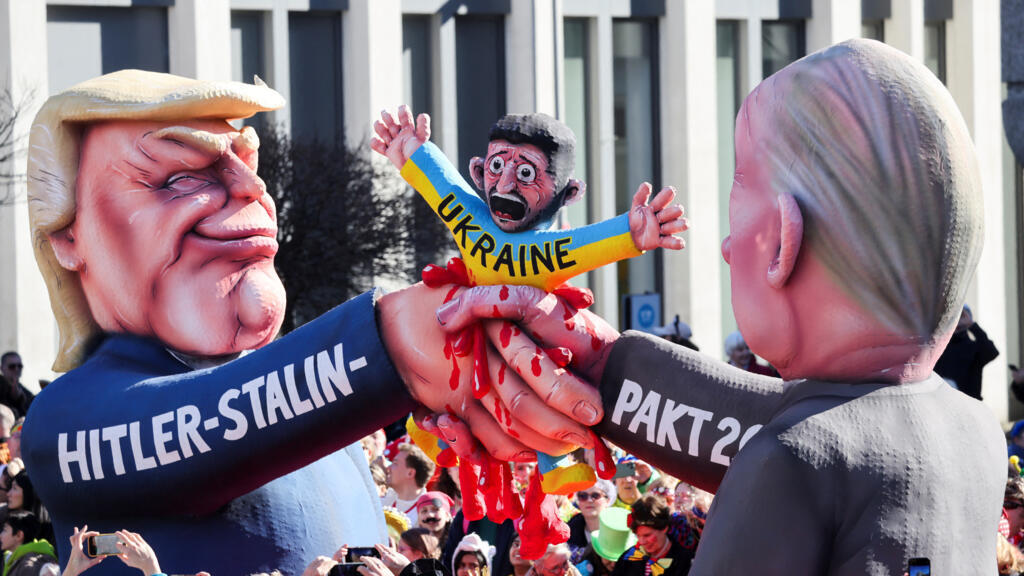
Cities like Mainz and Cologne are known for elaborate parade floats that lampoon global leaders. Political caricature has long been part of the carnival tradition, which allows designers to exaggerate and ridicule authority figures in creative and often provocative ways.
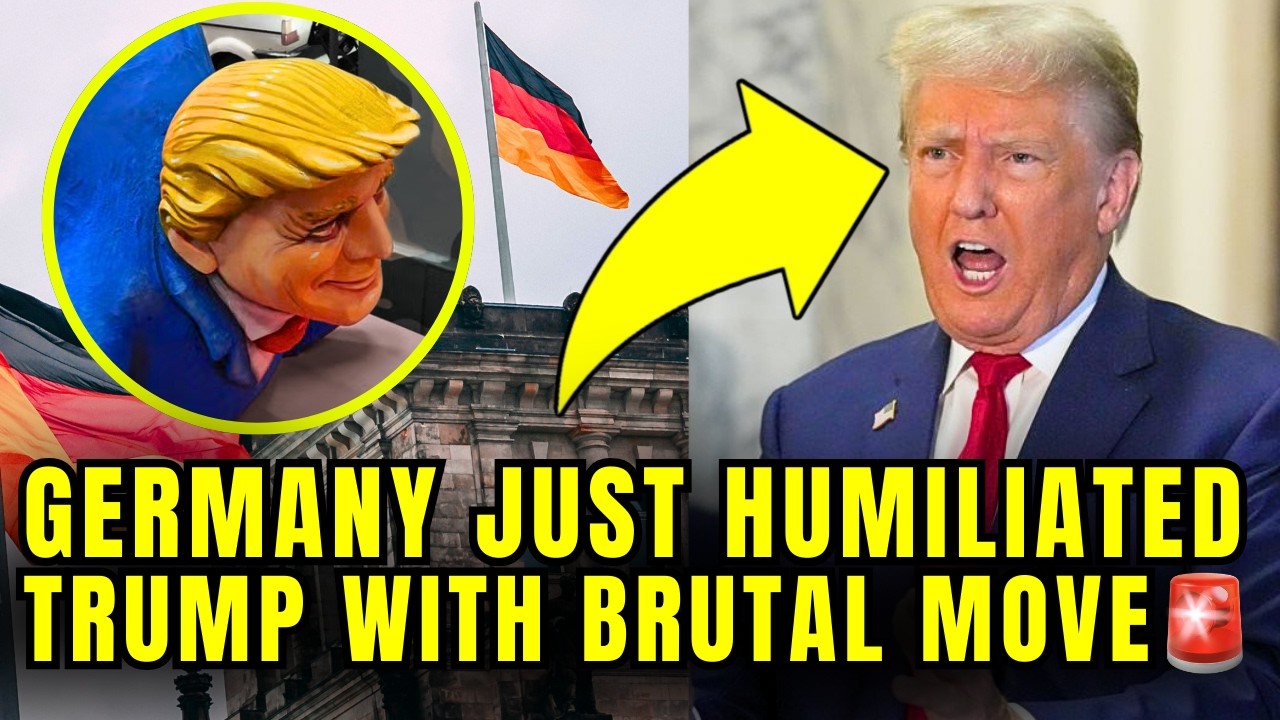
This year, several floats reportedly depict exaggerated versions of Trump in humorous or controversial scenarios. German media outlets have described designs that parody his political persona and public image.
Michael Bonewitz, spokesperson for the Mainz Carnival Association, confirmed that political motifs remain central to this year’s parade. “We have a whole lot of political themes,” he said, emphasizing that satire has always been a cornerstone of the festival.
Carnival floats often push boundaries, using visual exaggeration to provoke conversation. Organizers argue that the tradition is less about targeting individuals and more about holding powerful figures accountable through humor.
Satire as Cultural Commentary
Germany has a complex historical relationship with authoritarianism, making political satire particularly significant in its cultural landscape.
Many German artists view satire not as mere mockery but as a democratic safeguard — a way of preventing unchecked power. By caricaturing leaders, artists symbolically “shrink” them, transforming authority into something that can be questioned and debated.
The Hamburg opera and carnival floats reflect this philosophy. Rather than formal political protest, these artistic expressions channel frustration, criticism, and social commentary into performance and spectacle.
Political satire targeting U.S. leaders is not new in Europe. American presidents, including George W. Bush and Barack Obama, have been subjects of carnival caricature in previous years. However, the intensity of the Trump-themed imagery this season appears particularly pronounced.
International Reaction
Reactions to Germany’s satirical portrayals have been mixed.
Supporters argue that artistic freedom allows creators to critique public figures — especially those who have wielded significant global influence. They note that satire has historically played a role in challenging political authority, from Charlie Chaplin’s The Great Dictator to contemporary television comedy.
Critics, however, contend that certain depictions risk crossing the line into personal attack rather than substantive critique. They argue that satire is most effective when it addresses policy decisions and political behavior rather than resorting to crude imagery.
Still, carnival organizers maintain that exaggeration is intrinsic to the art form. “Carnival is about taking power down a notch,” one German cultural commentator noted. “It’s loud, it’s colorful, and it’s intentionally over-the-top.”
A Broader Pattern of Global Political Satire
Germany is not alone in using art to critique political figures. Across Europe and beyond, satire has emerged as a powerful tool for cultural expression in polarized times.
In the United Kingdom, political cartoons routinely lampoon leaders across party lines. In France, satirical publications have long challenged authority through biting illustration. Germany’s carnival tradition fits within this broader European context of political humor.
What sets the current moment apart is the multimedia nature of the commentary. A contemporary opera, street parades, and viral images shared online combine to amplify the message far beyond Germany’s borders.
The Role of Humor in Democracy
Scholars of political communication argue that satire can perform several functions:
-
Encouraging public engagement by making politics more accessible
-
Highlighting contradictions or controversies in leadership
-
Providing emotional release in times of political tension
-
Testing the resilience of democratic institutions
At the same time, satire can polarize audiences, reinforcing existing divisions rather than bridging them.
The German response to Trump underscores how global politics increasingly intersect with cultural production. Leaders are no longer critiqued solely in parliamentary chambers or editorial pages — they are portrayed in operas, floats, memes, and performance art.
What Comes Next?
Monsters’ Paradise is scheduled to tour across Europe later this month, ensuring that the satirical portrayal will reach wider audiences. Meanwhile, carnival season in Mainz and Cologne is expected to draw thousands of spectators, with images likely circulating internationally on social media.
Whether these artistic critiques influence political discourse remains to be seen. But one thing is clear: German artists and carnival designers are making full use of their tradition of satire to comment on global leadership.
For supporters, it’s a celebration of free expression. For critics, it’s an example of cultural overreach. For observers, it’s a reminder that politics today is as much a cultural spectacle as it is a policy debate.
In Germany this carnival season, humor has taken center stage — gilded crown, oversized caricatures, and all.