Trump Clashes With Reporter Over Epstein Files, Sparks National Outrage
Washington, D.C. — A heated exchange between former President Donald Trump and a reporter over the release of the Jeffrey Epstein files has ignited fresh controversy, raising questions about transparency, accountability, and presidential conduct.
The tense moment unfolded when a reporter asked Trump directly:
“Mr. President, why wait for Congress to release the Epstein files? Why not just do it now?”
Instead of addressing the substance of the question, Trump responded by attacking the reporter and the media outlet. He called the question unfair and dismissed the Epstein case as a “Democrat hoax.” He also suggested that the network’s broadcast license should be reviewed — a statement that quickly escalated the situation and fueled further media scrutiny.
The exchange has since gone viral, drawing sharp reactions from political commentators, late-night hosts, and voters across the political spectrum.
The Epstein Files Controversy
Jeffrey Epstein, the disgraced financier who died in jail in 2019 while awaiting trial on federal sex trafficking charges, remains a deeply sensitive topic in American politics. Epstein’s network of high-profile connections has fueled ongoing public interest in sealed documents, court records, and undisclosed files related to his activities.
For years, lawmakers and activists have called for greater transparency regarding Epstein’s associates and the handling of investigations tied to his case. The question posed to Trump reflects broader public frustration over why more information has not yet been released.
Trump has previously stated that he had a falling out with Epstein years before the financier’s arrest and has denied wrongdoing. However, public photos and past social interactions between the two men continue to surface in online debates, keeping the issue alive in political discourse.
A Response That Raised Eyebrows
What intensified the backlash was not just Trump’s refusal to answer directly, but his tone during the exchange. Critics argue that instead of offering clarification or reaffirming support for victims of abuse, he chose to attack the media and dismiss the premise of the question altogether.
Media analysts note that this is consistent with a long-standing strategy: confront the messenger, question the motive, and reframe the issue as political persecution.
Political communication experts suggest that moments like this resonate because they highlight a larger issue — how public figures respond when confronted with uncomfortable or morally serious topics.
“When you’re dealing with a case involving alleged exploitation and trafficking, voters expect seriousness,” said one political analyst. “Deflection can feel dismissive.”

Media and Late-Night Reaction
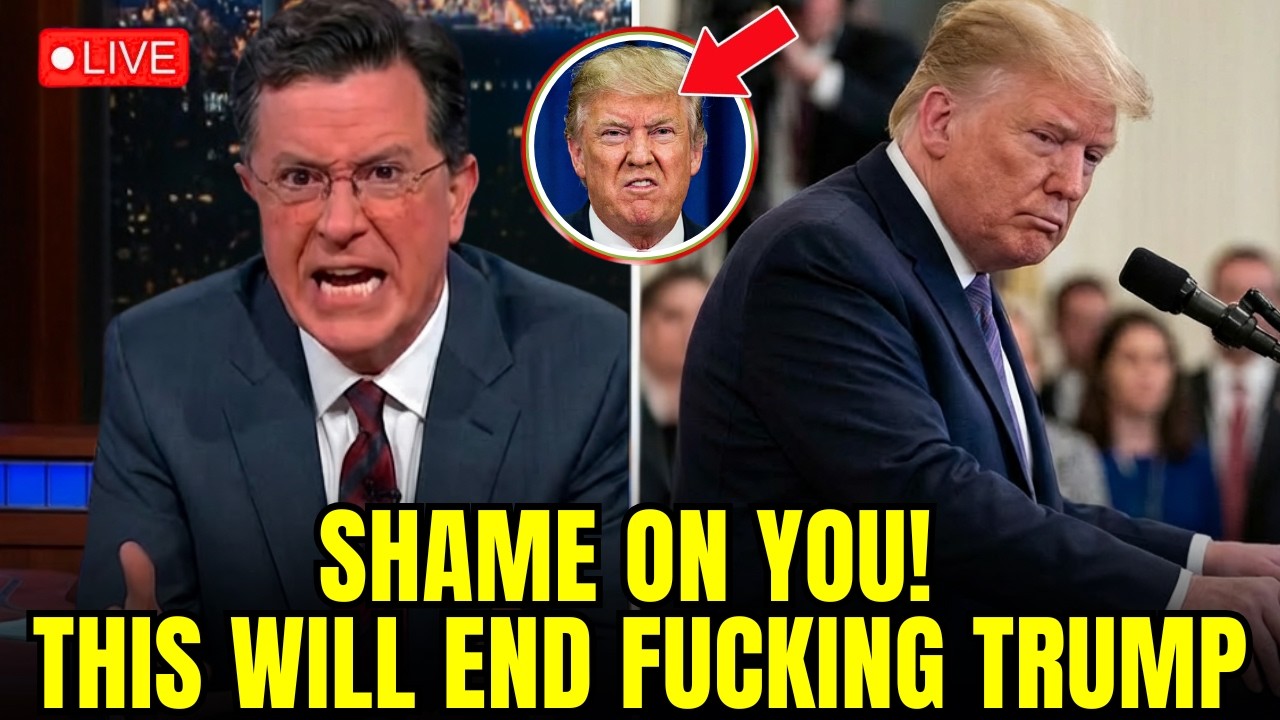
The exchange quickly became material for late-night television commentary. Comedian Stephen Colbert addressed the moment during his monologue, criticizing what he described as a lack of gravity in Trump’s response.
Colbert argued that when discussing cases tied to alleged abuse, the focus should remain on victims and accountability — not political theatrics. The segment gained millions of views within hours, contributing to renewed national conversation.
This follows a recent pattern in which comedians such as Colbert and Jimmy Kimmel have dissected Trump’s public statements, often framing their critiques around tone, contradictions, and media strategy rather than purely partisan attacks.
Political Strategy or Public Misstep?
Supporters of Trump argue that he is frequently targeted by hostile media and that his combative responses are a defense mechanism against biased questioning. They maintain that investigations into Epstein’s network should be bipartisan and not weaponized politically.
Critics counter that transparency should not depend on partisan framing and that leaders are expected to respond with clarity and respect when discussing crimes involving minors.
The broader question emerging from the incident is whether public frustration stems more from what was said — or what was not said.
Voters increasingly express concern about leadership tone. In a political climate already marked by division, moments that appear dismissive toward serious subjects tend to amplify existing tensions.
The Power of Optics
In modern politics, optics matter as much as policy. A facial expression, a choice of words, or an offhand remark can dominate headlines for days.
Trump has long understood the power of spectacle and media dominance. His critics argue that dramatic responses are often used to shift attention from the core issue. His supporters view his directness as authenticity.
However, experts note that cases involving sexual exploitation are uniquely sensitive. Public officials are often expected to demonstrate empathy and seriousness above all else.
“When discussing allegations tied to exploitation, the public expects gravity,” said a communications strategist. “Anything perceived as dismissive risks backlash.”
The Broader Transparency Debate
The Epstein files debate is not limited to one political figure. Lawmakers from both parties have called for increased transparency regarding sealed court documents and investigative records.
Advocates for victims argue that releasing more information could help restore trust in institutions and demonstrate accountability at all levels.
At the same time, legal experts caution that document releases must balance transparency with due process rights and privacy considerations.
The incident aboard Air Force One has reignited that broader debate — not just about Trump, but about how governments handle politically sensitive criminal cases.
Public Reaction
Online reaction was swift and polarized. Hashtags related to the Epstein files began trending shortly after the exchange aired. Some users criticized Trump’s tone, while others accused the media of attempting to provoke controversy.
Older voters, in particular, have voiced concern about declining standards of political discourse. Many argue that dignity in leadership should remain non-negotiable, regardless of party affiliation.
Political observers say the episode underscores a growing fatigue among Americans who want substantive answers rather than escalating media clashes.
What Happens Next?
It remains unclear whether additional Epstein-related documents will be released in the near future. Congressional pressure continues, and advocacy groups are maintaining calls for transparency.
For Trump, the episode adds another chapter to an already complex relationship with the press — one defined by confrontation, counterattack, and media spectacle.
For voters, the moment may reinforce deeper questions:
-
Should leaders respond differently when discussing serious criminal cases?
-
Does attacking the press strengthen or weaken public trust?
-
And how much does tone matter in shaping national perception?
One thing is certain: in today’s media ecosystem, every exchange is amplified, dissected, and replayed.
The debate over the Epstein files is far from over. And as political tensions rise heading into the next election cycle, moments like this will likely continue shaping public opinion — one headline at a time.






