Senators Question President T̄R̄UMP’s Fitness as War Powers Clash and 25th Amendment Talk Intensify

Washington — A widening rift in Washington deepened this week as several Democratic senators publicly raised questions about President T̄R̄UMP’s fitness for office, citing a recent unilateral military operation in Venezuela and what they described as increasingly erratic behavior. The unusually direct criticism — including calls to consider invoking the 25th Amendment — marks a notable escalation in rhetoric during T̄R̄UMP’s second term, even as the political realities of removal from office remain remote.
At the center of the latest controversy are two developments that have unsettled lawmakers across party lines: a surprise U.S. military operation that reportedly resulted in the capture of Venezuelan President Nicolás Maduro, and renewed statements by T̄R̄UMP about acquiring Greenland, coupled with remarks about deserving a Nobel Prize.
While the White House has defended the president’s actions as decisive leadership, critics argue that the pattern of behavior reflects a troubling disregard for constitutional norms and congressional authority.
A Rare Public Rebuke
Senator Ed Markey, Democrat of Massachusetts, called this week for Vice President JD Vance and members of the cabinet to consider invoking the 25th Amendment, which allows for the temporary or permanent removal of a president deemed unable to discharge the powers and duties of the office.
“Congress cannot ignore the warning signs,” Mr. Markey said in a statement. “The stability of our constitutional system depends on a president who exercises sound judgment and respects the limits of executive power.”
The 25th Amendment, ratified in 1967 in the aftermath of President John F. Kennedy’s assassination, was designed primarily to address situations of physical incapacity. It has never been used to remove a president against his will. To succeed, it would require the vice president and a majority of the cabinet to declare the president unfit. If the president contested that determination, a two-thirds vote in both the House and Senate would be required to sustain it — a threshold widely considered unattainable in the current political climate.
Still, the fact that sitting senators are openly discussing the amendment is striking. Historically, such conversations have been confined to private deliberations, not public statements.
The Venezuela Operation
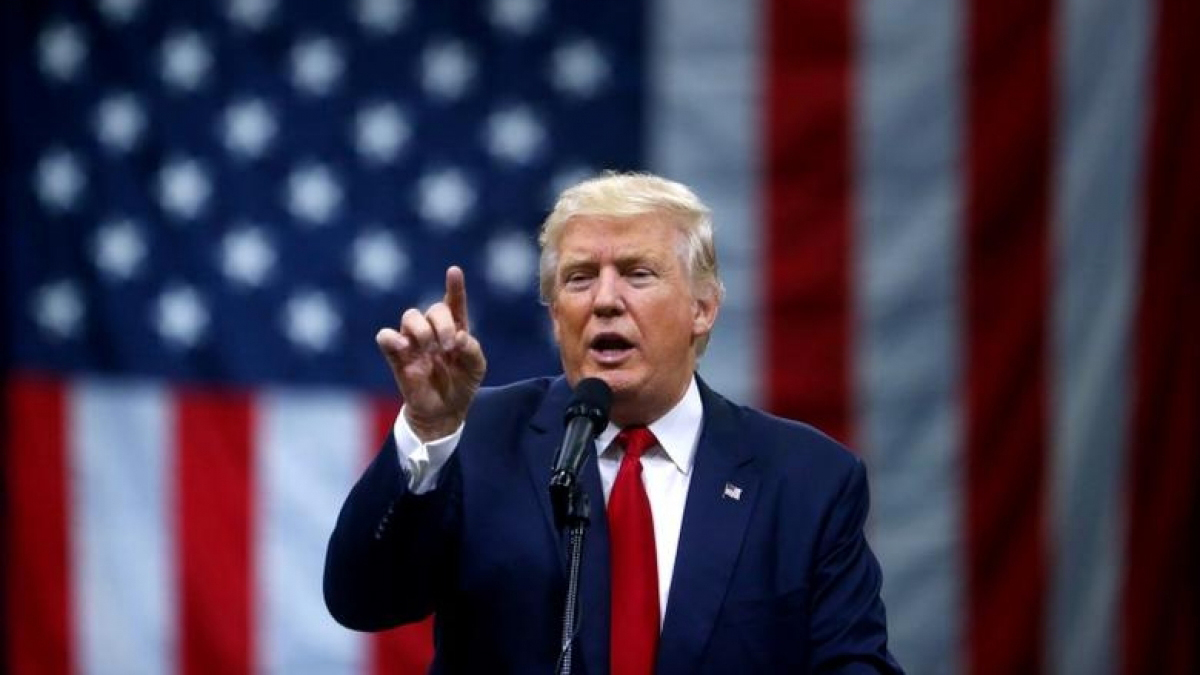
More consequential, lawmakers say, is the administration’s recent military action in Venezuela. According to administration officials, U.S. forces conducted a targeted operation that resulted in the apprehension of Mr. Maduro, long accused by Washington of authoritarian abuses and narcotics trafficking.
The White House has framed the operation as a lawful action to protect American interests and promote regional stability. “The president acted decisively to neutralize a threat,” a senior administration official said, speaking on condition of anonymity to discuss sensitive military matters.
But many lawmakers argue that the move bypassed Congress’s constitutional authority to declare war. Within days of the operation, the Senate passed a bipartisan War Powers Resolution aimed at limiting the president’s ability to engage in sustained military action without explicit congressional authorization.
Although War Powers Resolutions have been introduced in past administrations — often symbolically — their passage with support from members of the president’s own party is rare. A handful of Republican senators joined Democrats in backing the measure, signaling discomfort with what some described as executive overreach.
“The Constitution is clear,” said Senator Lisa Murkowski, Republican of Alaska, who voted in favor of the resolution. “Military force of this magnitude demands congressional engagement.”
The War Powers Act of 1973, enacted over President Richard Nixon’s veto during the Vietnam War, requires presidents to notify Congress within 48 hours of deploying armed forces into hostilities and limits military engagement to 60 days without congressional authorization. Presidents of both parties have often interpreted the law narrowly, leading to periodic clashes with Congress.
Whether the current resolution will meaningfully constrain T̄R̄UMP remains uncertain. Historically, such measures have struggled to overcome presidential resistance absent sustained bipartisan resolve.
Greenland and Growing Unease
Compounding congressional concern are renewed comments by T̄R̄UMP regarding Greenland. The president first floated the idea of purchasing the Danish territory during his first term, prompting diplomatic tension with Denmark. In recent days, according to lawmakers briefed on private communications, T̄R̄UMP again raised the prospect in a manner some described as “erratic.”
The White House declined to provide details of the remarks but characterized them as part of a broader discussion about Arctic security and strategic competition with Russia and China.
Critics, however, have portrayed the comments — particularly when paired with the president’s renewed assertions that he deserves a Nobel Prize — as evidence of misplaced priorities.
“Policy debates are one thing,” said Senator Chris Coons, Democrat of Delaware. “But when rhetoric begins to blur the line between strategic ambition and personal grievance, Congress has an obligation to ask questions.”
Allies of the president dismiss such criticism as partisan exaggeration. “The president has always thought big,” said Senator Lindsey Graham, Republican of South Carolina. “That’s not instability — that’s leadership.”
Political and Constitutional Realities
Despite the heated rhetoric, the path to removing T̄R̄UMP from office remains steep. Republicans maintain control of the House, making impeachment unlikely in the near term. Even if articles of impeachment were adopted, conviction in the Senate would require 67 votes — a level of bipartisan agreement that appears out of reach.
Vice President Vance has given no indication that he would support invoking the 25th Amendment, and administration officials have privately expressed confidence in cabinet loyalty.
Political analysts note that while immediate removal is improbable, the public debate itself is significant. “The 25th Amendment is as much a political instrument as a constitutional one,” said Professor Amanda Hollis-Brusky, a constitutional scholar at Pomona College. “When lawmakers invoke it publicly, they are shaping public perception, even if the legal outcome is unlikely.”
The emerging tensions also carry implications for the 2026 midterm elections. Democrats are expected to campaign heavily on themes of executive accountability and constitutional restraint, while Republicans are likely to frame the president’s actions as decisive leadership in a turbulent global environment.
A Presidency Under Strain
T̄R̄UMP has responded characteristically to criticism, denouncing what he calls a “witch hunt” and accusing detractors of undermining national security. In recent remarks, he defended the Venezuela operation as “strong and necessary” and dismissed calls for removal as “political theater.”
Yet the convergence of bipartisan unease over war powers, renewed scrutiny of presidential conduct, and public discussion of constitutional removal mechanisms underscores a presidency operating under unusual strain.
For now, the institutional guardrails of Congress appear to be functioning, albeit amid partisan friction. Whether those guardrails will hold — or whether the escalating confrontation between the executive and legislative branches will intensify — may depend less on the mechanics of constitutional procedure and more on the unpredictable trajectory of the president’s next decisions.
As Washington watches closely, one reality is clear: the debate over presidential power, judgment and accountability has entered a more volatile phase, with consequences that could extend well beyond the current term.