WASHINGTON — A series of late-night social media posts by former President Donald Trump has ignited debate among political observers, supporters and critics alike, raising questions not only about messaging strategy but also about the broader role of digital platforms in modern presidential politics.
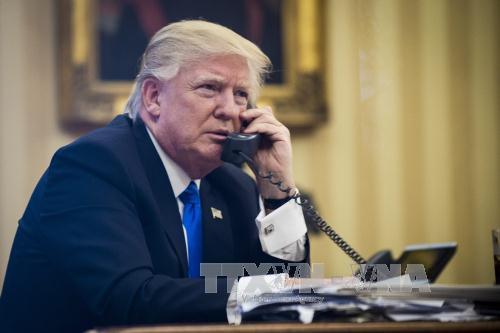
The discussion intensified after online commentators highlighted a pattern of posts appearing in the early morning hours, some clustered closely together. Publicly visible timestamps show activity during overnight periods, including several instances in which dozens of messages were published within short time spans. While Mr. Trump has long been known for his prolific use of social media, the frequency and timing of these posts have drawn renewed attention.
Supporters describe the activity as consistent with his long-established communication style — direct, unfiltered and often rapid. They note that Mr. Trump has historically favored unconventional hours and argue that late-night posting is neither new nor inherently concerning. Several allies have dismissed speculation about the timing, saying it reflects a personal preference rather than a substantive issue.
Critics, however, see the pattern differently. Some political opponents have characterized the bursts of activity as erratic, pointing to the volume and tone of certain messages. Mental health professionals contacted for general comment — none of whom have evaluated Mr. Trump — cautioned against drawing clinical conclusions based solely on social media behavior. “It is not appropriate to diagnose or speculate about someone’s mental state without direct examination,” said Dr. Laura Bennett, a psychiatrist and professor at Georgetown University. “Posting frequency alone does not establish impairment.”
The renewed focus on Mr. Trump’s digital habits comes amid a broader political landscape already marked by polarization and heightened scrutiny. With the 2026 midterm elections approaching, both parties are preparing campaign strategies that will likely incorporate online messaging as a central component. In that context, social media activity — including tone, timing and content — may become fodder for political advertising and debate.
Adding to the controversy are claims circulating online that one of the posts may have included government data prior to its scheduled public release. Administration officials have denied intentional wrongdoing and described the matter as inadvertent. Independent verification of the circumstances surrounding that claim remains limited, and no formal findings have been announced.
Experts in digital communications say the episode underscores how modern political narratives can accelerate quickly. “Social media compresses reaction time,” said Alan Rivera, a political communications scholar at Columbia University. “A single post — or a cluster of posts — can spark hours of cable coverage and days of online commentary, regardless of whether new substantive information is involved.”
For voters, the episode highlights a larger question about presidential communication norms. Historically, presidents relied on carefully structured briefings and formal addresses. In the digital era, immediate and continuous engagement has become more common, blurring the lines between official statements and personal commentary.
Polling data in recent years has shown that Americans remain sharply divided in their perceptions of Mr. Trump’s communication style. Many of his supporters view his directness as authentic and energizing. Detractors argue that the approach can create confusion or amplify controversy. Whether late-night posting materially affects voter attitudes remains uncertain, but strategists from both parties acknowledge that perception often matters as much as policy.
Within Republican circles, reactions have been mixed but measured. Some lawmakers have declined to comment directly on the timing of posts, instead emphasizing legislative priorities. Democrats, meanwhile, have signaled that they may incorporate the issue into broader arguments about leadership and judgment, though party officials have not yet formalized messaging around it.
Ultimately, the debate may say as much about the evolving nature of political discourse as it does about any individual figure. In a media environment driven by immediacy, the boundary between routine communication and headline-making event can be thin. What once might have gone unnoticed can now become a viral talking point within minutes.
As campaigns gear up for another election cycle, the role of social media — at all hours — is likely to remain central. Whether late-night posts prove politically consequential or simply another feature of a polarized digital era will depend, as always, on how voters interpret what they see.