Trump Expresses Frustration With Fox News as Interview Signals Subtle Shift
Former President Donald Trump publicly expressed dissatisfaction with Fox News this week, suggesting that the network’s polling and debate positioning have not been favorable to him. His remarks come amid growing discussion about whether Fox — long viewed as a friendly platform for Trump — is adjusting its approach to political coverage.
“Fox has changed,” Trump said during a recent appearance, noting that some of his “worst polls” have come from the network. While he praised several individual hosts by name, he made clear that he was “not happy” with the network’s direction overall.
The comments followed an interview in which Fox host Laura Ingraham pressed Trump on elements of his policy proposals, including his suggestion that the federal government consider backing 50-year mortgages as a way to reduce monthly housing payments.
Housing Proposal Draws Scrutiny
Trump has floated the idea of 50-year mortgages as a potential tool to address housing affordability. The concept, he argues, would lower monthly payments and expand access to homeownership.
Ingraham, however, questioned whether such a policy might instead leave borrowers in debt for much longer periods while increasing total interest costs. She also referenced concerns raised by housing economists who warn that extended loan terms could contribute to higher home prices if buyers qualify for larger loans.
Trump defended the proposal, arguing it would provide flexibility and stimulate the housing market. He pivoted to broader economic themes during his response, emphasizing his view that his administration’s policies have strengthened economic performance overall.
The exchange drew attention online, with some commentators describing it as evidence that even traditionally supportive media outlets are engaging in more substantive questioning.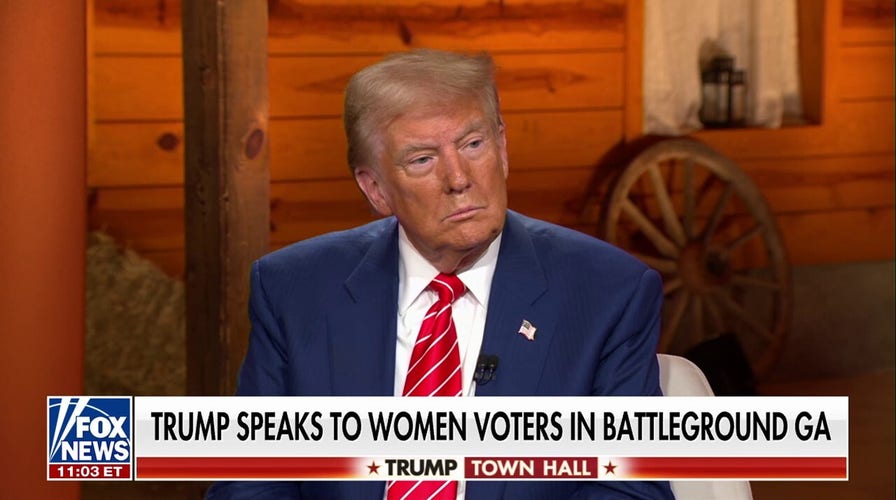
A Changing Media Dynamic
For much of the past decade, Fox News has been widely viewed as a favorable platform for Trump. The former president has frequently appeared on its programs, and many of the network’s primetime hosts have expressed support for his policy positions.
However, Fox News has also faced legal and reputational challenges in recent years related to election-related claims aired on its programs. The network reached a high-profile settlement in 2023 over defamation allegations tied to coverage of the 2020 election.
Media analysts suggest that these developments may have encouraged greater caution in how claims are presented and scrutinized on air.
“There are institutional incentives now for networks to fact-check more consistently,” said one media industry observer. “Legal exposure changes editorial calculations.”
At the same time, Fox competes with outlets positioned further to the right, creating pressure to balance credibility concerns with audience expectations.
Fact-Checking and Economic Claims
Trump’s economic messaging has also faced increased scrutiny across multiple platforms. In recent interviews, he has argued that inflation is largely under control and that public approval of his economic performance is strong.
Government data shows inflation has slowed from earlier peaks but remains above long-term targets, and polling reflects mixed public views about economic conditions. News organizations, including NBC and others, have published detailed fact-checks examining discrepancies between Trump’s statements and federal statistics.
These fact-checks have circulated widely online, contributing to broader debate about media accountability and political messaging.
Implications for 2026
The evolving relationship between Trump and Fox News may carry implications as the 2026 midterm elections approach.
For years, Trump’s media strategy has relied heavily on direct communication through friendly platforms and repetition of key themes. If major conservative outlets incorporate more real-time questioning or data-driven pushback, that dynamic could shift.
Political strategists note that while Trump retains a loyal base of support, persuadable voters often respond to perceptions of competence and clarity in policy explanations.
“When interviews move beyond slogans to details, that’s where candidates either strengthen their case or expose vulnerabilities,” said a Republican consultant who requested anonymity.
Internal Republican Calculations
Trump’s public criticism of Fox also places some Republican leaders in a delicate position. While many GOP lawmakers remain aligned with the former president, others have privately expressed concern about specific policy proposals or messaging strategies.
At the same time, few elected officials have been willing to openly challenge Trump’s assertions, leaving media figures in some cases to pose the tougher questions.
The Broader Narrative
Whether the Ingraham interview represents a meaningful turning point or simply an isolated exchange remains unclear. Trump continues to receive strong support from many conservative commentators, and Fox News remains a significant platform for his messaging.
Still, the episode underscores a broader trend: even in traditionally favorable media environments, political figures increasingly face rapid fact-checking, viral clip circulation, and real-time analysis across digital platforms.
In today’s media ecosystem, moments of hesitation, pivoting, or partial answers can quickly become part of a larger narrative about leadership style and preparedness.
As 2026 approaches, both campaigns and media outlets appear to be recalibrating their strategies — with the result that interviews once seen as predictable are drawing renewed scrutiny.
Whether this shift materially affects voter perceptions will likely depend on how frequently such exchanges occur — and how effectively candidates adapt when confronted with more pointed questioning.






