Late-Night Spotlight Returns Epstein Records to Political Conversation
In a recent monologue that quickly reverberated across social media, late-night host Jimmy Kimmel turned his attention to the continuing public release of documents related to the late financier Jeffrey Epstein — and to former President Donald Trump.
The segment, which aired before millions of viewers, did not hinge on punch lines alone. Instead, Kimmel centered his remarks on the volume and frequency of references to prominent political and business figures within newly unsealed court materials tied to Epstein’s criminal network. The audience reaction was noticeably quieter than during typical comedic exchanges, reflecting the gravity of the subject matter.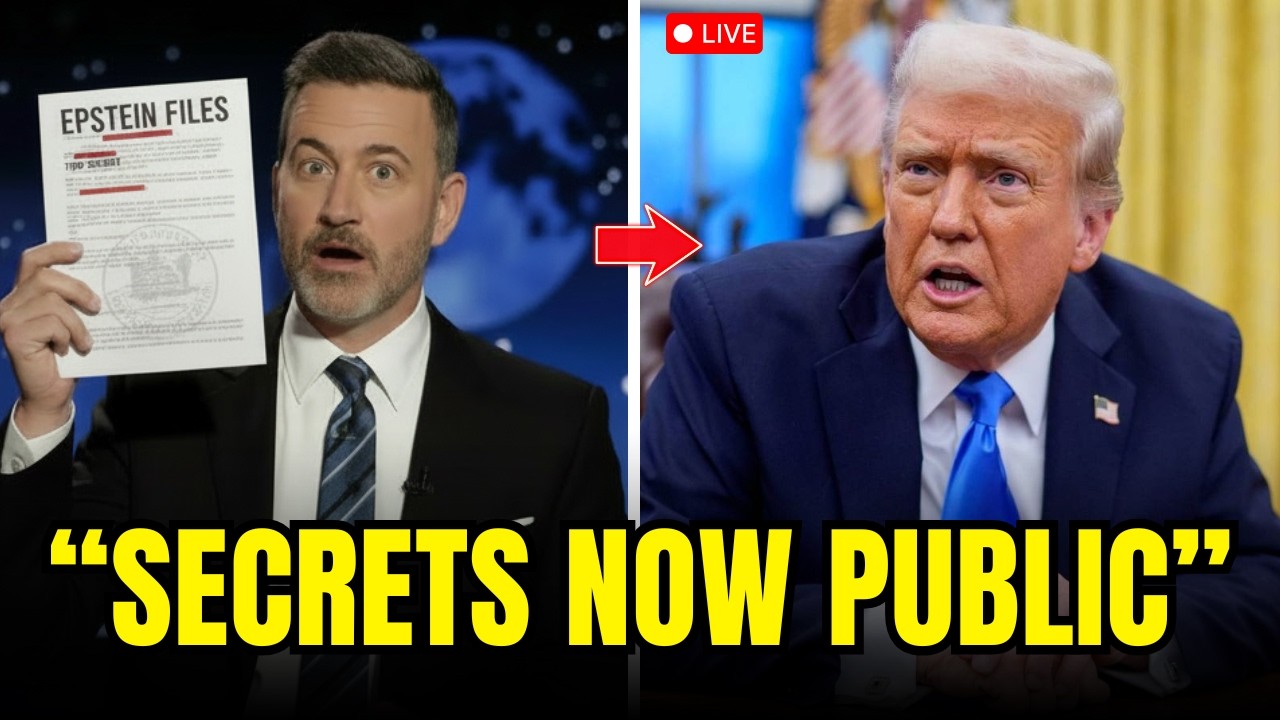
For months, courts and federal agencies have released batches of Epstein-related records, including deposition transcripts, flight manifests, email exchanges and internal communications. The documents have been scrutinized by journalists, researchers and online commentators alike, searching for insight into the breadth of Epstein’s social and professional associations.
Epstein, who died in federal custody in 2019 while awaiting trial on sex trafficking charges, had maintained relationships with high-profile individuals across political and economic circles. Public records over the years have documented social connections between Epstein and numerous influential figures, including Mr. Trump and former President Bill Clinton. Both men have denied knowledge of Epstein’s criminal conduct.
During the monologue, Kimmel revisited archival interviews in which Mr. Trump had described Epstein as a “terrific guy” years before the financier’s legal troubles became widely known. The late-night host juxtaposed those earlier comments with Mr. Trump’s more recent statements distancing himself from Epstein.
In one exchange referenced in the segment, Mr. Trump reiterated that he had “nothing to do” with Epstein’s crimes and argued that prior investigations had not implicated him. Representatives for Mr. Trump have consistently maintained that while he and Epstein moved in some of the same social circles decades ago, their relationship ended before Epstein’s most serious criminal conduct became public.

Legal experts caution that appearing in investigative documents does not, in itself, constitute evidence of wrongdoing. Mentions can reflect a wide range of contexts — from passing references in emails to inclusion in flight records or third-party statements. “Proximity and culpability are not the same thing,” said one former federal prosecutor who has followed the Epstein litigation. “Public discussion needs to keep that distinction clear.”
Still, the renewed attention underscores a broader tension in American political culture: the gap between official denials and public suspicion in high-profile scandals. For years, the Epstein case has lingered at the intersection of power, wealth and accountability. Its scope — spanning politics, finance and academia — has made it both combustible and legally complex.
Comedy shows have increasingly become forums for such discussions. Late-night hosts often address subjects that traditional news broadcasts approach more cautiously, especially when litigation remains ongoing. Unlike news anchors, entertainers can frame questions more pointedly, even if their commentary carries no legal authority.
The segment quickly drew partisan reactions. Supporters of Mr. Trump criticized Kimmel for what they described as selective emphasis and political bias. On conservative platforms, commentators argued that the focus on Mr. Trump overshadowed the bipartisan nature of Epstein’s associations.
Others defended the segment as a reflection of public interest in transparency. “The documents are public,” said a media analyst at a Columbia University seminar on political communication. “Once records enter the public domain, interpretation becomes part of the democratic conversation — whether that conversation happens in a courtroom, a newsroom or a late-night studio.”
The broader question remains what, if anything, further document releases will clarify. The Justice Department has faced pressure from lawmakers in both parties to ensure full transparency regarding Epstein’s network and contacts. Some members of Congress have called for additional review to determine whether relevant materials remain sealed.
Meanwhile, the political implications are less clear. Mr. Trump, who continues to command strong support within his party, has repeatedly dismissed renewed scrutiny as politically motivated. Polling suggests that while controversies tied to Epstein generate online engagement, they have not substantially shifted core voter blocs.
Yet the issue persists, resurfacing whenever new material becomes available or when a prominent figure revisits the subject publicly.
In the late-night segment, Kimmel ended not with a joke but with a question: how should the public interpret documentary records that appear inconsistent with political narratives? It was a question that, for now, remains unanswered — suspended between legal standards, political messaging and public perception.
As further records are examined and debated, the Epstein case continues to illustrate a recurring American dilemma: when powerful figures intersect with scandal, accountability is often adjudicated not only in courts of law but also in courts of public opinion.






