House Rule Defeat Exposes G.O.P. Divisions Over Trump’s Tariffs and Congressional Authority

WASHINGTON — Speaker Mike Johnson suffered a rare and stinging procedural defeat in the House of Representatives on Wednesday night, when a bloc of Republicans joined Democrats to block a rule that would have effectively shielded President Donald J. Trump’s global tariff policy from immediate congressional scrutiny.
The vote, 217 to 214, was not on the tariffs themselves but on a procedural measure — known as a “rule” — that would have set the terms for debate on pending legislation. Yet embedded within the rule was a controversial provision that would have temporarily barred the House from considering resolutions aimed at terminating Mr. Trump’s emergency tariffs on Canada and other countries.
In modern congressional practice, rules are almost always adopted along party lines. Their defeat is exceedingly rare and widely interpreted as a sign of internal disarray. For Mr. Johnson, now in his second Congress as speaker, the failed vote marked his third unsuccessful rule attempt in two terms — an extraordinary development in a chamber where leadership typically commands strict procedural discipline.
At stake is not merely a policy disagreement over tariffs, but a broader constitutional struggle over Congress’s authority to regulate trade and taxation — powers explicitly granted under Article I of the Constitution.
A Procedural Fight With High Stakes
The defeated rule would have delayed, for up to a year, any House action challenging the president’s tariffs under the National Emergencies Act. That law allows lawmakers to force consideration of a “privileged resolution” to terminate a declared national emergency. Because such resolutions are privileged, House leadership cannot easily prevent them from reaching the floor.
Mr. Johnson’s maneuver was widely interpreted as an attempt to circumvent that mechanism by preventing debate before it could begin.
“The House has defeated a rule that would have blocked lawmakers’ ability to bring up resolutions challenging Trump’s tariffs,” Jake Sherman of Punchbowl News reported shortly after the vote. “These resolutions will now flood the floor in the months running up to the election.”
Three Republicans — Representatives Thomas Massie of Kentucky, Don Bacon of Nebraska and Kevin Kiley of California — voted against the rule, joining Democrats and delivering the decisive margin.
Mr. Bacon had signaled his opposition earlier in the day, arguing that Congress had ceded too much authority to the executive branch in matters of trade.
“Tariffs have been a net negative for the economy and are a significant tax that American consumers, manufacturers and farmers are paying,” Mr. Bacon said in a statement. “Article I of the Constitution places authority over taxes and tariffs with Congress for a reason. But for too long, we have handed that authority to the executive branch. It’s time for Congress to reclaim that responsibility.”
Mr. Massie, a frequent critic of executive overreach from both parties, framed the dispute more bluntly in an interview after the vote.
“The speaker has to do what Donald Trump wants,” he said. “Instead of siding with the American people or our Republican conference, he’s siding with Donald Trump and basically doing whatever Donald Trump wants him to do.”
Tariffs as Taxation
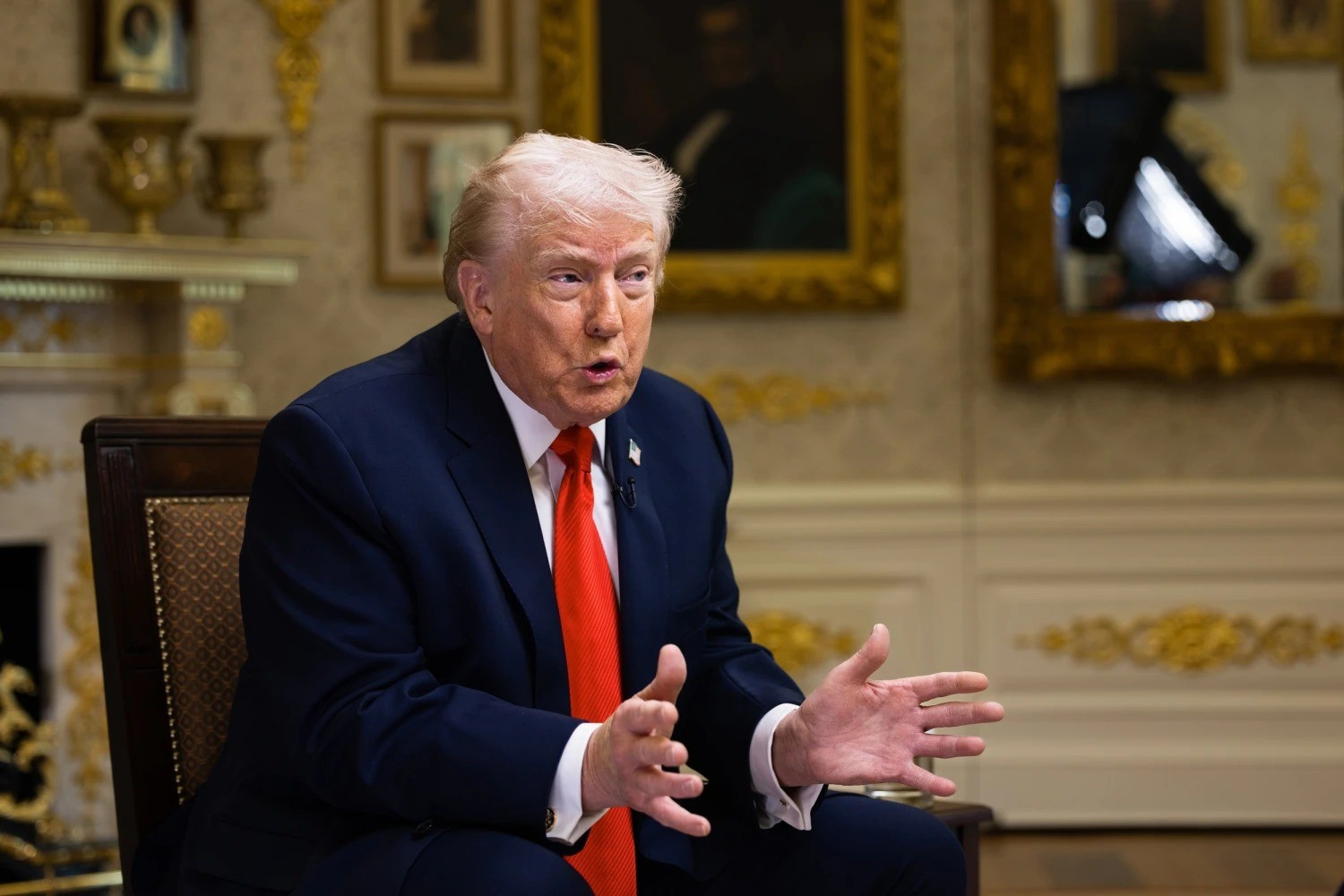
Mr. Trump’s tariffs — described by the administration as necessary leverage in trade negotiations — have increasingly become a political flashpoint as inflation data and job reports show renewed strain in key sectors.
Economists across the political spectrum generally agree that tariffs function as a tax on imported goods, with costs often passed through to consumers. The president has argued that foreign governments ultimately bear the burden. Critics, including some Republicans, dispute that characterization.
The vote’s outcome now opens the door to a House resolution declaring the tariffs unlawful. Should such a measure pass, it would move to the Senate and potentially to the president’s desk. Mr. Trump would almost certainly veto it, requiring a two-thirds majority in both chambers to override — a steep but not unimaginable threshold if bipartisan opposition grows.
For Republicans facing competitive midterm races, the procedural failure forces a politically fraught choice: defend the tariffs on the merits or vote to curb the president’s authority.
“This exposes members,” said one senior Republican aide, who spoke on condition of anonymity to discuss internal deliberations. “They can’t hide behind procedure anymore.”
Johnson Under Pressure
The rule vote was reportedly held open for hours as Mr. Johnson and his leadership team sought to persuade holdouts to reverse course. Such extended votes, once rare, have become a feature of narrow majorities and high-stakes internal disputes.
Mr. Johnson’s leadership has been marked by frequent confrontations between traditional conservatives and the party’s populist wing, as well as by pressure from Mr. Trump, who retains significant influence over the conference.
The speaker has also faced questions on unrelated controversies, including the administration’s handling of documents connected to the Jeffrey Epstein investigation and a rejected federal indictment effort targeting Democratic lawmakers over a video encouraging service members to refuse unlawful orders.
When asked about the latter episode, Mr. Johnson initially said he would reserve comment before suggesting that encouraging disobedience could “cross a line,” though a federal grand jury declined to indict the lawmakers in question.
Constitutional Tensions
Beyond the immediate political fallout, the episode underscores a deeper institutional question: how far Congress is willing to assert its constitutional prerogatives in an era of expanding executive power.
Under both Democratic and Republican presidents, lawmakers have often delegated authority over trade and national emergencies to the White House. The National Emergencies Act, enacted in 1976, was designed to impose limits, but critics argue it has instead enabled broad executive discretion.
Representative Joe Neguse, Democrat of Colorado, invoked that concern in a floor speech before the vote.
“One of the reasons prices are going up across the board in the United States are tariffs,” he said. “Ways that the Congress can finally stop abdicating its authority and exercise its powers with respect to tariffs.”
He cited Mr. Bacon’s earlier remarks as evidence that unease extended across party lines.
What Comes Next
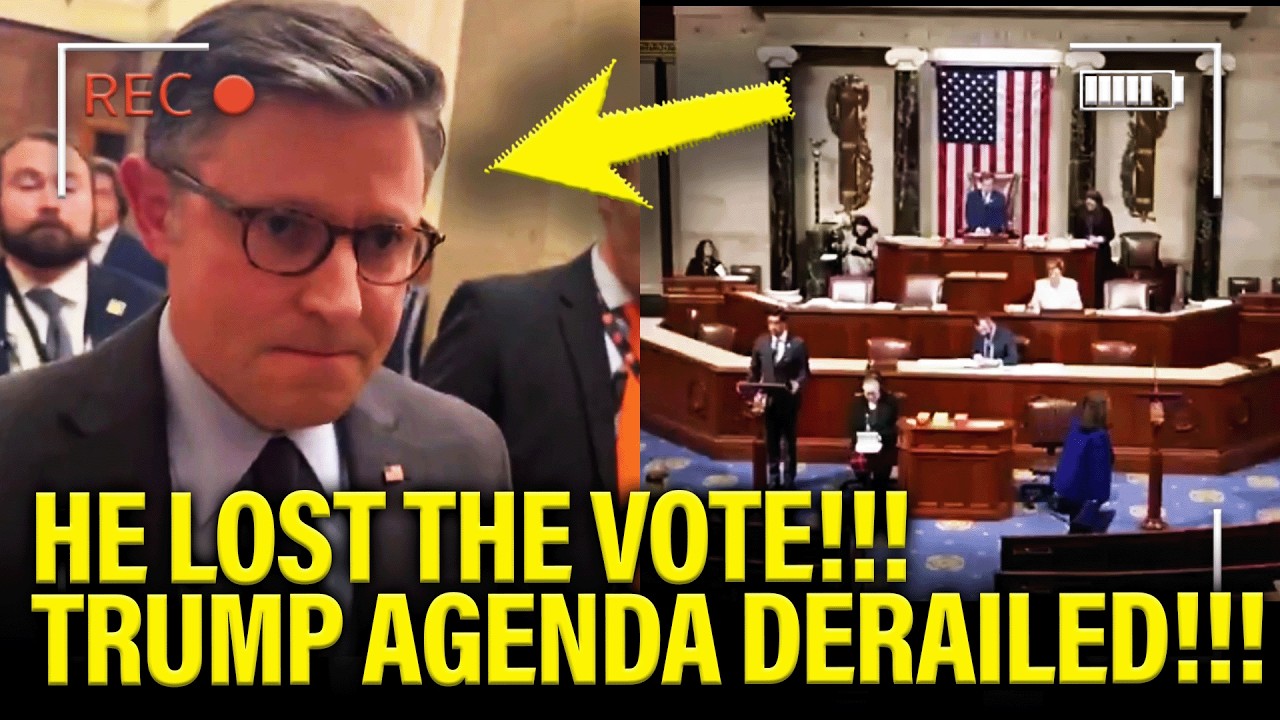
With the rule defeated, a privileged resolution challenging the tariffs could reach the floor as soon as Thursday. Whether it passes will depend on whether additional Republicans join the three who broke ranks.
Even if the House approves such a resolution, its prospects in the Senate remain uncertain. And an override of a presidential veto would require significant Republican defections.
Still, the procedural defeat carries symbolic weight. In a chamber where party discipline typically ensures that routine votes proceed without drama, the failure of a rule signals vulnerability at the top.
For Mr. Johnson, the episode illustrates the difficulty of governing with a razor-thin majority and a party still negotiating the boundaries of loyalty to its most dominant political figure.
For Congress, it presents a moment of choice: whether to reassert authority over trade policy or continue the pattern of deference to the executive branch.
And for voters, particularly those grappling with rising prices, the coming floor votes promise clarity — if not consensus — on where their representatives stand.