Comedians, Regulators and the New Front Line of Speech Wars in Trump’s Washington
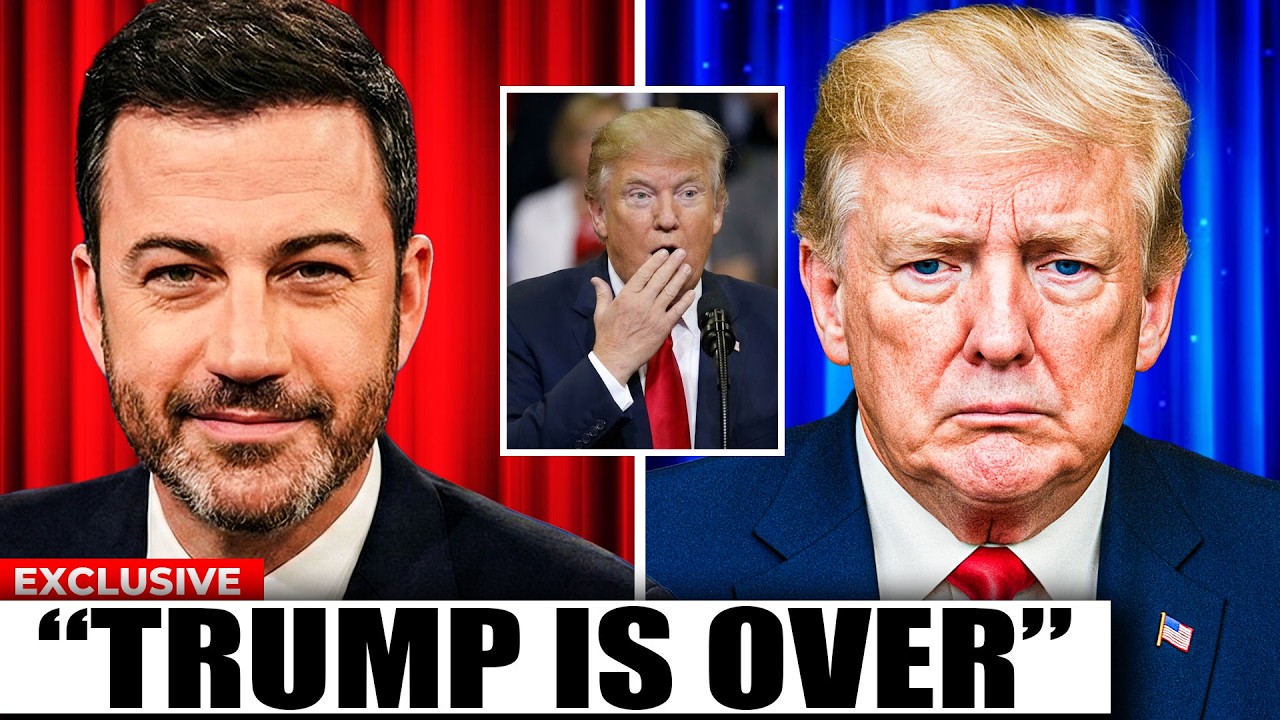
WASHINGTON — In the early hours after Jimmy Kimmel Live! went dark last fall, Donald Trump did what he has done for years when comedians aim their jokes in his direction: he reached for his phone.
According to reporting on the episode and its fallout, the president (and then again a candidate) used Truth Social to portray Kimmel as a “no-talent” propagandist whose network was “totally biased,” urging corporate owners and station groups to “get the bum off the air.” The post ricocheted across X, TikTok and YouTube, where conservative influencers framed the suspension as accountability and entertainment figures warned it looked like the state leaning on culture. (AP News)
The episode would have been another flare-up in America’s eternal argument over taste and politics — except it did not stop at insults.
In the days after Kimmel’s monologue about the killing of Charlie Kirk, ABC suspended the show indefinitely. The move came amid pressure from major affiliate owners and a public escalation from the Federal Communications Commission chairman, Brendan Carr, a Trump appointee, who signaled that the media ecosystem was due for “changes” and suggested broadcasters could face heightened scrutiny. (AP News)
The result was an unusually direct collision between late-night television and federal power — a skirmish that has since become a reference point in a broader struggle over who gets to speak, who gets to joke, and who gets to punish.
A suspension becomes a referendum

The suspension (from Sept. 17 to Sept. 22, 2025) followed a national shock: Kirk, the founder of Turning Point USA, was killed in a shooting that authorities treated as political violence, the kind of event that instantly becomes both tragedy and ammunition. In his monologue, Kimmel suggested that the suspect’s motives did not align neatly with the partisan storylines quickly taking over cable news.
ABC’s decision to pull the show triggered immediate backlash — not only from Kimmel’s fans, but from rival hosts. Jon Stewart, Stephen Colbert, Seth Meyers and others used their own shows to express solidarity and to warn that the fight was no longer about one monologue but about a system that could be bent by political pressure. (cbsnews.com)
Behind the scenes, corporate and regulatory anxiety was part of the story. The Associated Press reported that Disney and ABC were navigating affiliate revolt and looming FCC approvals for business matters, a convergence that critics said created the conditions for intimidation — even without an explicit order from government. (AP News)
Carr, for his part, insisted he was not directing programming. But his public posture — warning that broadcasters should expect more scrutiny — became central to the controversy. Ars Technica described the FCC’s posture as bordering on censorship, arguing that the chair’s comments functioned as a threat in everything but name. (arstechnica.com)
Disney reversed course within days. Kimmel returned on Sept. 23, and the comeback episode drew a surge in viewership — in part because the suspension turned a late-night host into a symbol. Entertainment Weekly reported that the return episode was the show’s biggest audience in a decade, even as some affiliates preempted it. (EW.com)
The “staffer” defense and a new scandal cycle
Since then, Trump’s relationship with mass media has grown even more combustible, with the boundaries between political messaging and internet culture collapsing further.
This month, Trump shared — and then deleted — a racist video that depicted Barack and Michelle Obama as primates. The White House initially defended the post as “an internet meme” and urged critics to “stop the fake outrage,” before shifting blame to a staffer and taking it down. Trump refused to apologize. (AP News)
The incident set off condemnation from across the political spectrum, including Senator Tim Scott, who called it one of the most racist things he had seen from the White House, and Gov. Gavin Newsom, who argued that the episode demonstrated a broader rot — not just a provocative post, but a governing culture that treats humiliation as strategy. (TIME)
For comedians, the episode offered a grimly familiar lesson: in Trump’s America, culture is not adjacent to politics — it is the arena. Late-night hosts have become recurring targets because they are among the few public figures able to reach mass audiences nightly with unscripted criticism. And Trump, whose political skill has always included the ability to redirect attention, treats comedians not as entertainers but as opposition.
Social media’s role: amplification, distortion, and pressure
The user-generated news ecosystem is now central to how these fights evolve. Kimmel’s suspension was not only a corporate decision; it was fueled by weeks of viral outrage, clips stripped of context, influencer commentary and “call your affiliate” campaigns that spread faster than any network standards-and-practices memo could respond to. (AP News)
At the same time, social platforms have been the place where claims outrun verification — especially around Jeffrey Epstein-related documents, a subject that reliably generates viral posts, conspiracy-laced “explainers,” and stitched-together clips that blur reporting with performance. In recent months, it has become common for highly produced videos to claim sweeping new “file drops” and to suggest specific public figures are named thousands of times — often without presenting original documents, context, or evidence that the mentions imply wrongdoing.
The dynamic creates a trap for both journalists and audiences: ignore the viral narrative and it fills the void; engage it and it can lend legitimacy to misinformation. Late-night thrives on the same terrain — reacting to what people are already watching — which makes comedians both amplifiers and, at times, reluctant fact-checkers.
The deeper fight: punishment, not persuasion
The most consequential through-line here is not whether one host’s joke was appropriate, or whether a meme was posted by a president or a staffer. It is the emerging expectation that speech can be punished through leverage — licenses, mergers, station ownership, regulatory approvals — rather than rebutted through argument.
Broadcast licenses cannot simply be “taken away” by presidential anger. But when an FCC chair publicly hints at consequences for the corporate parent of a network, and that network simultaneously depends on federal approvals, the distinction between legal power and political pressure begins to feel academic. (AP News)
This is why civil liberties advocates treated the Kimmel episode as a warning shot: if a late-night host can be forced off the air after commentary that angers those in power, what happens to smaller outlets, local reporters, or independent creators with fewer corporate protections?
Even some viewers who dislike Kimmel’s politics defended his right to criticize the president — precisely because the argument was no longer about humor. It was about the government’s role in shaping what can be said on major platforms.
What comes next
Kimmel returned, and the audience surge proved that public backlash still has force. (EW.com) But the broader direction of travel — an administration willing to flirt with regulatory intimidation, and a social-media culture built to turn outrage into action — suggests the next confrontation is not a matter of if but when.
For Trump, who has long measured public life by dominance and humiliation, the target list naturally includes comedians: figures who can puncture the brand in 90 seconds and turn presidential authority into a punch line. For the country, the lesson of the last year may be that the fight over free speech is no longer confined to courts or campuses.
It is now playing out in the space between a studio audience, a corporate boardroom, and a federal regulator — and it is being live-streamed, clip by clip, to millions who are no longer sure where entertainment ends and enforcement begins.
If you want, I can reshape this into a tighter “NYT A1” structure (harder news lead, more reported tone, fewer rhetorical lines) or a more “Sunday Magazine” narrative style—same facts, different voice.