🚨 SOMETHING FEELS OFF: MARK CARNEY’S SILENCE ON VENEZUELA IS MAKING WASHINGTON NERVOUS — a calm pause, a missing line, and a response that quietly breaks the script ⚡
When reports of explosions in Caracas and the detention of Venezuela’s president rippled across global news alerts, the assumption among diplomats and analysts was swift and familiar: Washington had acted, and its allies would follow. Markets braced for turbulence. Commentators predicted statements of solidarity. In North America, few doubted the script Canada would read from.
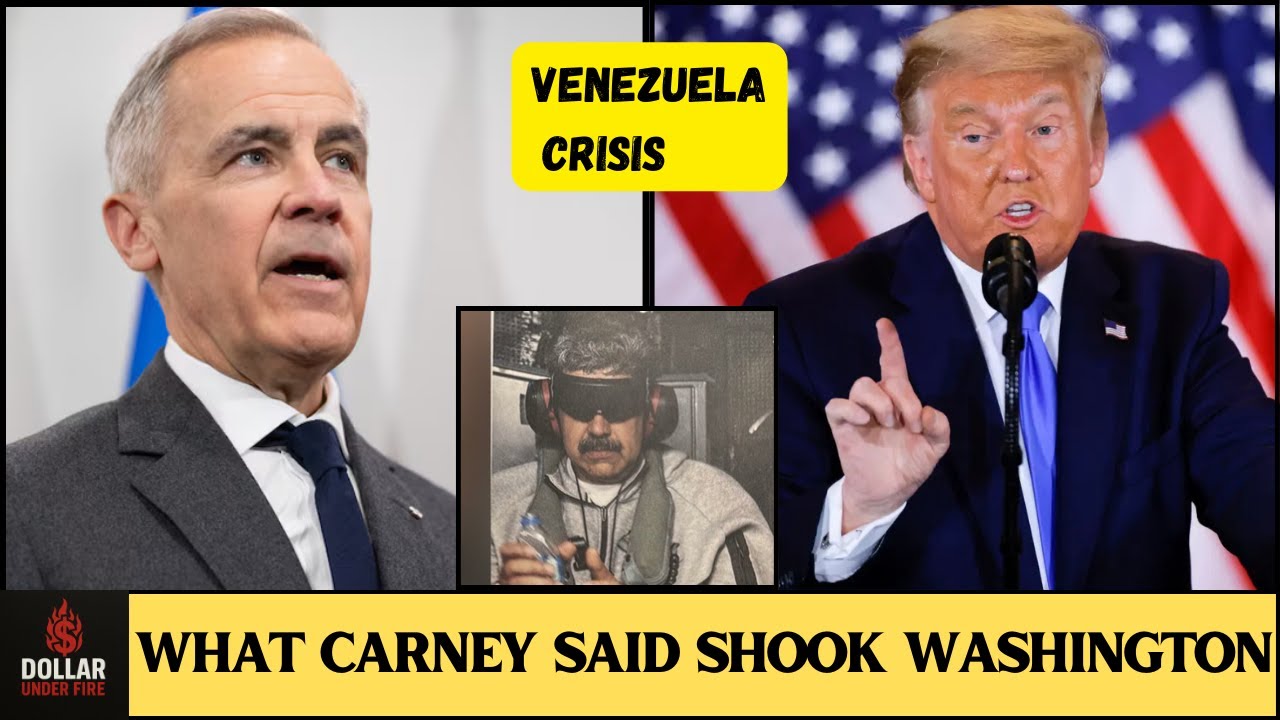
But as cameras remained trained on Venezuela, something unexpected unfolded in Ottawa—not action, but restraint.
Hours passed after the United States announced military strikes and asserted control over Venezuelan bases. There were no emergency press conferences in Canada, no echoing declarations of support. The silence itself grew conspicuous. And when Canada finally spoke, it was not with condemnation, nor with applause, but with carefully chosen words that unsettled expectations in Washington far more than an outright protest might have.
At the center of that response was Mark Carney, whose statement appeared, at first glance, to reaffirm familiar positions. Canada does not recognize the legitimacy of Nicolás Maduro’s government. It supports democratic outcomes for the Venezuelan people. It hopes for stability and prosperity. None of that was new.
What mattered was what was missing.
There was no endorsement of military intervention. No language praising decisive action. No acknowledgment of American authority to remove a foreign leader by force. Instead, the statement emphasized Venezuelans’ right to determine their future “peacefully and democratically,” a phrasing that separated opposition to Mr. Maduro from approval of the means used to dislodge him.
Then came a line that reframed everything: Canada reaffirmed its belief in “peaceful negotiated transitions that respect international law.”
Those two words—international law—carried weight. They were not framed as an accusation, nor aimed directly at Washington. But their implication was unmistakable. By invoking legality without naming the United States, Canada quietly questioned the legitimacy of unilateral action taken without multilateral authorization. It was a refusal without confrontation, a denial of validation delivered in diplomatic tones.
The contrast with Washington’s rhetoric was stark. American officials spoke openly about control, enforcement and restoring order. Canada spoke of process, legality and restraint. One approach treated power as permission; the other treated law as a boundary.
Inside Canada, the reaction fractured. Some voices praised the intervention as a moral necessity. Others condemned it as illegal and dangerous. A third group occupied an uneasy middle ground, rejecting Mr. Maduro while bristling at America’s role as enforcer. Mr. Carney aligned with none of them. By avoiding emotional cues altogether, he anchored Canada’s position in principle rather than reaction.
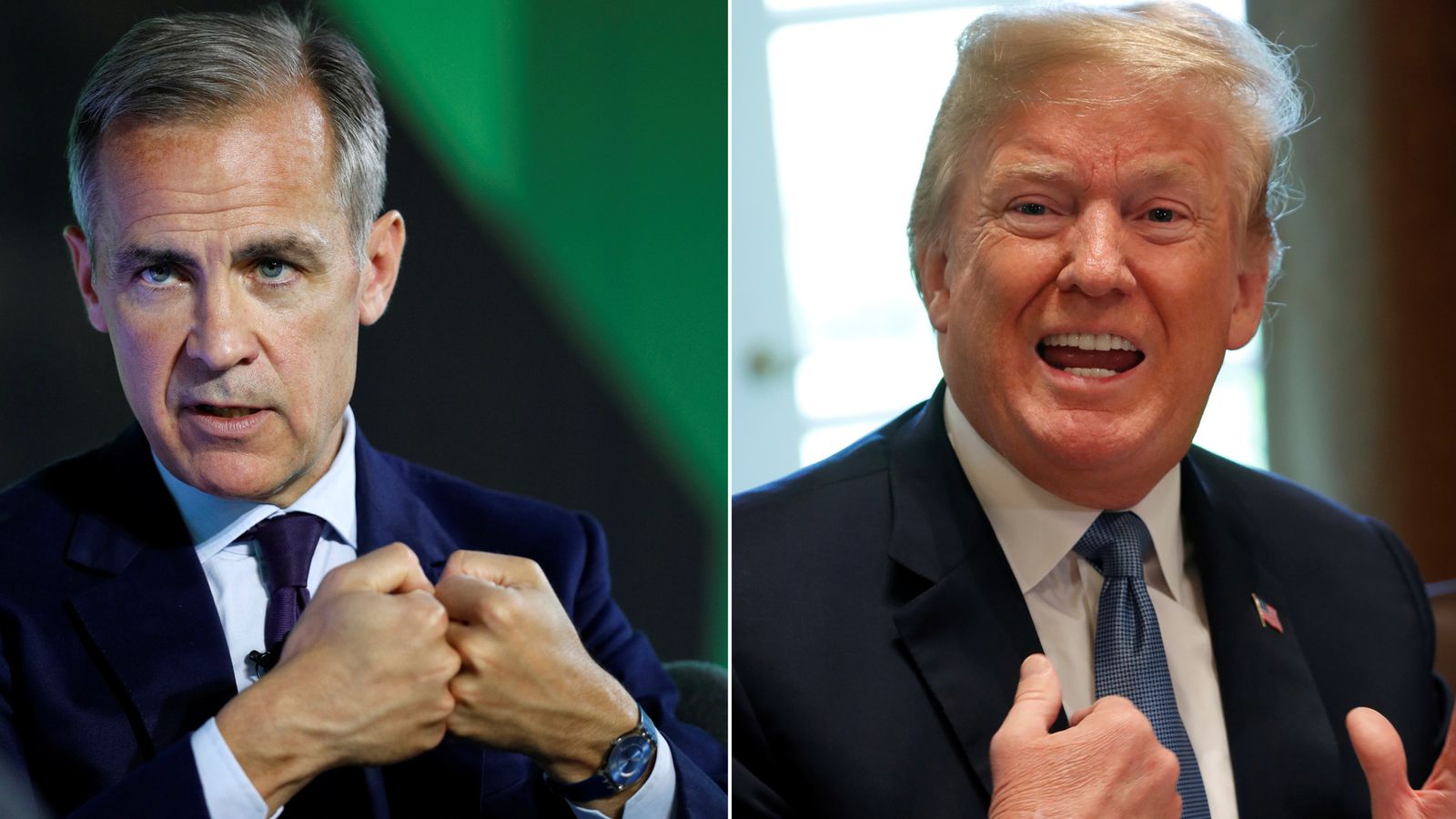
That choice had broader implications. This was not simply about Venezuela, but about how power operates in an international system already under strain. If a powerful country can invade a sovereign nation, detain its leader and announce control without clear international authorization, where does that power stop? And who decides when such actions are justified?
Canada’s answer, implied rather than declared, was that legitimacy must precede force. Rules matter precisely when they are inconvenient. Once bent, they do not snap neatly back into place; they weaken, and with them the protections smaller states rely on.
Ottawa’s focus also diverged in practical terms. While Washington emphasized authority and justice delivered on its terms, Canada spoke about protecting civilians, assisting refugees and maintaining diplomatic engagement on the ground. The priority was not celebration of force, but mitigation of harm.
What made the moment striking was not defiance, but discipline. Mr. Carney did not escalate rhetoric or trade barbs for domestic applause. He allowed contrast to do the work. One response framed crisis as an opportunity to exert control. The other treated it as a responsibility to act carefully.
In international politics, restraint is often mistaken for weakness. But credibility, diplomats note, grows from consistency, not volume. By emphasizing international law, peaceful transition and multilateral engagement, Canada signaled that it would support freedom without abandoning its values simply because a powerful neighbor expected alignment.
This was never just a story about Venezuela. It was a test of leadership under pressure—of whether speed and dominance would outweigh judgment and principle. The situation on the ground remains unresolved. But one shift is already evident. Canada did not shout. It did not rush. And in doing so, it reminded a watching world that, even in moments of upheaval, rules still matter.






