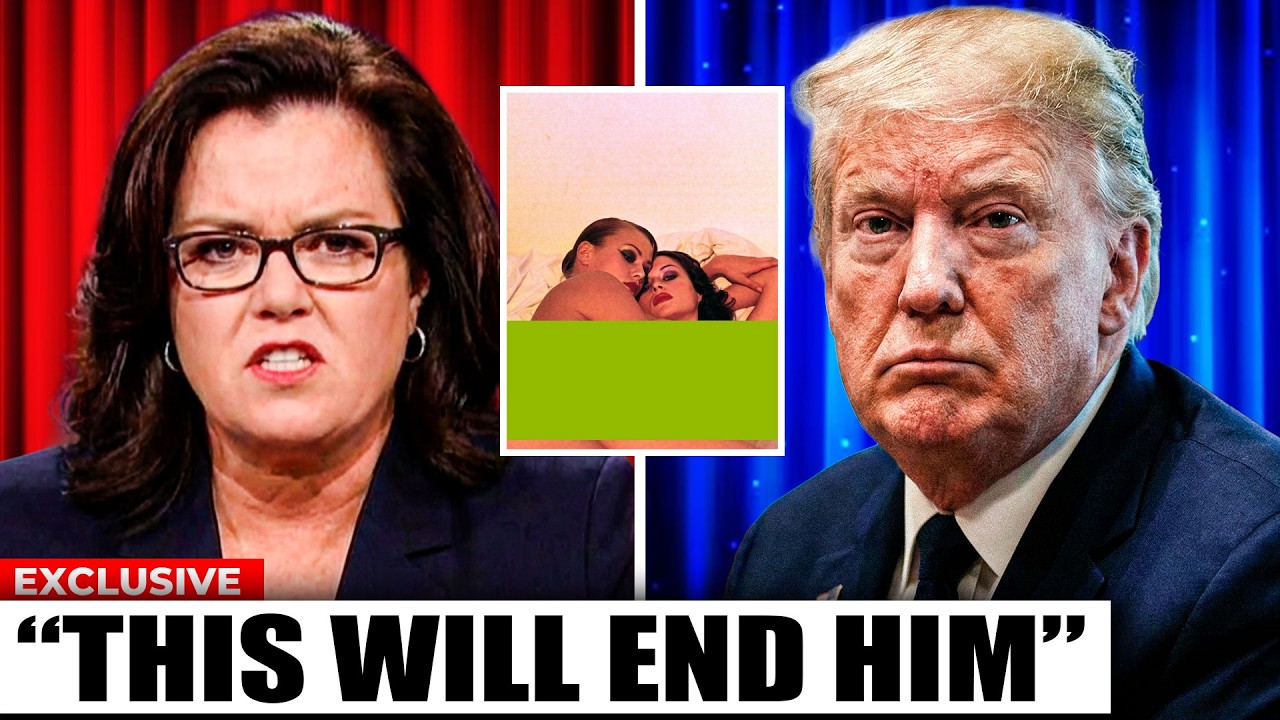
TRUMP GOES NUTS AFTER ROSIE O’DONNELL EXPOSES HIM LIVE — THE FEUD ERUPTS AGAIN
Donald Donald Trump reignited one of America’s longest-running celebrity feuds after comedian and activist Rosie O’Donnell delivered a blistering live television appearance that immediately went viral. Speaking candidly, O’Donnell accused Trump of dishonesty, hypocrisy, and long-standing patterns of intimidation, framing her remarks as a critique rooted in decades of public behavior rather than a sudden political attack.
During the interview, O’Donnell revisited Trump’s media persona, arguing that his rise was built on branding and spectacle rather than substance. She pointed to his history in New York business circles and reality television, claiming the image sold to the public never matched the reality insiders knew. The segment gained traction not because of a single line, but because of the calm certainty with which she spoke, turning old accusations into a cohesive narrative that resonated with viewers.
Trump’s response came fast and loud. Within hours, he lashed out online, mocking O’Donnell, reviving old insults, and amplifying the clash through official channels. Critics noted that instead of rebutting her claims, Trump focused on personal attacks—behavior that only fueled the story’s reach. The more he posted, the more attention the interview received, transforming a TV appearance into a full-scale political moment.
One of the most talked-about portions of the segment involved speculation about Melania Trump’s extended absences from public events. O’Donnell referenced widely circulated online theories and patterns noticed by the public, carefully framing them as questions rather than proven facts. While those claims remain unverified and controversial, they underscored a broader point: the growing sense of secrecy surrounding Trump’s inner circle and personal life.

O’Donnell also raised concerns about Trump’s temperament and decision-making, echoing worries voiced by other public figures over the years. Importantly, she presented these remarks as opinion and interpretation, not medical diagnosis, emphasizing observable behavior—late-night posts, escalating rhetoric, and repeated threats—as the basis for her criticism. Supporters called it “speaking truth to power,” while opponents dismissed it as partisan outrage.
What made the moment explode wasn’t just what Rosie O’Donnell said—it was how Trump reacted. His fury became the headline, reinforcing the image of a leader unable to ignore criticism or resist escalation. As clips continue to circulate, the episode stands as a reminder that in the Trump era, exposure doesn’t always come from documents or courts. Sometimes, it comes from a microphone, a camera, and an opponent who refuses to back down.