When the Ink Is the Story
On a recent evening at the Ed Sullivan Theater, Stephen Colbert walked onstage without his usual grin. The band played, the applause arrived on cue, but the tone felt altered — less late-night escapism, more civic tutorial. The subject was familiar, and fraught: the long-shadowed paper trail surrounding Jeffrey Epstein and the enduring question of who knew what, and when.
The segment, widely shared online in a dramatized, clip-ready format, did not purport to reveal new, verified documents. Instead, it examined something more procedural and, in its way, more unsettling: the black bars of redaction that have become a visual shorthand for secrecy in high-profile investigations.
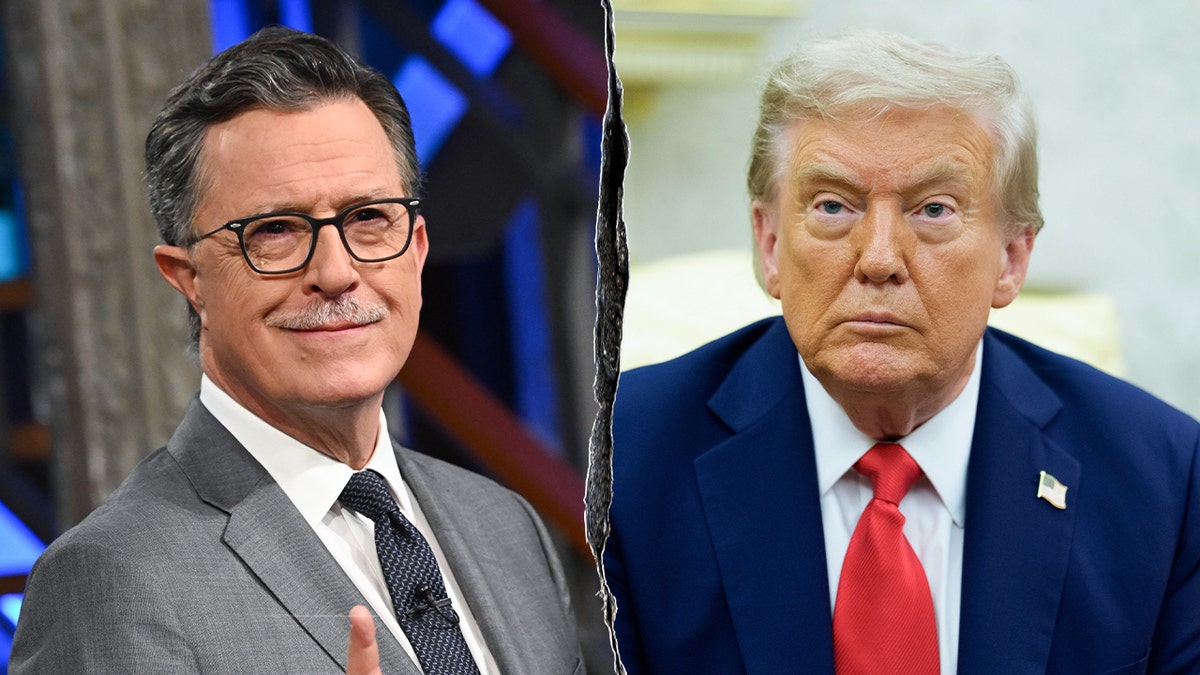
Colbert held up a thick folder wrapped in a plain cover sheet and called it, with a wry edge, “the most expensive black marker in America.” Whenever Epstein’s name surfaces, he suggested, the same pattern follows — pages appear, but whole lines are painted over, and the public is asked to trust the shadows.
He was careful not to describe allegations in lurid detail. The core of the Epstein case involves exploitation and abuse; the victims, he said, deserve respect rather than spectacle. The focus, instead, was accountability — how and why certain information remains hidden, and who benefits when it does.
Behind him, the screen displayed a page dense with black ink. Dates and a few visible words peeked through. Redaction, Colbert noted, can serve legitimate purposes: protecting minors, safeguarding ongoing investigations, shielding sensitive intelligence. But it can also be used, critics argue, to protect reputations.
That distinction — between privacy and protection, between safety and self-preservation — formed the spine of the segment. Colbert presented a stylized “redaction key,” showing two versions of a document: one fully blacked out, another with selective names momentarily visible, as if someone had briefly lifted the marker. The point was not the names themselves but the question that followed: if the system is confident in its integrity, why does it require so much darkness?
The phrase that ignited the internet was not an accusation but a label. Colbert referred to a “Trump FBI,” not as an official agency title, but as shorthand for what he characterized as a culture of loyalty tests and narrative control — institutions treated as extensions of political branding rather than independent actors. The term was provocative, but the argument was procedural: pressure institutions, shape messaging, discredit questioners.
He outlined what he called the familiar choreography of deflection: call the files fake; argue that disclosure would harm the nation; portray critics as obsessed; maintain the redactions. He played a montage of officials offering variations on “ongoing matter” and “no comment.” “Watch how the sentence always ends before the answer begins,” he said.
The applause that followed was not thunderous so much as deliberate. Colbert raised a hand, letting silence linger before delivering his final line: “Who benefits from the black ink?”
The reaction online was swift. Supporters praised the segment as a needed push against institutional opacity. Critics dismissed it as innuendo masquerading as inquiry. Within hours, clips circulated across social media platforms, reframed and reinterpreted by influencers on both sides of the political divide.
The broader context is complex. Court records show that Donald J. Trump, like many prominent figures in New York’s social circles during the 1990s and early 2000s, had social interactions with Epstein, including flights on Epstein’s plane. Trump has said he ended his association with Epstein long before Epstein’s 2019 arrest and has denied knowledge of Epstein’s crimes. The Justice Department has released materials related to Epstein’s prosecution, though significant portions remain redacted for legal and privacy reasons.
For many Americans, the frustration is less about specific names than about process. The Epstein case has become a symbol of perceived double standards — a wealthy network, a lenient plea deal in 2008, and a death in federal custody that fueled suspicion across the political spectrum. In that climate, redaction itself becomes suspect.
Colbert’s segment tapped into that suspicion without making a single concrete allegation. It argued that secrecy, even when justified, erodes trust when it becomes routine. “A confident system answers questions,” he said. “An insecure one hides behind markers.”
Trump responded in characteristically combative fashion, attacking the show as partisan and calling for scrutiny of its claims. The exchange only amplified the clip’s reach, turning a late-night monologue into a broader debate about transparency and power.
The episode illustrates a modern paradox: comedians, not lawmakers, often set the terms of public conversation about accountability. In a media ecosystem fragmented by partisanship, satire can function as both critique and catalyst.
But the ink remains. Redactions, whether warranted or strategic, carry a symbolic weight that outlasts any punch line. They invite questions that cannot be laughed away. And as long as the black bars remain, so too will the suspicion that something — perhaps mundane, perhaps consequential — lies beneath them.
In the end, the segment was less about Epstein than about the health of institutions. Accountability, Colbert suggested, begins precisely where the ink starts.