Cabinet Testimony and Congressional Scrutiny Deepen Questions About Executive Power
WASHINGTON — A contentious House Homeland Security Committee hearing this week placed Homeland Security Secretary Kristi Noem at the center of a widening debate over executive authority, immigration enforcement and disaster funding. But the session also unfolded against a far broader backdrop: intensifying questions about presidential decision-making, constitutional safeguards and the rare mechanisms available to address concerns about a president’s fitness for office.
During the hearing, Democratic lawmakers pressed Secretary Noem over cuts to federal homeland security and FEMA grants affecting New York. Representative Timothy Kennedy of New York accused the Department of Homeland Security of undermining counterterrorism preparedness in his state by withholding funds. Noem defended the reductions, citing what she described as compliance concerns related to immigration enforcement and unspent allocations. The exchange quickly grew tense, with members speaking over one another as they debated the legal and fiscal rationale for the agency’s actions.
The hearing also included emotional testimony connected to immigration enforcement, including questions about the deportation of veterans and long-term residents. Noem stated that U.S. citizens and military veterans are not subject to deportation, though lawmakers cited individual cases that they argued warranted further review. The exchanges reflected a broader partisan divide over how immigration law should be enforced and the balance between national security priorities and humanitarian considerations.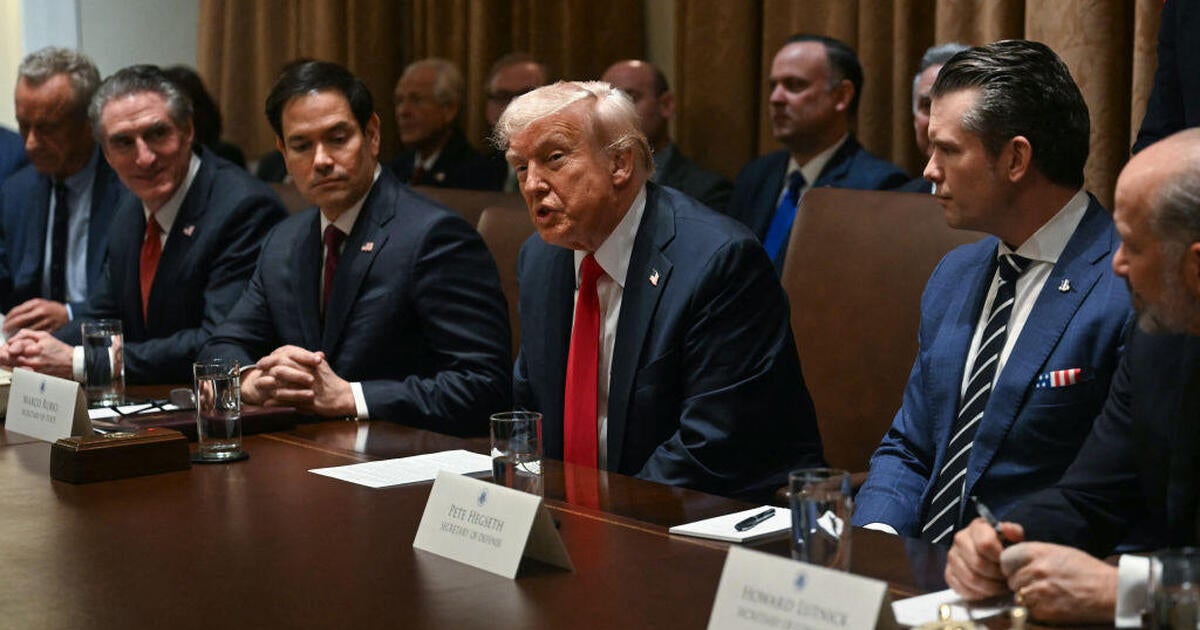
Beyond immigration policy, lawmakers are examining more consequential claims involving military authority and executive decision-making. Several cabinet officials have reportedly testified before congressional committees regarding internal disagreements over recent foreign policy actions, including alleged military strikes conducted without prior congressional notification. Legal scholars note that the War Powers Resolution requires presidents to consult Congress before introducing U.S. armed forces into hostilities, though presidents of both parties have historically interpreted those requirements differently. Administration officials have not publicly confirmed any unlawful action, and the White House maintains that all military decisions comply with statutory and constitutional authority.
The testimony has revived discussion in Washington of the constitutional avenues available when serious concerns arise about presidential conduct. Two mechanisms exist: impeachment, which begins in the House of Representatives and requires a Senate conviction, and Section 4 of the 25th Amendment, which allows a vice president and a majority of cabinet officials to declare a president unable to discharge the powers and duties of the office.
The 25th Amendment, ratified in 1967 after the assassination of President John F. Kennedy, was designed primarily to address situations of physical or mental incapacity. It has never been used to remove a president against his will. If invoked, the vice president immediately assumes the role of acting president. The president may contest the declaration, at which point Congress must vote within 21 days. Removal requires a two-thirds vote in both the House and Senate — a threshold that makes the process extraordinarily difficult.
Legal experts caution that the amendment’s language — “unable to discharge the powers and duties of his office” — is intentionally broad but historically understood to address incapacity rather than political disputes. “It was crafted as a safeguard against emergencies,” said one constitutional scholar. “Using it outside that context would be unprecedented and politically seismic.”
At the same time, some House Democrats are advancing articles of impeachment that allege abuse of power, obstruction of justice and violations of statutory authority. A resolution circulating in the chamber has drawn support from more than 140 members, though it would require a simple majority of 218 votes to pass the House and a two-thirds majority in the Senate to result in removal — another formidable hurdle.
Republicans remain divided. Some lawmakers argue that the constitutional processes now under discussion risk politicizing tools intended for extraordinary circumstances. Others have expressed concern about specific policy decisions while stopping short of endorsing removal efforts. The vice president’s role is particularly delicate; without his support, the 25th Amendment cannot move forward.
The White House has dismissed talk of removal as partisan maneuvering. In public statements and on social media, the president has described the scrutiny as politically motivated and reaffirmed his commitment to what he calls decisive leadership in matters of immigration, national security and foreign policy.
Meanwhile, polling suggests public opinion is sharply divided. Some surveys indicate declining approval ratings among independent voters, while the president retains strong support among core Republican constituents. With midterm elections approaching, lawmakers in both parties are weighing the political consequences of any dramatic constitutional action.
The events unfolding in Washington represent one of the most consequential stress tests of the modern presidency. While disputes over executive authority are not new, the simultaneous consideration of impeachment and the 25th Amendment underscores the gravity of the moment. Whether these discussions result in formal action or fade amid political negotiation remains uncertain.
For now, Congress continues its hearings, cabinet officials continue their testimony, and the nation watches as constitutional mechanisms — rarely invoked and never fully tested in this way — move from theoretical safeguards to subjects of active debate.