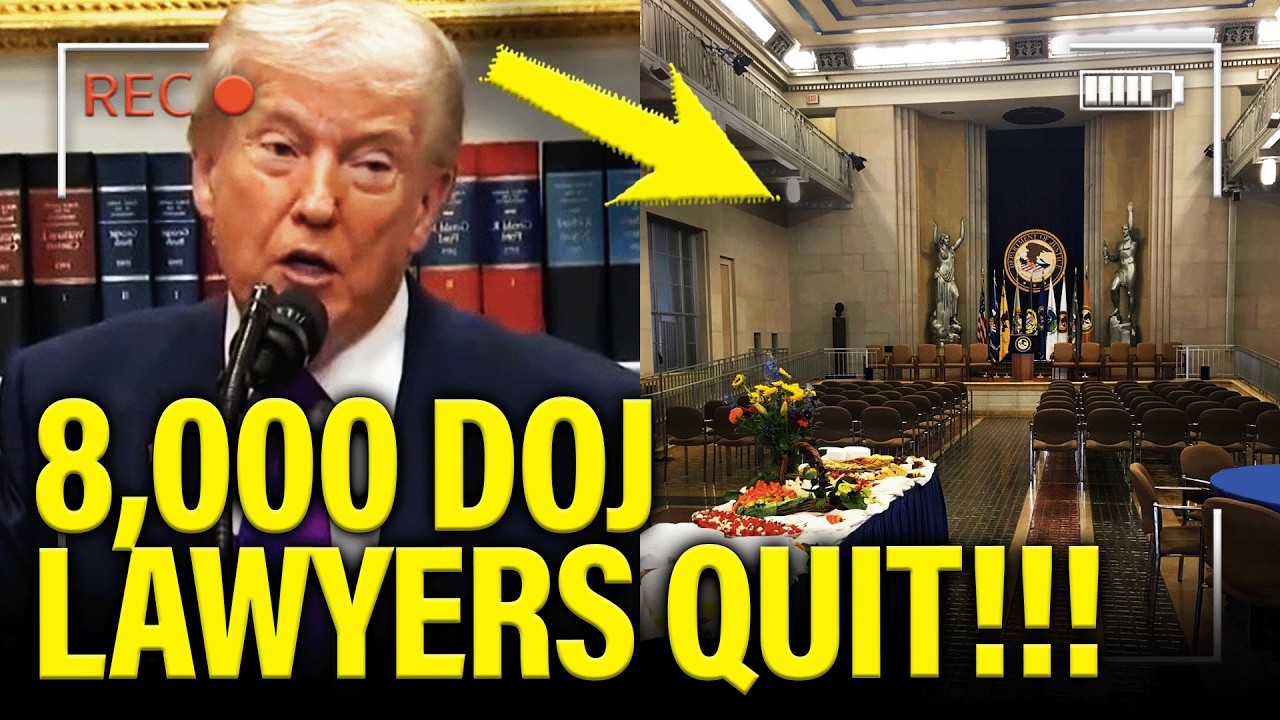
Reports of a potential mass exodus within the U.S. Department of Justice (DOJ) are fueling intense political and legal debate across Washington. Commentators and former officials have suggested that thousands of lawyers and staff may have either resigned or been pushed out, raising concerns about institutional stability. While the exact number remains disputed, the narrative of internal disruption has gained traction amid public hearings, court criticisms, and reports of growing workload pressures on remaining staff.
A recent congressional hearing involving Attorney General Pam Bondi has become a flashpoint in the broader controversy. Critics have argued that her testimony lacked clarity and professionalism, while supporters maintain she is facing highly politicized questioning. The hearing featured tense exchanges, with lawmakers pressing for answers on enforcement priorities, internal staffing levels, and investigative transparency. The clash highlighted deep partisan divides over the DOJ’s direction and credibility.
Adding to the controversy are reports from federal courtrooms across the country where judges—appointed by presidents from both parties—have reportedly expressed frustration over missed deadlines, incomplete filings, and inconsistent witness preparation. Legal observers warn that even isolated procedural breakdowns can damage the DOJ’s reputation, but repeated issues risk undermining judicial trust in federal prosecutors, a cornerstone of the American legal system.
Some current and former DOJ attorneys have cited heavy caseloads, staffing shortages, and insufficient training as contributing factors. Anecdotal reports describe attorneys being reassigned outside their expertise or handling complex cases with minimal preparation. If accurate, these accounts suggest structural strain rather than isolated management failures. Legal analysts note that prolonged staffing instability could slow case processing and impact everything from immigration proceedings to complex financial crime prosecutions.

The political dimension remains impossible to ignore. Critics of the current administration argue that leadership decisions and loyalty expectations have driven experienced professionals away. Meanwhile, supporters counter that institutional reform and policy shifts naturally create turnover. The broader debate reflects a longstanding tension in Washington: how to balance political leadership with the DOJ’s tradition of independence and continuity across administrations.
What happens next may determine the DOJ’s institutional trajectory for years. If workforce losses are as severe as some claim, rebuilding capacity could take time and sustained bipartisan support. If not, the controversy may ultimately reflect political messaging more than structural collapse. Either way, the ongoing debate underscores a fundamental reality: public trust in the justice system depends not only on outcomes, but on the perception of competence, fairness, and adherence to the rule of law.