By XAMXAM
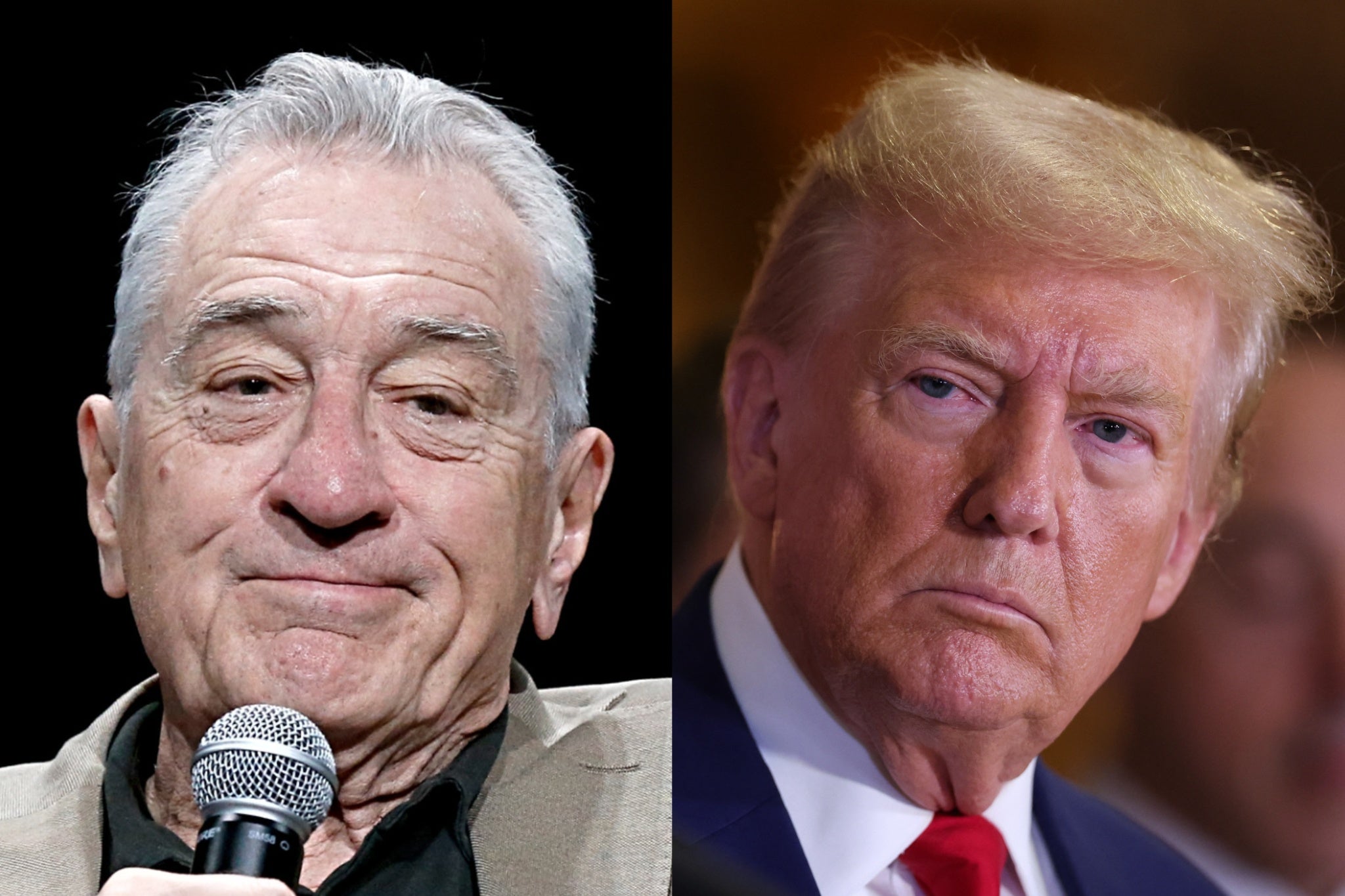
Robert De Niro has spent a lifetime perfecting the art of menace on screen. He has played mob bosses, broken boxers, haunted veterans and smiling sociopaths with such precision that entire generations learned what danger looks like by watching his face change. But when De Niro spoke on live television this week, he wasn’t performing. He wasn’t inhabiting a role. He was speaking plainly — and it landed with more force than any script ever could.
The moment was unscripted, brief, and unmistakable. Standing before a live audience, De Niro delivered a blunt condemnation of Robert De Niro’s longtime political adversary, Donald Trump, framing the former president not as a misunderstood provocateur but as a destabilizing force who, in De Niro’s words, threatens the country itself. There was no joke to soften the blow, no theatrical flourish. Just a declaration.
The reaction was immediate. The room froze, then erupted. Within minutes, the clip ricocheted across social media, cable news, and political group chats. And somewhere, according to aides and observers, Trump was watching — and fuming.
Trump’s response followed a familiar script. On social media, he lashed out at De Niro personally, calling him “low IQ,” “washed up,” and “punch drunk,” dismissing decades of cinematic achievement with the same insult-laden shorthand he has used against judges, generals, journalists and former allies. It was less a rebuttal than a reflex.
What made the exchange different was not the insult — Trump has always relied on ridicule — but the imbalance. De Niro did not respond. He did not escalate. He did not trade barbs. The asymmetry was striking: one man offering a measured, if blistering, moral judgment; the other reacting with visible fury.
For years, De Niro has been one of Trump’s most consistent celebrity critics. He criticized him before he entered office, during his presidency, after his defeat, and through the legal battles that followed. Consistency, in this case, matters. De Niro’s language has not evolved with the news cycle. It has hardened.
At film festivals, award ceremonies, protests, and interviews, he has returned to the same themes: contempt for democratic norms, glorification of grievance, the use of intimidation as leadership. He has likened Trump to the criminals he once portrayed, but with a sharper edge. Even gangsters, De Niro has said, operate by a code. Trump, in his view, does not.
That perspective carries unusual weight precisely because of De Niro’s career. He is not a pundit or politician. He is an artist who has spent decades studying power, ego, and moral collapse. When he describes a figure as dangerous, audiences understand he is drawing from lived creative experience — from having imagined the inner lives of men who destroy what they touch.

Trump, by contrast, has always been sensitive to celebrity criticism, particularly from figures whose cultural authority he cannot command. De Niro represents an America Trump has never fully entered: New York without bravado, masculinity without bluster, influence without self-promotion. Their clash is not merely political. It is cultural.
The intensity of Trump’s reaction revealed something else: De Niro’s words landed where polls and prosecutions often do not. They pierced the image. Trump thrives on spectacle, on dominating attention, on controlling the narrative. De Niro’s intervention stripped away the performance and reframed Trump not as a fighter but as a threat — a distinction Trump has long resisted.
The broader context matters. Trump is again seeking the presidency while facing unprecedented legal scrutiny and growing international skepticism. His critics have struggled to break through the noise of outrage and fatigue. In that environment, De Niro’s moment cut through precisely because it was not optimized for virality. It felt human. Direct. Old-fashioned.
Viewers did not hear a celebrity chasing relevance. They heard an American speaking from conviction. That difference explains why the clip spread so rapidly — and why Trump reacted so strongly.
In the days that followed, the episode became another data point in a larger pattern: Trump responds most aggressively not to structured opposition, but to moments that puncture his self-mythology. De Niro did not argue policy. He questioned character. And in Trump’s political universe, nothing is more destabilizing than that.
The exchange will not change minds overnight. But it clarified something essential. Trump still believes dominance comes from volume. De Niro demonstrated that authority can come from stillness.
In a media landscape saturated with noise, a few unadorned sentences were enough to expose the fault line — and to remind the country that sometimes the most unsettling performances are the ones where the actor stops acting at all.