How Federal Authorities Secured a Warrant to Seize Ballots in Fulton County
February 15, 2026
Federal authorities obtained a search warrant to seize ballots and election-related records in Fulton County, Georgia — a move that has sparked significant political and legal controversy.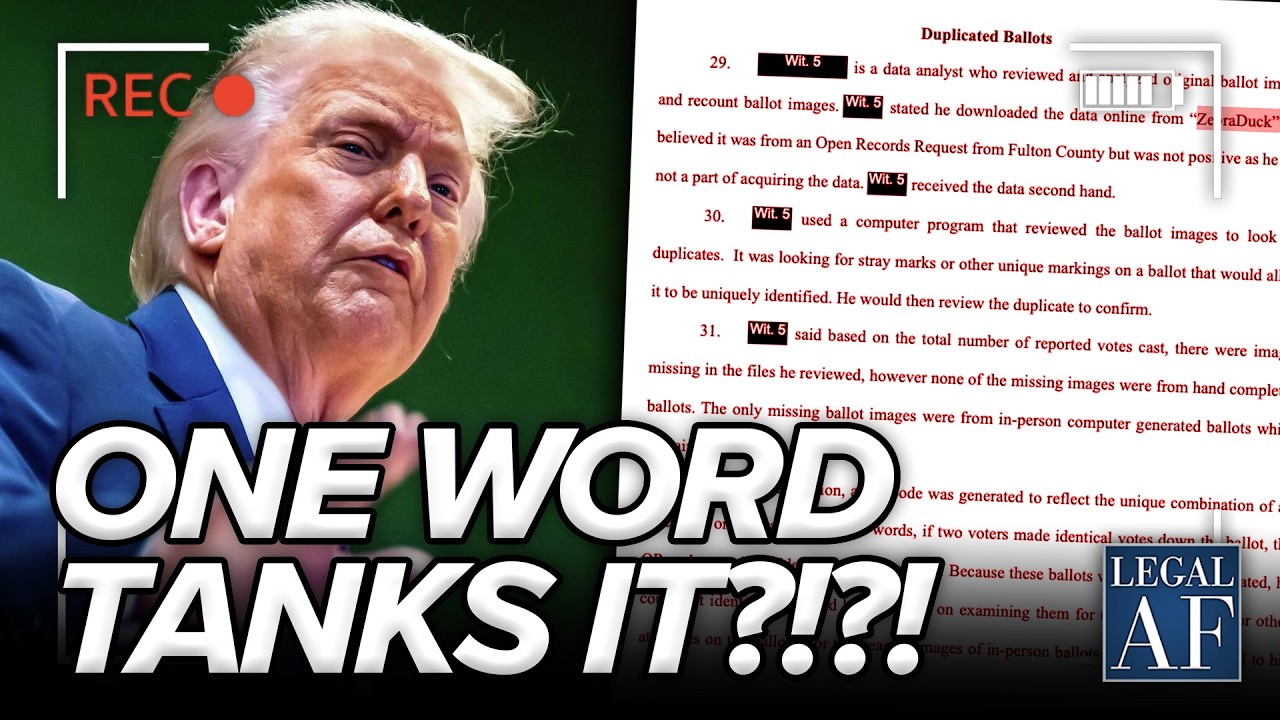
The key question critics immediately raised was straightforward: how did the Department of Justice establish probable cause for a warrant when more than 60 courts had previously rejected claims of widespread fraud in the 2020 election?
Now that the underlying affidavit has been unsealed, the answer appears to lie not in proof of large-scale election fraud, but in a narrower legal theory centered on record retention and potential intent.
The Legal Standard: Probable Cause
To obtain a federal search warrant, investigators must present a sworn affidavit to a magistrate judge demonstrating probable cause — meaning there is a fair probability that a crime occurred and that evidence of that crime will be found at a specific location.
Probable cause is a relatively low threshold. It does not require proof beyond a reasonable doubt or even proof that a crime definitely occurred. It requires only a reasonable basis to believe evidence of a crime may exist.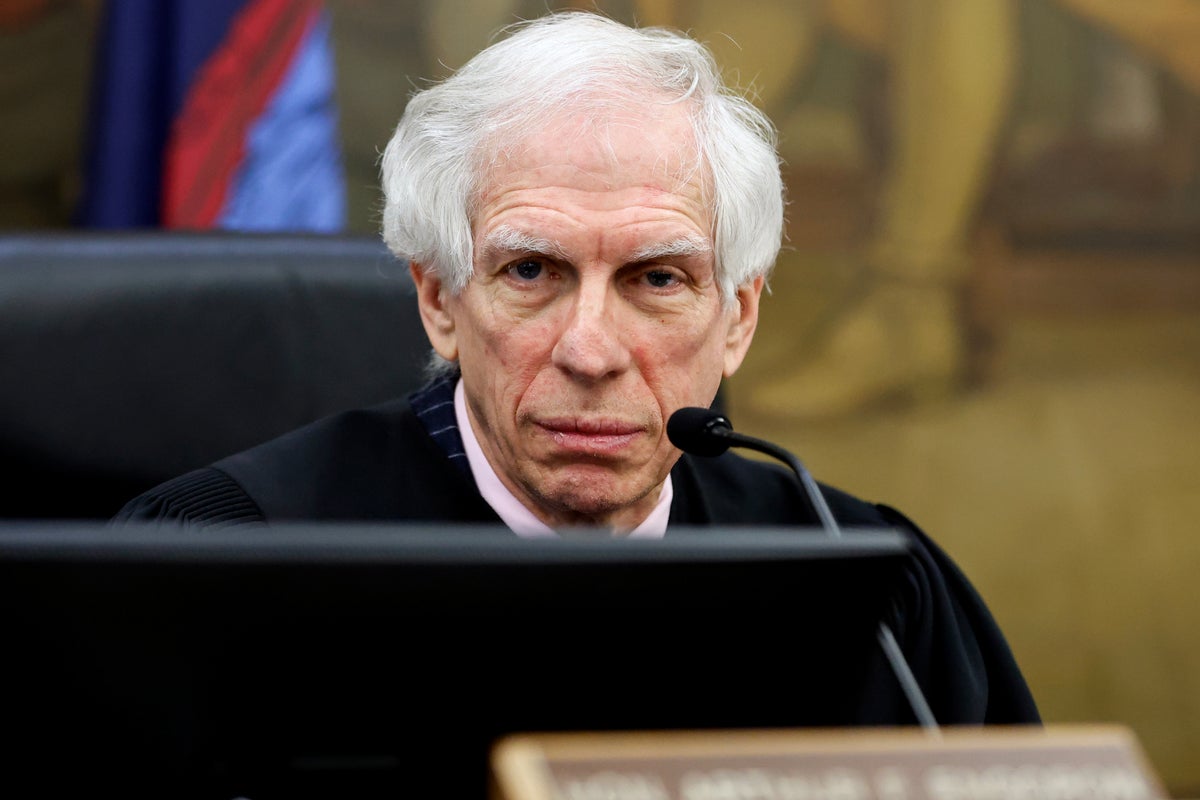
In this case, the warrant was approved by U.S. Magistrate Judge Katherine M. Selenus.
The Referral That Sparked the Investigation
According to reporting by The New York Times, the criminal investigation began with a referral from Kurt Olsen, who was serving as director of election security and integrity in the Trump administration.
Olsen had previously been involved in legal efforts challenging aspects of the 2020 election. His referral alleged potential irregularities involving ballot images and duplicate absentee ballots in Fulton County.
The affidavit relied in part on those claims, many of which had been widely disputed in prior litigation and election reviews.
The Affidavit’s Core Argument: Intent and Record Retention
The sworn affidavit was submitted by FBI Special Agent Hugh Raymond Evans.
Importantly, the affidavit did not claim it had discovered evidence that changed the outcome of the 2020 election. Instead, it focused on administrative discrepancies previously acknowledged by Georgia officials.
Those discrepancies included:
-
Approximately 3,000 missing ballot scan images
-
Instances of duplicate ballot scanning
-
Administrative errors in recordkeeping
Georgia officials had previously described these issues as procedural or clerical errors.
However, the affidavit reframed the issue around intent. Under Title 52 of the U.S. Code — which governs federal election record retention — intentional destruction, concealment, or mishandling of election records can constitute a federal crime.
The affidavit stated in its concluding section:
“If these deficiencies were the result of intentional action, the election records identified in Attachment B are evidence of violations of Title 52.”
That conditional phrasing became central to the probable cause determination.
Why a Magistrate Could Approve the Warrant
Legal analysts note that probable cause does not require certainty that a crime occurred — only a fair probability that evidence of a crime may be found.
The affidavit included statements from 11 witnesses, including two Republican-appointed members of the Georgia State Election Board. It combined data analysis with acknowledged discrepancies in ballot documentation.
By shifting the focus from “election fraud” to “potentially intentional record retention violations,” investigators created a narrower legal pathway for the warrant.
The theory was not that fraud altered the election outcome, but that intentional mishandling of federally protected election records might have occurred.
Whether that theory ultimately holds up in court remains to be seen.
Critics Call It a Fishing Expedition
Opponents of the warrant argue that the affidavit relied on speculative language and conditional reasoning rather than concrete evidence of criminal intent.
They point specifically to the affidavit’s own acknowledgment that it was “unclear” whether the deficiencies constituted a crime.
Fulton County officials have challenged the seizure in federal court, arguing that it was unconstitutional and procedurally improper. They also contend that federal authorities did not immediately provide a full inventory of what was taken.
Supporters of the warrant argue that federal investigators are obligated to examine possible violations of election law when credible discrepancies are documented — even if those discrepancies were previously described as administrative.
Broader Implications
The case highlights several significant tensions:
-
The low threshold required for probable cause
-
The distinction between administrative errors and criminal intent
-
The federal government’s authority over election record retention
-
Ongoing disputes about federal versus state control of election processes
It may ultimately reach higher appellate courts, potentially even the U.S. Supreme Court.
Notably, in prior election-related cases following the 2020 election, the Supreme Court declined to intervene in ways that would have altered state-certified results.