🔥 BREAKING: A SHARP LATE-NIGHT MOMENT SHIFTS THE TONE AS Stephen Colbert RESPONDS TO PUBLIC CRITICISM — THE REACTION QUICKLY IGNITES ONLINE BUZZ ⚡
A viral YouTube video circulating this week claims to capture a dramatic escalation in the long-running feud between former President Donald Trump and late-night host Stephen Colbert, culminating in a monologue that allegedly invoked the specter of Jeffrey Epstein and left Mr. Trump “instantly humiliated.”
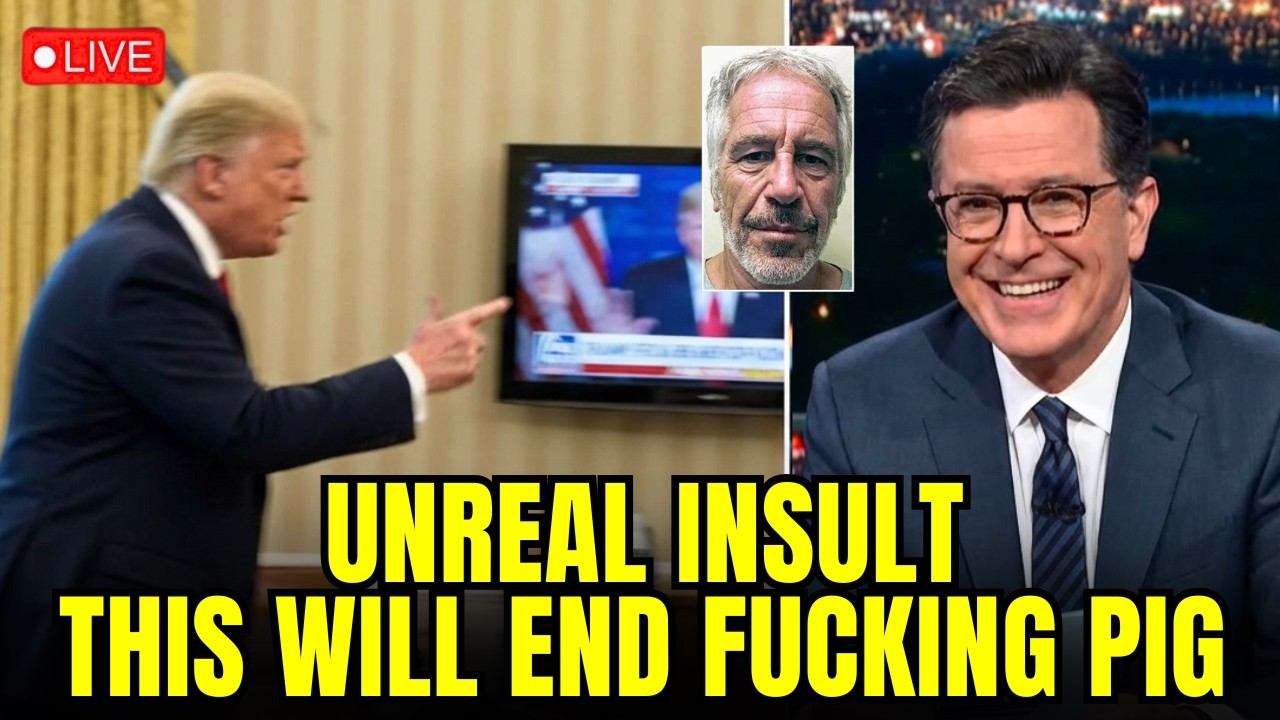
The video, titled “Trump ATTACKS Colbert’s Late Night Legacy — Stephen’s ‘Epstein’ Clapback HUMILIATES Him Instantly,” presents a transcript of what it describes as a tense broadcast from the Ed Sullivan Theater, home of “The Late Show with Stephen Colbert.” According to the narration, Mr. Trump criticized Mr. Colbert at a political rally, dismissing the comedian’s career as forgettable and devoid of legacy. Hours later, the account claims, Mr. Colbert responded with a pointed monologue contrasting his own professional trajectory with lingering questions surrounding Mr. Trump’s associations, including references to the disgraced financier Jeffrey Epstein.
There is no independent evidence that such a confrontation unfolded in the manner described. While Mr. Trump and Mr. Colbert have frequently traded barbs over the years — often with Mr. Trump criticizing the host’s ratings and Mr. Colbert lampooning the former president’s rhetoric — the specific sequence portrayed in the viral transcript has not been corroborated by reputable news outlets.
The transcript follows a cinematic structure. It opens with Mr. Trump allegedly belittling Mr. Colbert at a rally, asserting that the comedian’s career would be forgotten and that his own “brand” represented a more enduring legacy. The scene then shifts to 11:35 p.m., when Mr. Colbert is said to have taken the stage with an unusually solemn demeanor. The studio band is muted, the lighting subdued. He introduces a heavy binder — “receipts,” in the language of political theater — and frames his remarks as a meditation on what constitutes a legacy.
From there, the narrative pivots to the case of Mr. Epstein, who died in federal custody in 2019 while awaiting trial on sex trafficking charges. Mr. Trump, like many public figures, has faced scrutiny over past social interactions with Mr. Epstein before his arrest, though he has denied wrongdoing and has not been charged with any crime related to the case. The viral transcript depicts Mr. Colbert carefully emphasizing that he is not presenting secret evidence, but rather highlighting the “material that swirls around powerful men when ugly stories follow them.”
The power of the monologue, as described in the video, lies less in specific revelations than in tone. Mr. Colbert is portrayed as measured and prosecutorial, contrasting what he characterizes as a comedian’s transparent pursuit of laughter with a politician’s alleged attempts to control narratives and suppress uncomfortable questions. The closing line — suggesting that legacy cannot be bullied into existence — is framed as a decisive rhetorical blow.

Yet much of the script bears the hallmarks of dramatized political storytelling that has become common on digital platforms. It blends real tensions — Mr. Trump’s public disdain for certain late-night hosts, Mr. Colbert’s frequent criticism of Mr. Trump, and the enduring public fascination with Mr. Epstein’s connections — with heightened theatrical detail. The result is a scene that feels plausible in spirit, even if its particulars remain unverified.
Mr. Trump has a long history of attacking media figures by name, often labeling them “low-rated” or “untalented.” Mr. Colbert, whose program has regularly featured political satire, has been among his most persistent critics in late-night television. During Mr. Trump’s presidency, “The Late Show” frequently led in ratings among network late-night programs, a fact Mr. Colbert occasionally cited in on-air rejoinders.
The Epstein case, meanwhile, continues to occupy a charged place in the political imagination. Court documents and flight logs have fueled speculation across the ideological spectrum, even as law enforcement investigations have produced limited public disclosures beyond those tied to criminal proceedings. In that environment, even indirect references can carry heavy implications.
Media scholars note that viral political clips often rely on narrative compression and moral contrast. By staging events as courtroom dramas — complete with symbolic props like binders and deliberate pauses — such content invites viewers to experience politics as a series of climactic reckonings. The emphasis is on emotional resolution rather than documented development.
For audiences, the challenge is distinguishing between verified broadcast moments and stylized retellings designed to maximize engagement. Authentic segments from major network programs are typically archived and widely reported, particularly when they involve explosive allegations or direct confrontations between prominent figures. The absence of corroborating coverage raises questions about the literal accuracy of the account.
That does not diminish the broader cultural dynamic it reflects. The relationship between Mr. Trump and late-night television has been mutually reinforcing: he supplies material; hosts supply satire; each side claims vindication before its audience. In that sense, the viral script captures a real and ongoing battle over narrative and reputation.
But whether a single monologue “ended” anyone is another matter. In contemporary American politics, legacies are not settled by late-night verdicts alone. They are contested over time — in courts, in elections and in the historical record.
As with many politically charged videos circulating online, viewers would do well to separate theatrical framing from verifiable fact. The applause line may echo, but the truth of what occurred depends on more than a well-timed pause and a prop binder.






