🔥 BREAKING: A TENSE PRESS MOMENT SPARKS A SHARP LATE-NIGHT RESPONSE AS Stephen Colbert TAKES AIM AT A SENIOR POLITICAL FIGURE — ONLINE REACTION QUICKLY BUILDS ⚡
When former President Donald Trump was asked recently why he would not move unilaterally to release additional government files related to the late financier Jeffrey Epstein, his response was less about substance than style.
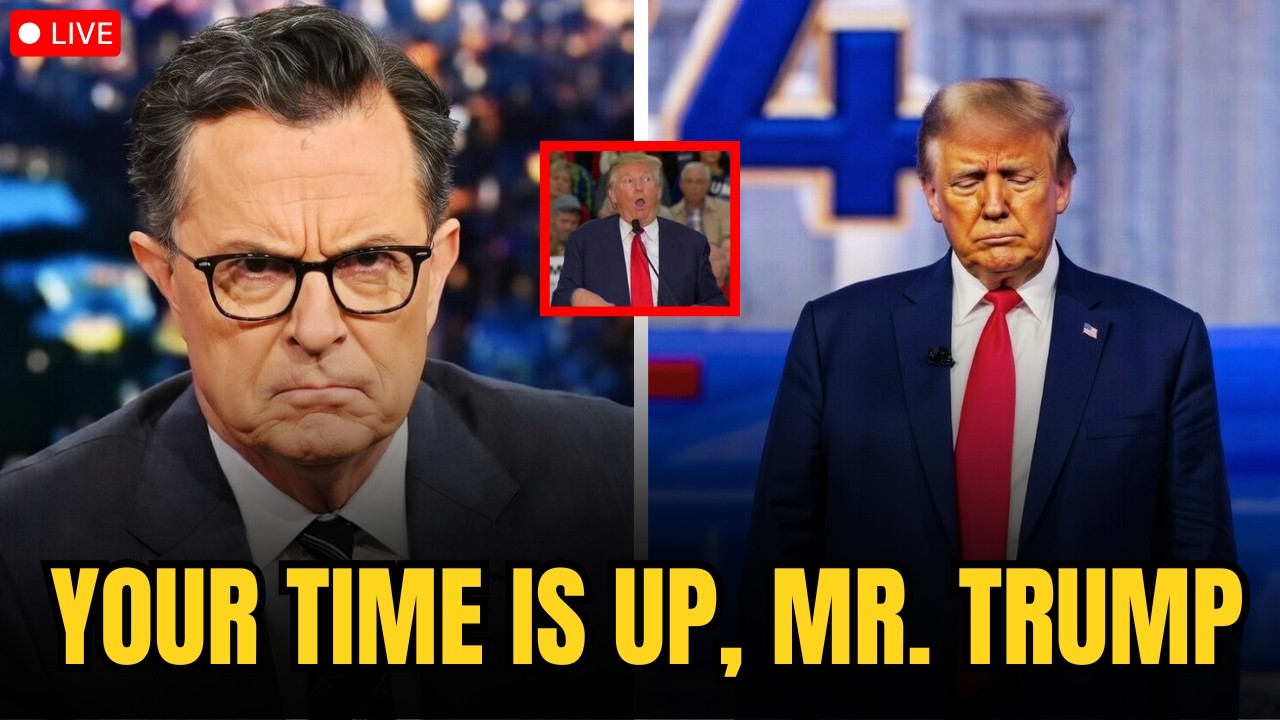
“It’s not the question that I mind,” Mr. Trump told a reporter. “It’s your attitude. I think you are a terrible reporter.” He added that he had “nothing to do with Jeffrey Epstein,” saying he had expelled him from his private club years ago because he considered him “a sick pervert.”
The exchange, which took place amid renewed public attention on Epstein-related documents, might have passed as another combative moment between Mr. Trump and the press. But what drew particular notice was his tone — at one point telling the reporter to “smile” — and the broader context in which it occurred.
Epstein, who died in federal custody in 2019 while awaiting trial on sex trafficking charges, remains a flashpoint in American political life. His relationships with prominent figures in business, academia and politics have fueled years of scrutiny, speculation and partisan dispute. Court records and photographs have documented past social interactions between Epstein and Mr. Trump, among others. Mr. Trump has repeatedly said he distanced himself from Epstein long before the financier’s legal troubles became public and has denied any wrongdoing.
For critics, however, the president’s demeanor in responding to questions about the matter — especially those touching on the release of investigative files — carried symbolic weight. They argue that issues tied to sexual exploitation and abuse demand visible gravity from public officials, particularly from someone who once occupied the nation’s highest office.
The moment quickly migrated from the political sphere to the cultural one. On “The Late Show with Stephen Colbert,” the host Stephen Colbert replayed the clip for viewers, expressing disbelief at what he characterized as a casual response to a subject involving serious crimes. While late-night television has long served as a venue for political satire, Mr. Colbert’s commentary struck a more somber tone than usual, framing the exchange as a measure of character rather than merely a punch line.

The controversy also included reports that Mr. Trump had insulted a female journalist during questioning aboard Air Force One, calling her a derogatory name. His campaign and allies have frequently defended his combative style as evidence of authenticity and strength, arguing that he resists what they describe as hostile or biased media coverage.
Supporters of the former president note that he has consistently condemned Epstein’s crimes and has said that he barred Epstein from his Mar-a-Lago club in Florida years ago. They argue that his frustration is directed not at the underlying issue of abuse, but at what they view as insinuations of personal involvement. In this view, the clash reflects a longstanding adversarial relationship between Mr. Trump and segments of the press rather than indifference to victims.
Still, the optics of the exchange have proven potent. The Epstein case, because of its association with powerful figures and its harrowing accounts of exploitation, occupies a uniquely sensitive place in the public imagination. For many Americans, the subject evokes not only legal questions about sealed documents and investigative transparency, but also moral expectations about how leaders should respond when confronted with wrongdoing connected to their social circles.
Political communication experts say that moments like these can resonate beyond their immediate policy implications. Presidential rhetoric, they note, is often judged not only by what it conveys factually but by the emotional cues it sends. Displays of anger, levity or dismissal can shape public perception as much as formal statements.
The exchange also comes at a time when debates over the release of Epstein-related materials have intensified on Capitol Hill. Lawmakers from both parties have called for varying degrees of disclosure, with some arguing that full transparency is necessary to restore trust, and others cautioning that court-ordered redactions and privacy protections must be respected. The Justice Department has said that the review process is governed by legal constraints designed to protect victims and uncharged individuals.
In that context, Mr. Trump’s response — brief, combative and tinged with sarcasm — has become a Rorschach test. To his detractors, it reinforces a pattern of deflection and personal attack when faced with uncomfortable questions. To his supporters, it is another example of a politician pushing back against what they perceive as unfair insinuations.
What is less disputed is that the Epstein case continues to test public confidence in institutions, from the courts to Congress to the presidency itself. The images and transcripts that have surfaced over the years have left a lingering sense of unfinished reckoning.
Whether additional disclosures will clarify outstanding questions remains uncertain. But as the political and legal processes unfold, moments of rhetoric — a smile, a rebuke, a dismissive aside — can assume outsized importance. In a polarized era, they become shorthand for deeper arguments about accountability, dignity and the standards Americans expect from those who seek to lead them.






