A Late-Night Interview Sparks Political Debate Over Media, Satire and Image
The appearance of Senator JD Vance on Jimmy Kimmel Live this week quickly became one of the most discussed late-night segments of the year, generating a wave of online reactions and partisan commentary. What began as a standard promotional interview evolved into a tense exchange that blurred the lines between satire, political messaging and media spectacle. Within hours, clips from the show circulated widely across social platforms, fueling debate about tone, authenticity and the role of entertainment in political discourse.
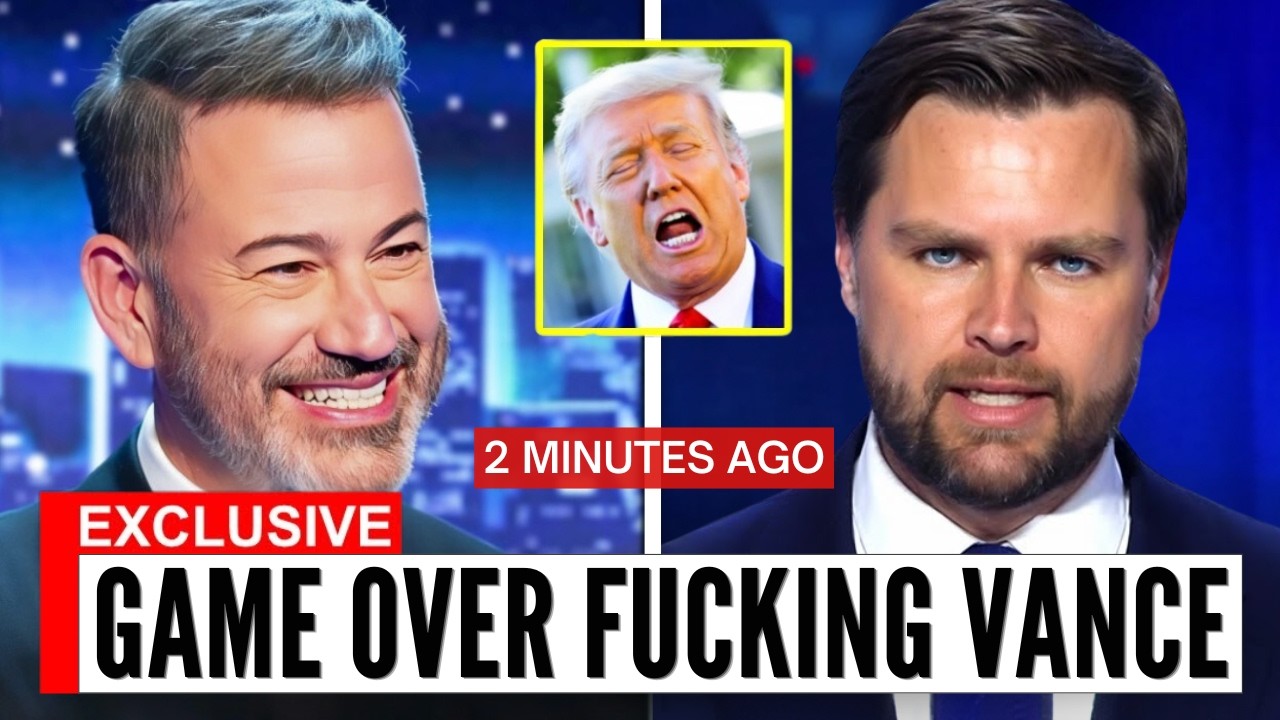
Senator Vance, who has built much of his public persona around advocacy for working-class voters in the Midwest, entered the studio with visible confidence. Early portions of the conversation followed familiar patterns: criticism of media narratives, references to political elites and pointed jabs at coastal institutions. The audience responded with a mix of laughter and murmurs, typical of late-night political interviews where humor and policy often intersect.
The tone shifted when the host introduced a satirical scenario involving hypothetical private communications. While clearly framed as comedic performance rather than verified documentation, the segment placed Vance in a defensive posture. The imagined excerpts portrayed an unflattering contrast between public rhetoric and private sentiment — a device commonly used in political satire to test consistency. The audience reaction noticeably quieted, reflecting the sharper edge of the exchange.
At one point, the show incorporated a staged “phone call” element — another traditional late-night trope — heightening the theatrical tension. The bit, which referenced former President Donald Trump in a dramatized format, was structured for humor rather than factual reporting. Nonetheless, the imagery resonated with viewers already accustomed to high-intensity political media cycles. Late-night programs have increasingly relied on these dramatic constructions to comment on public figures, often walking a narrow line between parody and provocation.
By the conclusion of the segment, Vance appeared visibly frustrated. He exited without further elaboration, and the host moved quickly to commercial break. No official statement was released by Vance’s office immediately following the broadcast. Supporters later characterized the exchange as an ambush, while critics described it as a revealing stress test of composure under scrutiny.
Political communication scholars note that late-night television has evolved into a powerful venue for shaping narratives. What was once primarily comedic relief now functions as a parallel arena for political engagement, particularly among younger voters. According to media analysts, viral moments from these shows often reach larger audiences online than the original television broadcast itself. The impact is less about policy substance and more about perceived authenticity, tone and reaction.
Within 24 hours, the clip accumulated millions of views across platforms. Commentators debated whether the segment was a fair critique, an example of partisan entertainment or simply effective television. While no evidence supports the fictional elements presented during the show, the broader conversation centered on trust — specifically, whether public figures project consistency between private belief and public messaging.
For political figures navigating the modern media environment, such appearances carry calculated risk. Engaging in unscripted or semi-scripted exchanges can humanize candidates, but it can also expose them to moments that opponents amplify. Strategists from both parties increasingly weigh the benefits of reaching nontraditional audiences against the possibility of viral missteps.
Ultimately, the episode underscores the evolving relationship between politics and performance. In an era when campaign messaging competes with social media algorithms and entertainment programming, perception can shift quickly. Whether the interview alters voter sentiment remains uncertain. What is clear is that late-night television continues to function as a cultural amplifier, where humor, narrative and political identity collide — often in ways that reverberate far beyond the studio walls.






