The American political landscape was shaken this week by an explosive claim from Republican Congressman Thomas Massie, who publicly suggested that former President Donald Trump had crossed a line from political retaliation into personal endangerment.
Massie’s allegation centers on what he describes as escalating threats following his outspoken demands for transparency related to the long-suppressed case of Jeffrey Epstein, whose network of elite connections continues to haunt American institutions.
In a stark social media post, Massie implied that Trump’s attacks were no longer metaphorical, warning that if anything “mysterious” were to happen to him, responsibility should be examined beyond coincidence.

The post immediately ignited alarm across Washington, where political rhetoric has increasingly blurred into language that critics argue can inspire real-world violence.
According to Massie, the hostility intensified after he questioned why Epstein-related files remain only partially released, with key names redacted or delayed under claims of procedural privilege.
Trump, meanwhile, has reportedly supported well-funded efforts to undermine Massie’s political career, signaling that the dispute is not merely ideological but deeply personal.
Observers note that Trump’s history of publicly targeting critics has often been followed by waves of harassment directed at those individuals by his most aggressive supporters.
What makes this confrontation particularly volatile is its connection to Epstein, a figure whose crimes involved systemic abuse and whose protection by powerful people remains one of the most disturbing scandals in modern American history.
Despite Epstein’s death in federal custody in 2019, questions surrounding his associates, enablers, and beneficiaries have never been fully resolved.
Massie has repeatedly argued that justice cannot be achieved without full transparency, including the release of unredacted prosecutorial and investigative documents.
He has also criticized the Department of Justice for what he describes as selective disclosure that shields influential figures while offering symbolic gestures to the public.
At the center of Massie’s critique is Attorney General
Pam Bondi, whose recent congressional testimony drew backlash from lawmakers and survivors alike.
During that hearing, Bondi was accused of deflecting serious questions about Epstein-related accountability by focusing instead on economic talking points.
Critics argue that this approach demonstrated a troubling disconnect between the gravity of sexual exploitation crimes and the political priorities being emphasized.
Massie publicly expressed disappointment with what he characterized as a lack of empathy, particularly after observers noted Bondi avoiding eye contact with Epstein survivors present in the room.
For advocates of transparency, this moment symbolized a broader institutional failure to confront uncomfortable truths.
The controversy intensified further when discussions emerged about unredacted names potentially implicated in Epstein’s orbit, raising concerns about why those names had not been disclosed sooner.
Massie suggested that certain individuals within the legal and political establishment were given advance knowledge of which names might surface.
One such figure referenced in public discussion was Todd Blanche, highlighting how deeply the issue penetrates elite legal circles.

These revelations have fueled suspicion that the justice system is operating with two sets of rules: one for ordinary citizens and another for the powerful.
Within Congress, Massie’s warnings have reportedly resonated with lawmakers who privately admit to feeling intimidated by the current political climate.
Several members have expressed concern that extreme rhetoric can create an atmosphere where violence becomes not only imaginable but normalized.
Political scientists warn that when leaders frame opponents as existential threats, supporters may feel morally justified in taking extreme action.
Massie, while attempting to project calm in public appearances, has acknowledged that the underlying tension is impossible to ignore.
He has continued his daily routines, but with an unmistakable undertone of vigilance that reflects broader fears within democratic institutions.
The debate over Epstein files is not merely about past crimes, but about present accountability and future deterrence.
Survivor advocates argue that withholding information perpetuates trauma and signals that justice is negotiable when wealth and influence are involved.
Legislative efforts such as the proposed Epstein Files Transparency Act aim to address these concerns by limiting the government’s ability to invoke deliberative process privilege.
Supporters of the act argue that prosecutorial discretion should not be used as a shield for embarrassment or complicity.
Opponents, however, claim that full disclosure could compromise ongoing investigations or unfairly implicate individuals without due process.
This tension between transparency and legal caution lies at the heart of the current dispute.
Meanwhile, Trump has continued to deny any wrongdoing or improper connection to Epstein, dismissing renewed scrutiny as politically motivated.
Yet public skepticism remains high, particularly given past reporting that documented Epstein’s access to influential social and political circles.
The normalization of casual associations with Epstein by wealthy elites has drawn renewed condemnation from journalists and activists.
Language used by billionaires and power brokers to minimize those relationships has been criticized as evasive and morally hollow.
For many Americans, the question is no longer whether Epstein was protected, but by whom, and at what cost.
Massie’s allegations have therefore struck a nerve far beyond partisan lines.
They reflect a growing frustration with institutions perceived as unwilling or unable to police themselves.
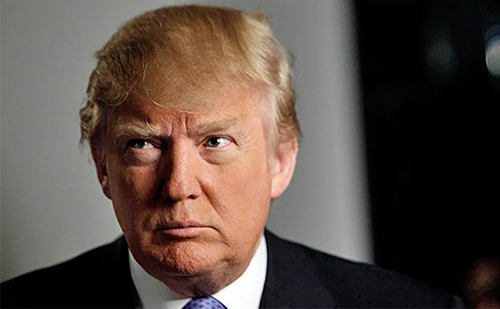
Whether Trump’s rhetoric constitutes a credible threat is ultimately a matter for law enforcement to assess.
However, the broader implications are unmistakable.
When elected officials feel compelled to publicly warn for their own safety, it signals a profound breakdown in political norms.
As the Epstein controversy resurfaces, it exposes unresolved fractures in America’s justice system.
It also raises uncomfortable questions about power, accountability, and the price of speaking out.
For now, Massie’s words hang heavily over Washington, a reminder that transparency, once delayed too long, can become dangerous in itself.
And in a democracy already strained by mistrust, the cost of silence may prove even higher.






