🔥 BREAKING: A SHARP LATE-NIGHT MONOLOGUE SHIFTS THE TONE AS Jimmy Kimmel TAKES AIM AT A RISING POLITICAL FIGURE LIVE ON TV — THE REACTION QUICKLY IGNITES ONLINE BUZZ ⚡
On a recent weeknight, the comedian Jimmy Kimmel devoted a segment of Jimmy Kimmel Live! not to punchlines about personalities, but to what he described as a pattern in modern political communication.
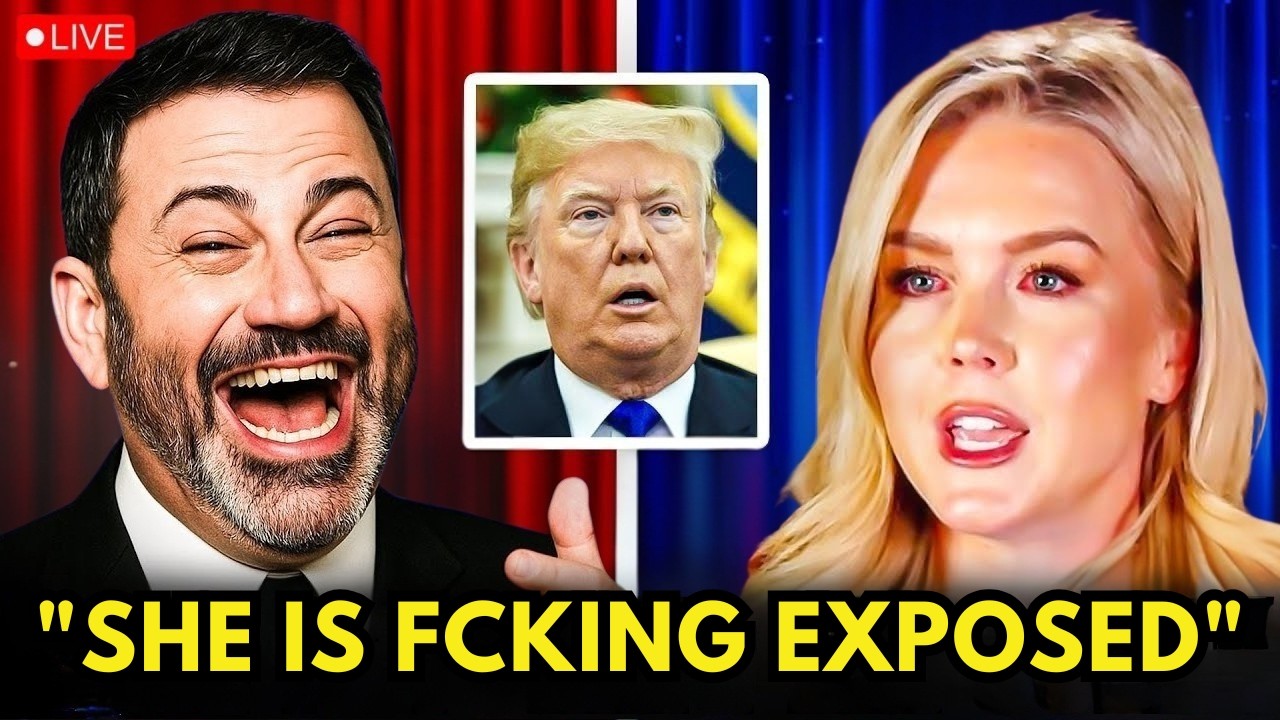
The focus of his monologue was Karoline Leavitt, a press secretary for former President Donald Trump, and the role she plays at the podium. Rather than mocking her directly, Mr. Kimmel framed the segment as an examination of how questions from reporters are answered — or, he suggested, redirected.
Press secretaries, he reminded viewers, are meant to serve as intermediaries between government officials and the public. Their job is to clarify policy, provide context and respond to scrutiny. Yet, in a series of clips from televised briefings, Mr. Kimmel argued that straightforward inquiries were frequently met with reframing, repetition of talking points or criticism of the question itself.
To illustrate his point, he introduced what he called a simple test: three columns labeled “Question,” “Response” and “Verifiable Detail.” After replaying a reporter’s query, he read the official reply and then asked what concrete information had been provided — dates, figures, direct explanations. Often, he suggested, the answers sounded definitive but lacked specifics.
The studio audience’s reaction shifted from laughter to a quieter attentiveness. The humor, while present, was secondary to the structure of the critique. Mr. Kimmel avoided personal insults, instead highlighting what he described as a broader “fog routine” — a sequence in which difficult questions are reframed as partisan attacks, replaced with slogans and followed by accusations of media bias.
The segment aired amid a long-running tension between Mr. Trump and late-night hosts. The former president has frequently criticized Mr. Kimmel, questioning his ratings and talent in social media posts. In one recent message, Mr. Trump called him “a man with no talent” and urged network executives to remove him from the air. Mr. Kimmel responded lightly, joking that he had seen the post and then gone downstairs to make breakfast for his children.
Yet beneath the exchange of barbs lies a more substantive dispute about the role of media and satire in democratic life. Mr. Kimmel’s monologue suggested that the issue was not loyalty or ideology, but clarity. Strong arguments, he said, should welcome scrutiny because transparency strengthens trust.
Political communication scholars note that press briefings have increasingly become arenas of strategic messaging. “There’s a shift from answering the specific question to controlling the broader narrative,” said one professor of media studies. “That can mean emphasizing themes, redirecting attention or challenging the premise of the question.”
Such tactics are not unique to any one administration. Democratic and Republican officials alike have sought to stay on message. But in an era of fragmented media and viral clips, the contrast between question and answer can be replayed, dissected and shared widely.

In Mr. Kimmel’s segment, the repetition itself became the point. Replay the question. Replay the response. Notice what is missing. The exercise transformed what might have been a conventional late-night critique into something closer to a civics lesson, suggesting that citizens could apply the same method in their own media consumption.
The reaction extended beyond the studio. Clips of the segment circulated online, drawing both praise and criticism. Supporters argued that the format provided a practical way to assess public statements without escalating into partisan shouting. Critics countered that late-night comedy inevitably carries bias, even when presented in a measured tone.
Mr. Trump responded publicly, dismissing the host as irrelevant while praising Ms. Leavitt as loyal and effective. The reaction, some observers noted, had the paradoxical effect of drawing additional attention to the segment. Viewers returned to watch the examples cited and to evaluate the claims for themselves.
Mr. Kimmel addressed the controversy on the following night’s broadcast, reiterating that his concern was not personal conflict but avoidance. Democracy, he said, depends on persistent questioning. Public officials are not owed applause; they owe explanations.
The episode underscores how late-night television has evolved into a forum for political commentary that blends humor with analysis. Where previous generations of hosts relied primarily on punchlines, contemporary figures often present annotated clips, graphics and structured arguments. The result can blur the boundary between satire and media criticism.
Whether such segments meaningfully alter public understanding is difficult to measure. But they do reflect a growing appetite for tools that help viewers navigate political rhetoric. In an information environment saturated with claims and counterclaims, even a simple chart can resonate.
Ultimately, the exchange between Mr. Kimmel and Mr. Trump highlights a familiar dynamic: a politician who views media as adversarial and a comedian who sees scrutiny as part of civic duty. Between them stands the press secretary, tasked with translating policy into public language while defending the administration’s narrative.
The broader question raised by the monologue is less about any individual and more about expectations. In a democracy, should communication aim primarily to persuade, or to inform? As viewers replay clips and compare words with details, they are engaging in a small but significant act of accountability — one that, for better or worse, now unfolds as often on late-night stages as in official briefing rooms.






