Trump LOSES It After Jimmy Kimmel Destroys Don Jr. on Live TV
Jimmy Kimmel’s Relentless Roast of Donald Trump Jr.
Late night television has never been gentle with political families. But in recent months, Jimmy Kimmel has elevated the art of the roast to a new level — and his favorite recurring target appears to be Donald Trump Jr..
What began as occasional jabs has evolved into something far more systematic. On Jimmy Kimmel Live!, Don Jr. has become less of a political figure and more of a punchline — a character in a long-running comedy narrative that paints him as privileged, performative, and perpetually out of his depth.
And after a recent monologue, the internet erupted with one question: did Trump finally lose it over Kimmel’s latest takedown?
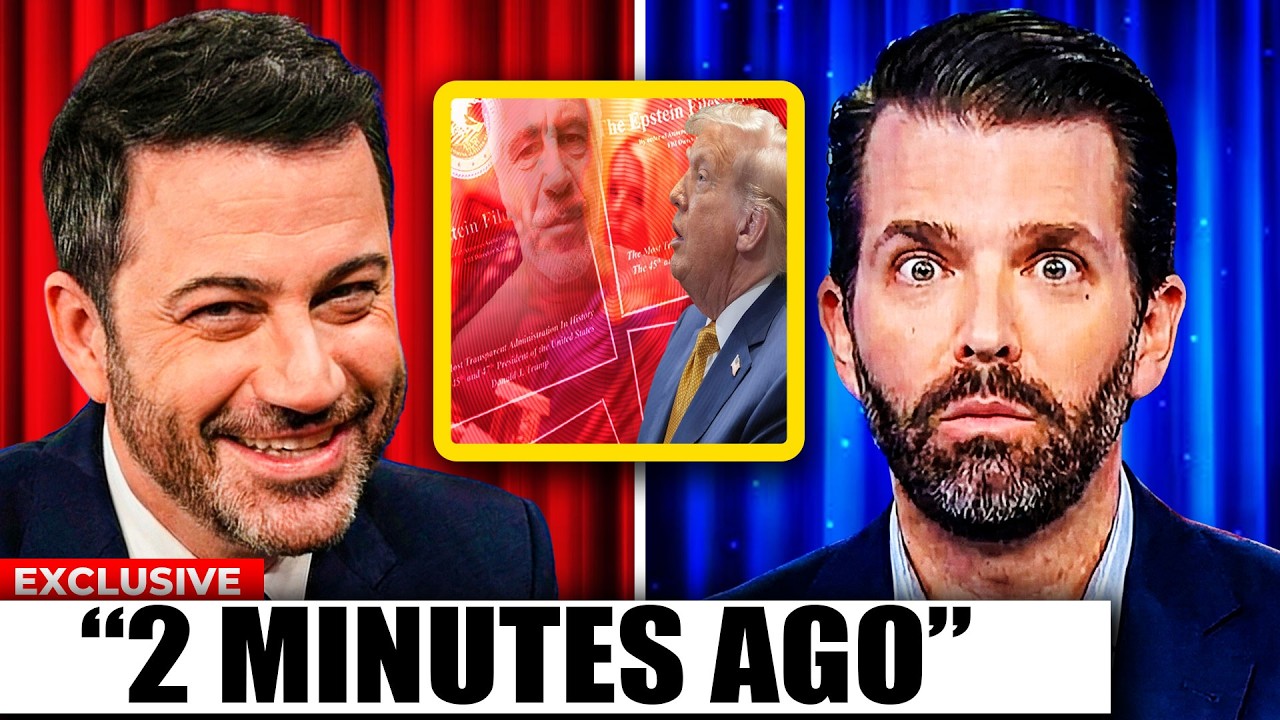
The “Most Disappointing Son” Line That Stung
Kimmel’s sharpest blow came during election coverage, when he delivered what many viewers called a “kill shot” joke. Referring to Don Jr., Kimmel quipped that no one was more upset than “Trump’s most disappointing son.”
The audience roared.
It wasn’t just the insult — it was the framing. By implying that even within the Trump dynasty Don Jr. struggles for validation, Kimmel turned a political surrogate into a psychological case study.
Comedy works best when it blends exaggeration with a hint of truth. And critics argue that Kimmel’s joke resonated precisely because it tapped into a widely discussed public dynamic between Don Jr. and his father, Donald Trump.
Courtrooms, Protests, and Punchlines
The roast intensified during coverage of court appearances involving the Trump Organization. Protesters outside chanted “crime family,” a phrase Kimmel quickly adopted in his monologue.
He mocked Don Jr.’s courtroom demeanor, appearance, and testimony — even joking that he “should have worn makeup.”
Late night comedy has always leaned into spectacle, and for Kimmel, the Trump family provides a steady stream of it. Courtroom drama, social media outbursts, controversial speeches — each moment becomes fresh material.
Rather than reacting defensively, Don Jr. often doubles down publicly. Ironically, that response pattern appears to give Kimmel even more to work with.

The Cracker Barrel Controversy
Perhaps the most surreal chapter involved a redesign of the Cracker Barrel restaurant logo. After Trump posted outrage online — including an AI-generated clip of himself dancing with the mascot — Don Jr. chimed in on social media with “WTF is wrong with Cracker Barrel?”
Kimmel seized the moment.
He described Don Jr. as a “New York prep school nepo baby cosplay grits gobbler,” accusing him of pretending to be a blue-collar everyman despite growing up in a Manhattan penthouse.
The line wasn’t just funny; it was strategic. It targeted what critics see as the core contradiction of Don Jr.’s public persona — a wealthy heir presenting himself as a grassroots populist.
Kimmel framed it as performance politics. Viewers framed it as comedy gold.
Trump’s Speeches Fuel the Fire
The late night segments didn’t stop at Don Jr. Kimmel also highlighted what he described as bizarre moments from Trump’s recent speeches, including remarks at a White House Hanukkah event where Trump referenced building a $400 million ballroom and made exaggerated sound effects to describe military operations.
Kimmel juxtaposed those moments with economic concerns like rising unemployment and market volatility, suggesting a disconnect between political messaging and everyday realities.
The sharper the contrast, the louder the laughter.
Comedy as Accountability?
Supporters of Kimmel argue that late night comedy now plays a form of cultural accountability. By spotlighting contradictions and perceived hypocrisy, hosts translate complex political narratives into digestible satire.
Critics counter that such coverage can deepen partisan divides and reduce serious political debate to entertainment.
Regardless of perspective, the ratings and viral clips suggest that audiences are engaged.
Don Jr., in particular, has become a recurring character in this evolving political comedy landscape.
The “Don Jr. Gold” Moment
Another memorable segment involved promotion of a gold investment brand associated with Don Jr. Kimmel mocked the branding, joking that “it ain’t real gold unless it’s Don Jr. Gold.”
The ridicule underscored what Kimmel portrays as commercialization of political influence — a theme he frequently revisits when discussing the Trump family.
Every product plug, every social media post, every public appearance becomes potential setup for another punchline.
Why This Roast Feels Different
Political families have long endured satire. From the Bush twins to Chelsea Clinton, late night hosts have tested boundaries before.
But the Trump era — spanning presidency, legal battles, campaign rallies, and online spectacle — provides unusually continuous material.
What makes the Kimmel–Don Jr. dynamic unique is its persistence. This isn’t a one-night viral moment. It’s an ongoing storyline.
Each time Don Jr. responds publicly, it extends the narrative arc.
Each time Trump delivers a speech that sparks controversy, Kimmel incorporates it into the broader comedic universe.
Does Trump Actually “Lose It”?
While there is no confirmed direct response from Trump specifically targeting Kimmel over the latest jokes, the broader Trump media strategy often involves counterattacking critics and entertainers alike.
Historically, Trump has responded strongly to perceived media mockery. That pattern fuels speculation every time a particularly brutal joke goes viral.
Even without a public meltdown, the optics matter. Millions watch the clips. Millions share them. In the social media age, perception travels faster than rebuttal.
And perception is precisely what comedy influences most effectively.
The Bigger Picture: Politics Meets Entertainment
The intersection of politics and entertainment has never been tighter. Late night hosts now shape political narratives as much as cable news panels.
For Trump supporters, Kimmel’s monologues represent partisan ridicule.
For critics of Trump, they represent catharsis.
For neutral observers, they illustrate how modern political discourse increasingly unfolds through humor.
What is undeniable is that Donald Trump Jr. has become a fixture in that landscape.
Conclusion: A Comedy Feud That Keeps Giving
Jimmy Kimmel’s takedowns of Don Jr. are not isolated incidents. They are part of a sustained comedic campaign that blends satire, cultural critique, and viral spectacle.
Whether viewed as fair game or excessive mockery, the impact is clear: Don Jr. remains a central figure in late night punchlines.
And as long as speeches, tweets, courtroom appearances, and viral controversies continue, the material will too.
In today’s media environment, sometimes the sharpest political weapon isn’t a policy paper — it’s a well-timed joke delivered live to millions.






