Donald Trump’s obsession with attention backfired spectacularly when late-night television turned his own words into live ammunition. What began as a routine Oscars monologue quickly escalated into a viral moment after Jimmy Kimmel read Trump’s Truth Social rant word for word on the Oscars stage, ending with the now-infamous line, “Isn’t it past your jail time?” The audience reaction was instant, thunderous, and global, transforming a presidential outburst into a pop-culture spectacle in real time.

The setting made the moment unavoidable. Broadcast live from the Dolby Theatre during the Academy Awards, Kimmel flipped the power dynamic by using Trump’s own post as a punchline, while cameras captured Hollywood’s biggest stars laughing without restraint. Within hours, headlines across major outlets framed the episode not as a joke, but as a rare reversal: a sitting president roasted live on the world’s biggest entertainment stage, unable to control the narrative he started.
Back on Jimmy Kimmel Live!, Kimmel doubled down. He held up Trump’s post like a trophy, calling it his “real Oscar,” and mocked the White House’s defensive press statement that followed. Rather than outrage, the tone was precise ridicule, exposing how thin-skinned reactions and exaggerated claims of “mandates” only amplified the damage. Ratings spiked, clips circulated nonstop, and Trump’s attempts to dismiss the moment only kept it alive.
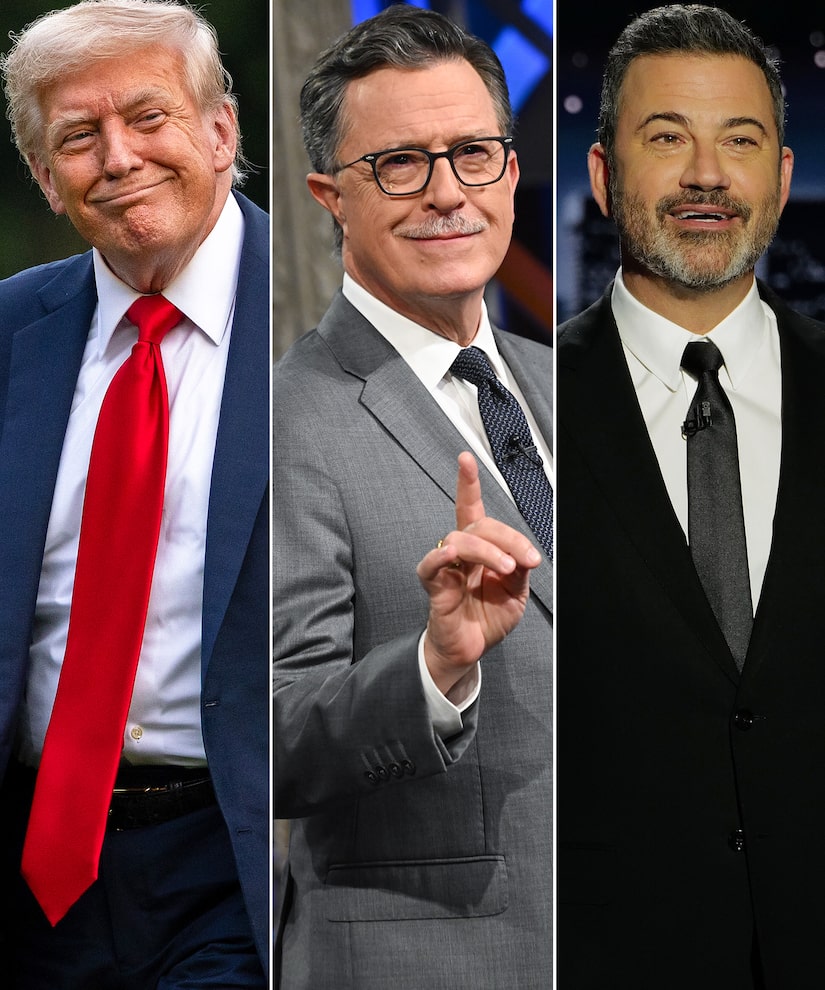
The pattern didn’t stop there. As images surfaced of construction tearing into the White House amid Trump’s controversial ballroom project, Kimmel used visual proof to contrast past promises with present reality. The jokes landed harder because they were anchored in footage and quotes, turning denial into slapstick and making image management impossible. Comedy, in this case, functioned as real-time fact-checking with a laugh track.
Then the spotlight shifted to Stephen Colbert on The Late Show with Stephen Colbert, where Colbert revived one of late night’s most infamous confrontations with Trump. Revisiting his blistering monologue that once drew FCC complaints, Colbert reminded audiences that sharp satire survived scrutiny and even thrived. The line that nearly ended his show ultimately defined it, proving that humor framed as commentary—not accusation—remains protected and powerful.
Together, Kimmel and Colbert delivered something sharper than a roast: exposure. By letting Trump speak for himself and then dissecting the obsession with image, approval, and grievance, late-night television turned presidential self-importance into public parody. The result was unmistakable—Trump didn’t lose control because of comedians; he lost it because comedy held up a mirror, and millions watched him react.






