The Counterprogramming Presidency
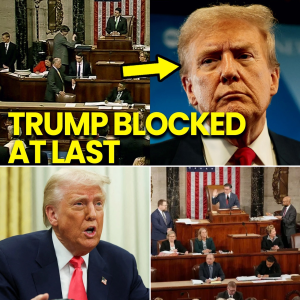
In American politics, spectacle has always had a place. But rarely has it felt as central to a presidency as it does now. For Donald Trump, the State of the Union address — historically a moment for presidents to present a shared national agenda — has increasingly resembled something else: a televised assertion of dominance, a carefully staged reaffirmation of political centrality.
This year, however, a different kind of spectacle is taking shape alongside it.
A growing group of lawmakers has signaled that they may not attend Mr. Trump’s address, with early estimates suggesting that dozens could boycott the event. In parallel, organizers are planning what they call a “People’s State of the Union,” a counterprogramming effort featuring lawmakers and citizens who say they have been directly affected by Trump-era policies. The message is not subtle. If the president intends to frame the nation’s condition as a story of triumph, others intend to offer a rebuttal grounded in lived experience.
At first glance, such gestures may appear symbolic. Boycotts of presidential addresses are not unprecedented. Yet the emerging dynamic is notable not for its theatricality but for what it suggests about authority. The modern State of the Union operates as a ritual of inevitability: the president speaks, members of Congress attend, applause rises and falls in predictable rhythms. Participation itself reinforces the legitimacy of the performance.
Refusal interrupts that ritual.
The protest is rooted in more than partisan disagreement. Critics describe a governing style that they see as rooted in dominance rather than deliberation. They point to rhetoric surrounding homeland security that emphasizes force and secrecy over transparency, and to proposals that would expand executive discretion in areas ranging from immigration enforcement to foreign military engagement. The debate, in their telling, is not simply about policy outcomes but about democratic norms: visibility, oversight and constitutional limits.
In recent weeks, some members of Congress — including lawmakers not typically aligned — have spoken about the need to reassert legislative authority over decisions of war and peace. The conversation has been sharpened by reports of escalating tensions abroad and speculation about potential military strikes. The constitutional question is straightforward: Should a president be able to initiate major conflict without explicit congressional approval? For many lawmakers, the answer is no, regardless of party.
At home, economic anxiety has become another flashpoint. While administration officials cite positive macroeconomic indicators, including job growth and market performance, many households describe a more strained reality. Rising rents, medical costs and utility bills have fueled a sense that official narratives do not align with lived experience. When voters speak about affordability as their central concern, they are not invoking ideology but arithmetic.
This disconnect is precisely what the alternative programming seeks to spotlight. Organizers say the counterevent will feature federal workers who lost positions, immigrants navigating shifting enforcement priorities and families grappling with health care expenses. The intent is to challenge the premise that the president’s speech constitutes the definitive account of national conditions. Instead of “Trump speaks, America listens,” the countermessage is “America speaks.”
The strategy carries risks. In an era saturated with competing streams of information, fragmentation can deepen polarization. Yet it also reflects a broader shift in political communication. Presidents once held near-monopolies on national attention during major addresses. Today, digital platforms and partisan media ecosystems make simultaneous narratives inevitable.
For Mr. Trump, whose political identity has long been intertwined with media mastery, this diffusion of attention presents a unique challenge. His critics argue that his power relies not only on electoral victories but on commanding the spotlight — shaping the frame within which events are interpreted. Counterprogramming, by design, dilutes that frame.
Layered atop these disputes are lingering questions about transparency, particularly surrounding high-profile investigations and the handling of sensitive documents. Regardless of specific allegations, public skepticism has grown around the perception of selective disclosure. When political movements call for transparency in one context but appear hesitant in another, contradictions become difficult to ignore.
Meanwhile, the president’s public focus on ambitious construction projects and symbolic expansions has drawn criticism from those who see such priorities as disconnected from everyday economic strain. To supporters, these projects represent confidence and forward momentum. To detractors, they symbolize misplaced emphasis in a moment of household vulnerability.
The result is a presidency defined as much by counterperformance as by performance itself. The State of the Union, once a largely uncontested civic ritual, now functions as a contested narrative space. Participation is no longer assumed. Legitimacy is debated in real time.
What emerges from this moment is not simply a clash between a president and his opponents, but a broader question about the nature of democratic accountability. Is national reality defined from a podium, or constructed collectively through public scrutiny and debate? Can dissent coexist with unity, or does refusal signal fracture?
The answers will not be settled in a single evening’s broadcast. But the existence of parallel events underscores a central truth: political authority in the United States remains contingent. It depends not only on elections, but on the willingness of citizens and institutions to engage, affirm or withhold consent.
The health of the union, in the end, may be measured less by the applause inside the chamber than by the vibrancy of the arguments outside it.