Jack Smith Defends His Trump Investigations in Closed-Door Congressional Testimony
Washington — Jack Smith, the former special counsel who led the federal prosecutions of President Donald J. Trump, appeared before the Republican-led House Judiciary Committee on Wednesday for an eight-hour closed-door deposition, vigorously defending the integrity and findings of his now-dismissed investigations.
In portions of his opening statement obtained by multiple news organizations, Mr. Smith asserted that his team had developed “proof beyond a reasonable doubt” that Mr. Trump engaged in a criminal scheme to overturn the 2020 presidential election results and prevent the lawful transfer of power. He described evidence showing that, amid the violence at the Capitol on Jan. 6, 2021, Mr. Trump and his associates made phone calls to members of Congress, urging further delays in certifying the election — calls that investigators traced through billing records.
Mr. Smith also addressed the separate case involving classified documents, stating that prosecutors uncovered “powerful evidence” that Mr. Trump willfully retained highly sensitive materials after leaving office, storing them insecurely at his Mar-a-Lago resort in Florida, including in a bathroom and ballroom accessible during events. He accused Mr. Trump of repeatedly obstructing justice to conceal the documents.
Emphasizing the apolitical nature of his work, Mr. Smith told lawmakers that he made prosecutorial decisions “without regard to President Trump’s political association, activities, beliefs, or candidacy in the 2024 presidential election.” He added that, presented with the same facts, he would have pursued charges against a former president regardless of party affiliation.
The testimony came in response to a subpoena from the committee chairman, Representative Jim Jordan, Republican of Ohio, as part of a broader Republican inquiry into what Mr. Jordan has described as potential abuses in the Biden-era Justice Department. Mr. Smith had previously offered to testify publicly, an overture rejected by the committee, prompting criticism from Democrats that the closed session was intended to control the narrative.

Representative Jamie Raskin of Maryland, the panel’s ranking Democrat, emerged from the deposition praising Mr. Smith as a “sensational and honorable public servant” who spent hours “schooling the committee on the professional responsibilities and ethical duties of a prosecutor.” Mr. Raskin sarcastically noted that Mr. Jordan had made “an excellent decision” in keeping the hearing private, adding that a public session “would have been absolutely devastating to the president and all the president’s men involved in the activities of January 6th.”
Mr. Raskin and other Democrats renewed calls for the release of the full transcript and the sealed second volume of Mr. Smith’s report on the classified documents case, arguing that previous special counsel reports — including those by Robert S. Mueller III and Robert Hur — were made public. They contended that withholding the material deviates from precedent and deprives Americans of transparency.
Mr. Smith’s appearance carried personal risks. President Trump has repeatedly called for his prosecution, labeling him derisively and vowing retribution against perceived adversaries from his first term. Constraints on Mr. Smith’s testimony — including grand jury secrecy rules, Justice Department policies and a federal judge’s order sealing parts of his report — limited what he could disclose in detail.
Republican lawmakers offered few public comments immediately after the session, though some described it as professional. The committee has previously referred one of Mr. Smith’s deputies for potential obstruction in a related inquiry, and it continues to seek interviews with additional former prosecutors involved in obtaining phone records of Republican members of Congress during the election interference probe.
Mr. Smith defended that step as necessary, explaining that the records — which revealed patterns of communication but not content — followed evidence of coordination tied directly to Mr. Trump’s actions. “President Trump did,” he said when asked why certain lawmakers came under scrutiny, underscoring that the investigation traced contacts initiated by the former president and his circle.
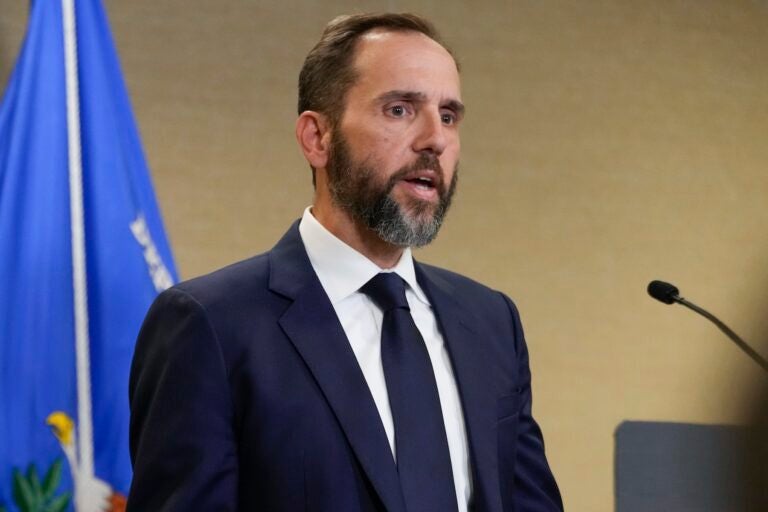
The deposition marks a pivotal moment in the lingering fallout from the Trump investigations, which were dropped after his 2024 election victory due to a longstanding Justice Department policy against prosecuting a sitting president. While the cases never reached trial, Mr. Smith’s assertions revive questions about accountability for the events surrounding Jan. 6 and the handling of national security secrets.
As Congress wraps up its work before the holiday recess, the fate of Mr. Smith’s full findings remains uncertain. Democrats insist the public deserves access; Republicans appear focused on scrutinizing the prosecutors themselves. In a polarized Washington, the testimony served as a reminder of unresolved tensions over the rule of law and political retribution.






