Congress Weighs Removal as Trump Confronts Fresh Test of Power
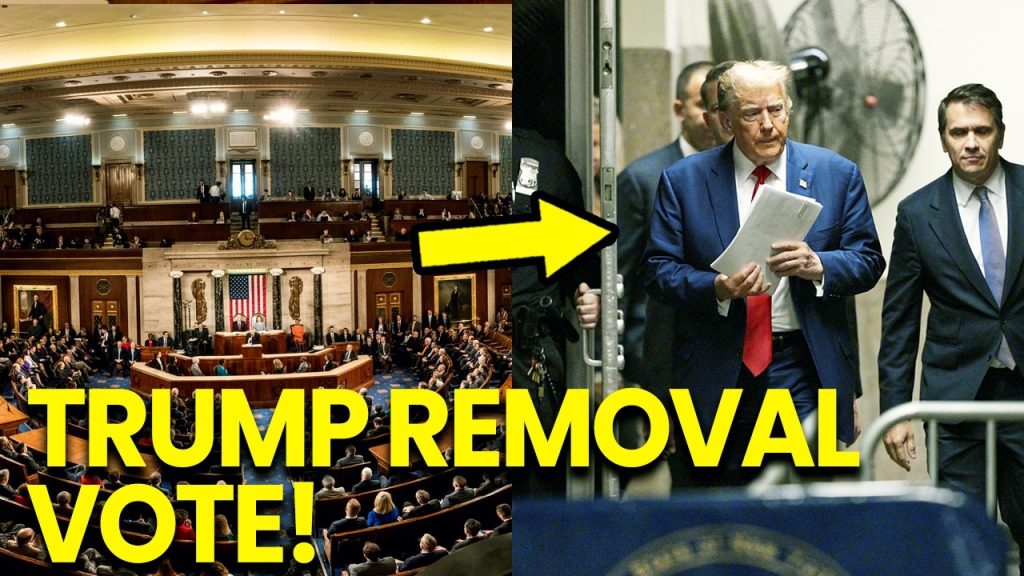
WASHINGTON — A procedural vote in Congress this week thrust President Donald Trump’s second term into another period of uncertainty, as lawmakers debated impeachment resolutions and the scope of executive authority in a session that was as much about constitutional boundaries as it was about partisan politics.
The immediate trigger was a privileged resolution introduced in the House, one that allows sponsors to force consideration on the floor without the assent of leadership. The measure, House Resolution 353, outlines seven articles of impeachment, including obstruction of justice, abuse of trade powers and usurpation of congressional spending authority. Additional resolutions, filed separately, focus on allegations of abuse of power and incitement.
Republican leaders have dismissed the effort as premature and politically motivated. Democrats, while acknowledging the steep odds of conviction in a divided Congress, argue that the Constitution compels them to articulate their objections formally and place members on the record.
“This is not a criminal trial,” one Democratic lawmaker said during floor debate. “It is a constitutional inquiry into whether the president’s conduct meets the standard of high crimes and misdemeanors.” Republicans countered that the charges recycle long-standing grievances and risk trivializing impeachment by deploying it as a routine political weapon.
The House vote, regardless of outcome, underscores a broader reality: Mr. Trump’s presidency is again operating under the shadow of removal. He was impeached twice during his first term and acquitted by the Senate both times. Now, in his second term, formal proceedings — even if largely symbolic at this stage — have revived the question of how far Congress is willing to go in challenging executive authority.
At the center of the latest resolution are familiar disputes. One article accuses the president of obstructing congressional oversight by instructing administration officials not to comply with subpoenas. Another contends that his aggressive use of tariffs exceeds statutory authority and intrudes on Congress’s constitutional role in regulating trade. Still another alleges that redirecting congressionally appropriated funds violates the separation of powers.
Democrats also argue that the president has retaliated against critics in ways that implicate First Amendment protections and that his use of the pardon power has, at times, shielded political allies. A final article employs sweeping language, accusing Mr. Trump of conduct amounting to “tyranny” — a term Republicans describe as inflammatory and imprecise.
The White House has rejected the accusations in their entirety. In statements and social media posts, Mr. Trump characterized the effort as an attempt to relitigate past battles and distract from legislative priorities. Allies within the party framed the vote as evidence that Democrats remain focused on removal rather than governance.
Complicating matters is a parallel debate over election law. As the House considered impeachment language, Senate Republicans advanced the White House-backed Save America Act, legislation that would require proof of citizenship to register to vote and mandate photo identification nationwide, including for mail ballots. Supporters describe the bill as a commonsense security measure ahead of the midterms. Critics warn that implementing new requirements so close to an election could create administrative strain and disenfranchise eligible voters.
The confluence of these fights — over impeachment, over election procedures, over executive discretion — has intensified the sense of institutional strain in Washington. Yet constitutional scholars caution against conflating procedural action with predetermined outcomes. The House possesses the authority to impeach by a simple majority. Removal, however, requires a two-thirds vote in the Senate, a threshold that remains formidable.
Some activists have gone further, publicly invoking the 25th Amendment, which allows the vice president and a majority of the cabinet to declare a president unable to discharge the duties of the office. Such a step would be extraordinary and, by most accounts, politically implausible given the loyalty of Mr. Trump’s appointees. Still, the mere discussion reflects the depth of concern among his critics.
For Republican lawmakers, the vote presents a strategic dilemma. In safe districts, standing firmly with the president carries little immediate risk. In competitive areas, however, members must weigh the views of independent voters who may be wary of perpetual institutional conflict. Democratic leaders, for their part, must calculate whether forcing repeated impeachment votes strengthens their case for accountability or risks appearing overzealous.
Beyond Capitol Hill, the episode reverberates in subtler ways. Foreign governments track signals of political stability when negotiating trade agreements or security arrangements. Investors monitor the durability of policy commitments. Even absent removal, the spectacle of another impeachment debate can introduce a degree of uncertainty.
None of that uncertainty, however, guarantees a shift in the balance of power. Mr. Trump has demonstrated an ability to convert legal and political challenges into rallying points for his supporters. Previous impeachment proceedings galvanized his base and reinforced his narrative of grievance. Whether this moment follows a similar trajectory will depend on public opinion, which remains sharply polarized.
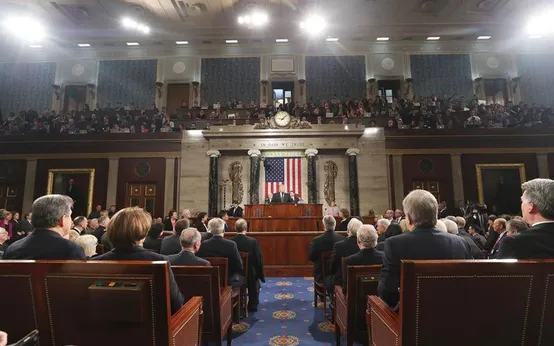
As lawmakers delivered speeches this week, invoking the framers and the Federalist Papers, the chamber was subdued rather than theatrical. The process unfolded through parliamentary motions and recorded votes — the mechanics of a coequal branch exercising its constitutional prerogative.
The immediate outcome may prove less consequential than the precedent. Each time Congress turns to impeachment, it tests the elasticity of that instrument. Each time the president dismisses it as partisan excess, he reinforces the normalization of perpetual conflict between branches.
For now, the administration continues to govern, advancing legislation in the Senate and preparing for the midterm campaign season. Yet the shadow persists. The vote, whatever its tally, signals that the constitutional struggle over the limits of presidential power remains unsettled — and that in Washington, even procedural acts can carry the weight of history.






