🔥 BREAKING: TRUMP PUSHES BACK After Late-Night Clash With JIMMY KIMMEL — STUDIO MOMENT SPARKS MASSIVE ONLINE REACTION ⚡
In recent weeks, a series of viral videos have claimed to show a dramatic on-air confrontation between Jimmy Kimmel and White House press secretary Karoline Leavitt — a clash described in bold headlines as an “epic showdown” in which Ms. Leavitt was allegedly “kicked off” the set.
The problem: no such interview ever took place.
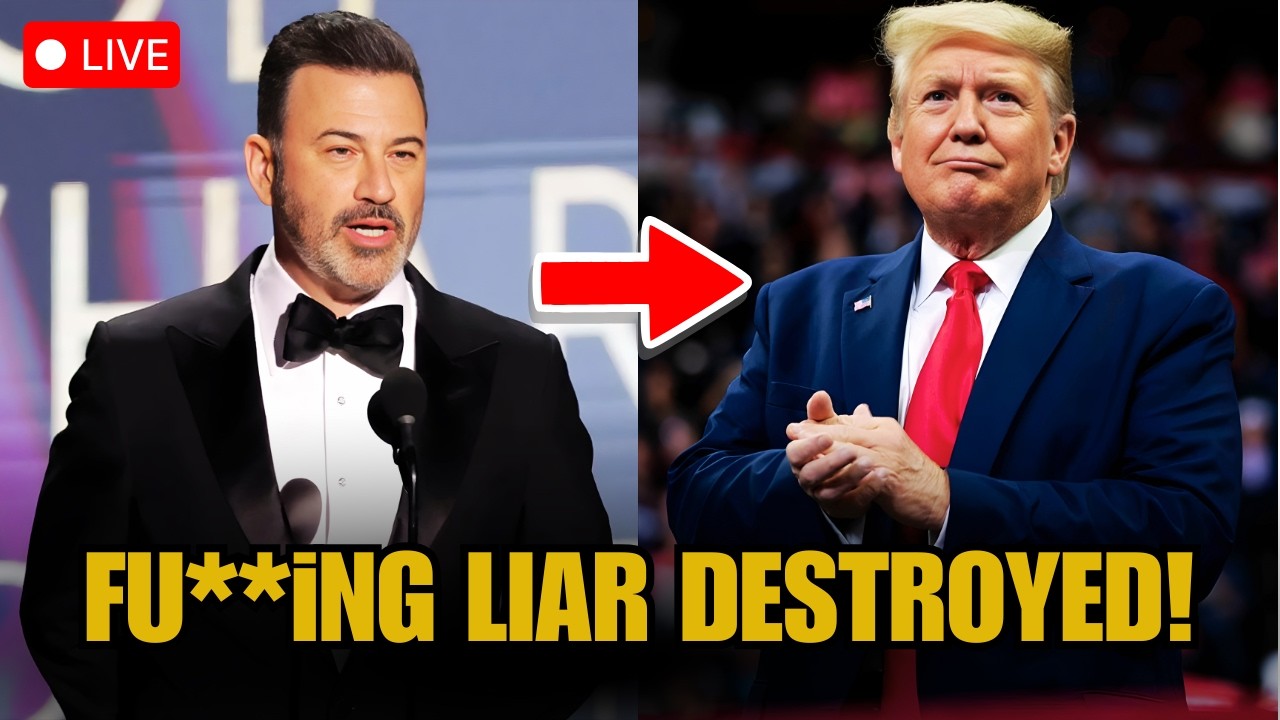
The fabricated segments, which began circulating widely in April, amassed tens of thousands — and in some cases hundreds of thousands — of views across YouTube, TikTok and Facebook. Thumbnails depicted Mr. Kimmel and Ms. Leavitt seated across from one another in a studio setting, their expressions frozen in apparent mid-argument. Titles promised fireworks. Narrators described a heated exchange in which Mr. Kimmel supposedly pressed Ms. Leavitt about her defense of President Trump, culminating in her storming off stage.
But there is no record of Ms. Leavitt ever appearing on “Jimmy Kimmel Live.” The show’s official guest logs contain no listing of her name. No footage exists in ABC’s archives. Representatives for the program confirmed that the purported interview did not happen. A White House official dismissed the clips as fabricated.
The rise of the false narrative illustrates how generative artificial intelligence and political polarization are converging to produce highly persuasive — and highly misleading — content.
In many of the videos, the imagery appears plausible at first glance. The lighting matches the warm tones of a late-night studio. The set resembles the familiar backdrop of Mr. Kimmel’s stage. But closer inspection reveals telltale signs of digital manipulation: distorted fingers, overly smooth facial textures and inconsistent shadows. In some frames, Mr. Kimmel’s hand appears to have six fingers; in others, facial features blur unnaturally into the background.
The audio, too, is a composite. Snippets of Mr. Kimmel’s past monologues criticizing Mr. Trump are spliced together with separate clips of Ms. Leavitt speaking at White House briefings. The editing creates the illusion of a direct exchange. In reality, the two individuals never shared the same stage.
Some of the channels distributing the content include disclaimers in their descriptions noting that the material is fictional or “for entertainment purposes only.” Those caveats, however, are often buried beneath sensational headlines and are unlikely to be seen by viewers who encounter the clips through algorithm-driven feeds.
The phenomenon is part of a broader pattern in which political content is repackaged in increasingly theatrical forms. Late-night hosts such as Mr. Kimmel have long criticized Mr. Trump in comedic monologues. Ms. Leavitt, for her part, has defended the administration’s policies in press briefings and television appearances. The fake confrontation exploits existing tensions, stitching together real remarks to simulate a dramatic face-off that never occurred.
Media analysts say such fabrications thrive because they confirm expectations. Supporters of Mr. Trump may be primed to view late-night hosts as hostile; critics may expect combative exchanges between comedians and administration officials. The AI-generated scenario feels believable because it aligns with preexisting narratives.
“This is less about fooling people with something completely implausible,” said one digital media researcher who studies misinformation. “It’s about taking real personalities and real conflicts and rearranging them into a heightened version of what audiences already imagine.”
The timing is notable. The 2024 election cycle intensified scrutiny of online misinformation, and the rapid improvement of generative AI tools has lowered the barrier to creating convincing synthetic media. What once required sophisticated editing software and technical skill can now be produced with widely available platforms.
Lawmakers have proposed legislation aimed at regulating AI-generated political content, though efforts have stalled amid disagreements over free speech protections and enforcement mechanisms. Technology companies, meanwhile, have pledged to label or remove deceptive media, but enforcement remains inconsistent.
For Mr. Kimmel, the fabricated clips add another layer to a long-running feud with Mr. Trump, who has frequently criticized the host and even threatened legal action against media outlets. For Ms. Leavitt, who has become a prominent defender of the administration’s policies, the false narrative places her at the center of a spectacle she did not participate in.
The episode underscores a central challenge of the digital age: the erosion of a shared factual baseline. When high-quality fabrications circulate alongside authentic footage, distinguishing between them requires vigilance — and often time that social media users do not devote to verification.
In this case, a simple check of publicly available guest lists would have revealed the deception. Yet the videos’ reach suggests that many viewers accepted the premise at face value, sharing and commenting before questioning its authenticity.
The fabricated Kimmel-Leavitt showdown may fade from feeds as quickly as it appeared. But the mechanics behind it — the blending of real statements, AI-generated visuals and emotionally charged storytelling — are likely to persist. As political campaigns intensify and digital tools grow more sophisticated, the line between satire, commentary and outright fabrication may become even harder to discern.
For now, one fact remains clear: the explosive late-night clash that millions believed they saw existed only in pixels and imagination.






