When French Fries Become Foreign Policy
It is not often that a side order of French fries carries geopolitical weight. Yet along the 49th parallel, a quiet recalibration of power is unfolding — not over missiles or military alliances, but over frozen potatoes.
For decades, the trade in French fries between Canada and the United States was so seamless it bordered on invisible. Refrigerated trucks crossed the border with mechanical regularity. American fast-food chains built supply forecasts around Canadian harvest cycles. Few executives questioned whether the flow could ever slow.
Now they are.
The United States imports roughly 1.4 million tons of frozen French fries each year. About 1.2 million tons — nearly 86 percent — come from Canada. In provinces like Prince Edward Island, Alberta and Manitoba, potatoes are grown, processed, flash-frozen and shipped south in volumes so predictable that the system appeared immune to politics.
That assumption has fractured.
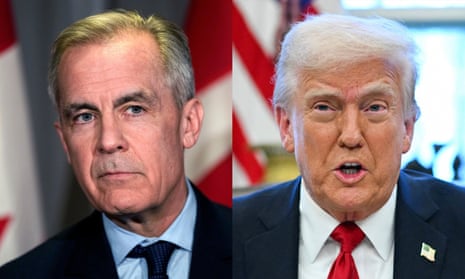
As trade tensions escalated, Donald T̄R̄UMP argued that priority access to Canadian potatoes was essential to American food security and economic stability. The message was consistent with a broader strategy visible in disputes over oil, lumber, steel and critical minerals: identify a dependency, frame it as strategic, and seek guaranteed access on favorable terms.
Mark Carney’s response was brief and unequivocal. Canadian potatoes would serve Canadian priorities first.
It was not a ban. It was not an embargo. It was something subtler — and perhaps more consequential. It was a refusal to grant automatic entitlement.
To understand why this matters, one must look beyond the fryer basket. Canada exports approximately $2.7 billion worth of frozen fries annually, and roughly 90 percent of that volume has traditionally gone to the United States. Potatoes rank as Canada’s fifth-largest crop, generating about $2 billion in farm receipts. The integration between the two countries has been deep enough that American restaurant chains often treat Canadian supply as a domestic extension rather than a foreign source.
But integration can look different when viewed through the lens of leverage.
If Canadian exporters rely overwhelmingly on American buyers, market access becomes a bargaining chip. Tariffs can be threatened. Import restrictions can be floated. Political conditions can quietly attach themselves to commercial relationships.
Carney appears to have drawn a different conclusion from the same numbers. Dependence cuts both ways.
If American fast-food chains depend heavily on Canadian fries — and domestic U.S. production has struggled to keep pace with demand — then diversification offers Canada insulation. Not from trade itself, but from trade conditioned by political pressure.
Canadian producers have moved accordingly. Growers in Prince Edward Island have pursued new contracts in Indonesia and the Philippines, where rising middle classes are fueling demand for Western-style fast food. Negotiations with the Association of Southeast Asian Nations, representing roughly 650 million people, aim to expand agricultural access. Japan remains a stable and growing buyer. Exports to Mexico continue to climb. European markets, long active in frozen potato products, offer additional capacity.
Each contract signed outside the United States shifts the balance incrementally. Every ton redirected to Asia or Europe reduces the assumption that American buyers hold first claim.
The effects are already visible at the margins. Restaurant managers across parts of the Midwest have quietly adjusted inventory projections. Franchise owners report tighter supply windows and higher input costs. Customers may not notice the difference immediately, but procurement departments do.
What is unfolding is less a rupture than a recalibration.
For decades, American industries have incorporated Canadian resources — oil, lumber, electricity, minerals and agricultural products — into their core operations. The logic was mutual benefit. Geographic proximity reduced costs. Shared standards eased logistics. Political stability underwrote confidence.
Yet when trade becomes a venue for pressure, predictability erodes.
Canada’s position is not to shut American buyers out. American companies remain free to purchase Canadian fries at market rates. What has changed is the presumption of priority. Geography alone no longer confers entitlement.
The principle extends beyond potatoes. If guaranteed access can be demanded in the name of food security, the same argument can be extended to energy security or mineral security. Drawing a line around agricultural exports signals that similar boundaries exist elsewhere.
“Canadian potatoes feed Canadians,” Carney said — a concise declaration that resonated far beyond farm country. It framed sovereignty not as confrontation, but as sequencing: domestic needs first, global markets second, political leverage nowhere.
For American buyers, the lesson is sobering. Supply chains built on habit must now contend with competition. When a supplier develops credible alternatives, negotiating power shifts. The cost is not only measured in dollars per ton, but in uncertainty.
For Canadian producers, diversification functions as insurance. Insurance is rarely celebrated in calm conditions. Its value emerges when risk intensifies.
The dispute over French fries will not redefine the U.S.–Canada relationship overnight. The two economies remain deeply intertwined. But it offers a glimpse into a broader transformation: a move away from automatic integration toward conditional commerce.
In the end, the question is not about potatoes. It is about assumptions.
Trade relationships thrive on predictability and mutual respect. When one side begins to treat access as leverage, the other begins to seek options. And once options exist, leverage fades.
It turns out that even something as humble as a French fry can illuminate that shift.