It wasn’t just another late-night monologue — it was a cultural moment wrapped in comedy.
During a recent stand-up style segment, Trevor Noah delivered a sharp, extended critique of Donald Trump that quickly ricocheted across social media. What began as humor about awards season and political headlines evolved into a broader commentary on leadership, ego, and spectacle in modern politics.
From Grammys to Geopolitics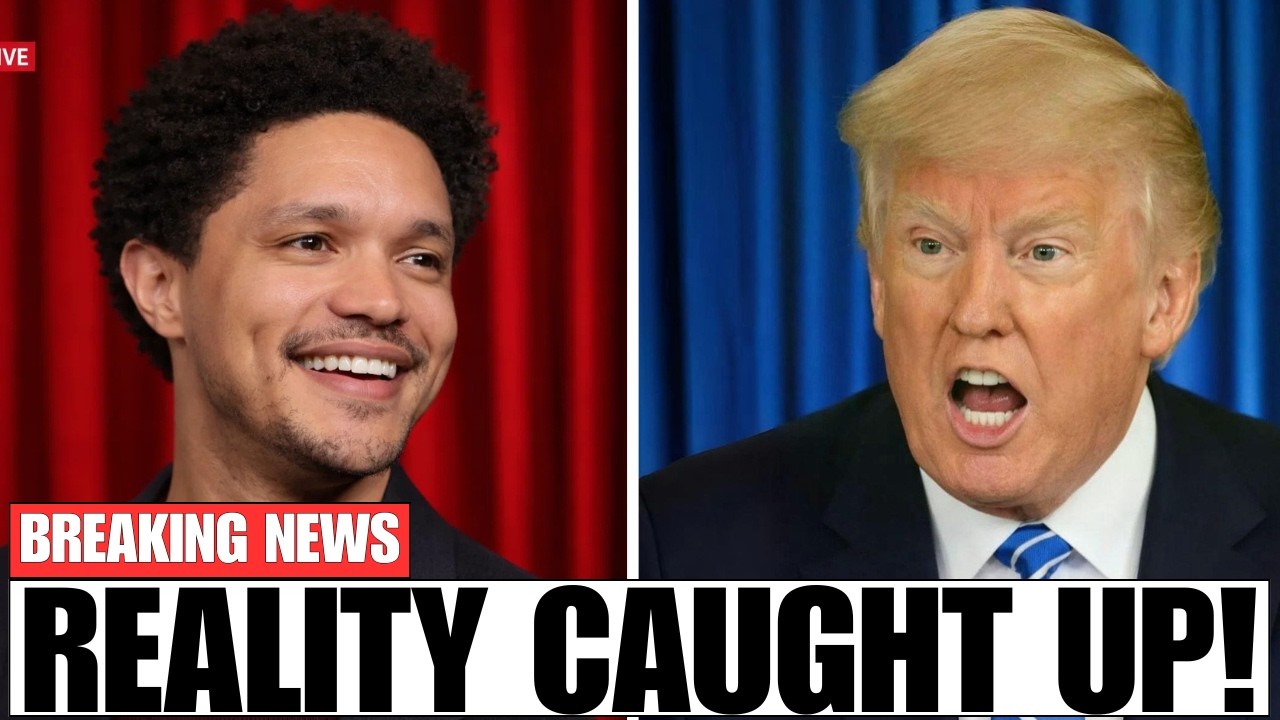
The bit opened lightly, referencing the Grammy Awards and Trump’s past complaints about being linked to Jeffrey Epstein. But within minutes, Noah shifted tone, drawing parallels between Trump’s public persona and reality television theatrics.
He portrayed Trump’s political style as performance-driven — loud, confident, and often improvisational. Rather than building toward punchlines slowly, Noah delivered rapid, pointed observations about Trump’s approach to diplomacy, media criticism, and public appearances.
The audience reaction suggested more than laughter; it was recognition.
Leadership as Performance
Noah’s commentary centered on a recurring theme: that Trump’s political method often prioritizes spectacle over substance. He likened press conferences to episodes in an unscripted series, where confidence frequently substitutes for detailed explanation.
At one point, Noah joked that Trump’s responses to policy questions sounded like beauty pageant answers — broad, glowing promises without specifics. The line landed sharply, reinforcing his broader argument that presentation sometimes overtook policy detail.
Media, Attention, and Conflict

Another thread in the segment focused on Trump’s relationship with media criticism. Noah suggested that Trump’s frustration with comedians and journalists appeared proportional to their cultural reach. Established institutions, he implied, drew stronger reactions than newer or smaller critics.
He also highlighted Trump’s history of labeling unfavorable coverage as “fake” while simultaneously engaging heavily with the platforms he criticized — a dynamic Noah described as both combative and dependent.
Foreign Policy and Rhetoric
The roast expanded into foreign affairs, with Noah mocking what he framed as contradictions in Trump’s public statements about de-escalation and military action. He depicted diplomacy under Trump as unpredictable — promising calm one moment and pivoting dramatically the next.
While delivered humorously, the critique carried a clear undertone: unpredictability may generate headlines, but it also generates uncertainty.
Ego and Legacy

As the segment built toward its peak, Noah pivoted from mockery to reflection. He suggested that beneath Trump’s public bravado lies an intense sensitivity to perception — a need not merely to win, but to appear dominant at all times.
He argued that comedy in this context functions less as insult and more as scrutiny — a way to test the durability of carefully constructed political branding.
Why It Resonated
The clip’s viral spread wasn’t simply about jokes. It reflected a broader public appetite for analysis packaged as humor. Noah’s calm delivery contrasted with the chaos he described, amplifying the effect.
By the end, the performance felt less like a roast and more like commentary on an era where politics and entertainment increasingly overlap.
Whether supporters view the segment as satire or attack, and critics view it as accountability or exaggeration, one thing is clear: the late-night stage remains one of the most influential arenas in shaping political narratives.
And in that arena, the spotlight still burns bright.