🔥 BREAKING: Stephen Colbert Replays a Viral Clip — Donald Trump’s Response Quickly Becomes the Focus ⚡
For decades, the late-night monologue has followed a familiar rhythm: a clip, a punch line, a quick pivot to the next story. But on The Late Show, Stephen Colbert has increasingly embraced a different device — one that relies less on punch lines than on repetition.
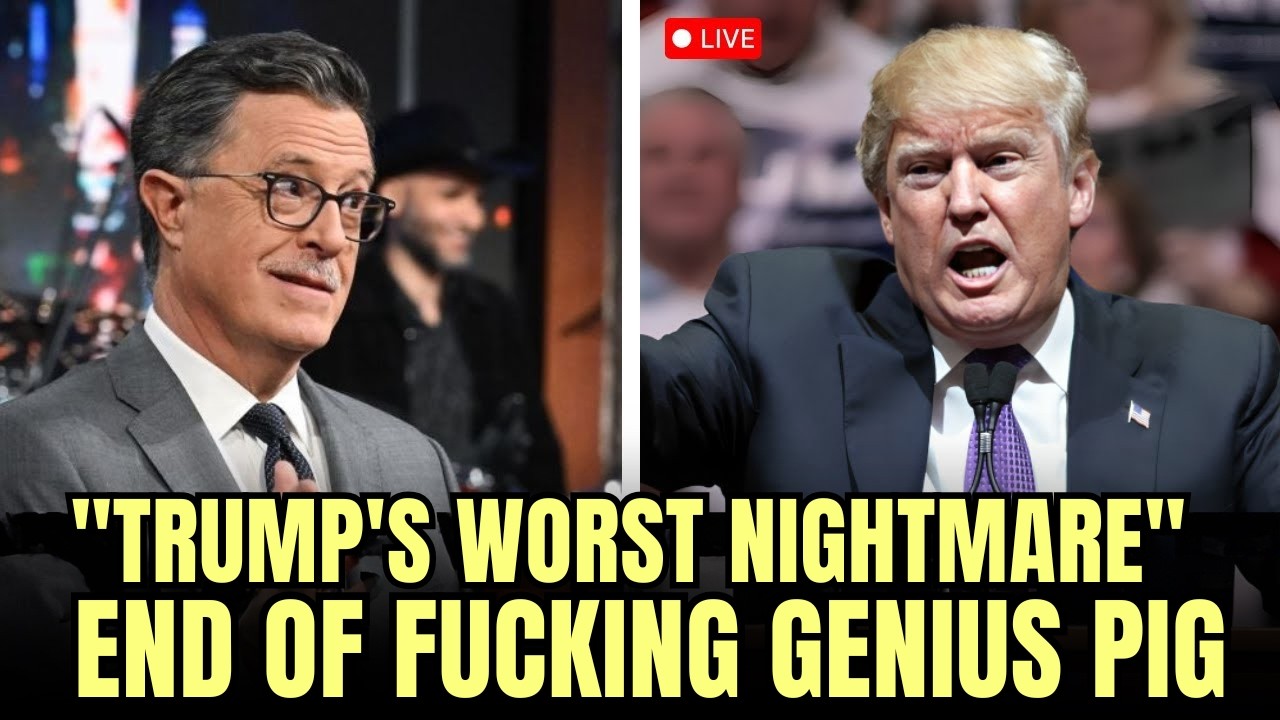
When former President Donald Trump boasts, blusters or makes a remark that ricochets across the news cycle, Mr. Colbert often pauses, raises a hand and plays the clip again. The second viewing, he suggests, can land differently from the first.
The tactic gained prominence during Mr. Trump’s presidency, particularly after the former president described having “aced” a cognitive screening test. In interviews, Mr. Trump recounted identifying objects — “person, woman, man, camera, TV” — as though narrating a feat of unusual intellectual rigor. The anecdote was delivered with characteristic confidence, framed as evidence of mental sharpness.
When Mr. Colbert first aired the footage, the studio audience responded with laughter. The list of nouns sounded, to many viewers, like a sketch. But then the host asked to hear it again. The second playback slowed the tempo of the moment. The laughter softened, replaced by a more contemplative quiet. Repetition, Mr. Colbert implied, invited reconsideration.
The approach reflects a broader shift in late-night political comedy. Rather than relying solely on impersonations or punch lines, hosts increasingly position themselves as curators of the public record, replaying footage to underscore what was said and how it was said. In an era when political figures frequently accuse critics of distortion or misquotation, the raw clip becomes both evidence and argument.
Mr. Trump has long bristled at such treatment. He has dismissed Mr. Colbert as untalented and has suggested that television networks should reconsider their programming choices. After particularly pointed segments, he has taken to social media with familiar refrains: “no talent,” “failing show,” “fake news.” What he has not done, critics note, is deny the words themselves when they are presented in full.
The replay device was also central to Mr. Colbert’s coverage of other controversial remarks. When audio resurfaced of Mr. Trump making suggestive comments about his daughter Ivanka in earlier interviews, Mr. Colbert aired the footage without embellishment, then played it again. The silence that followed in the Ed Sullivan Theater was conspicuous. The humor lay not in imitation but in exposure.
Similarly, during the early months of the coronavirus pandemic, Mr. Trump speculated at a White House briefing about whether disinfectants might have potential as treatments — comments that public health officials quickly cautioned against. Mr. Colbert replayed that exchange twice as well, arguing that repetition would preserve the historical record. “Future generations won’t believe this,” he told viewers before pressing rewind.
The strategy draws on a simple psychological principle: repetition reinforces memory. The first hearing of a startling statement may register as incredulity; the second can transform disbelief into acknowledgment. By eschewing rapid-fire jokes, Mr. Colbert allows the words to stand largely on their own.
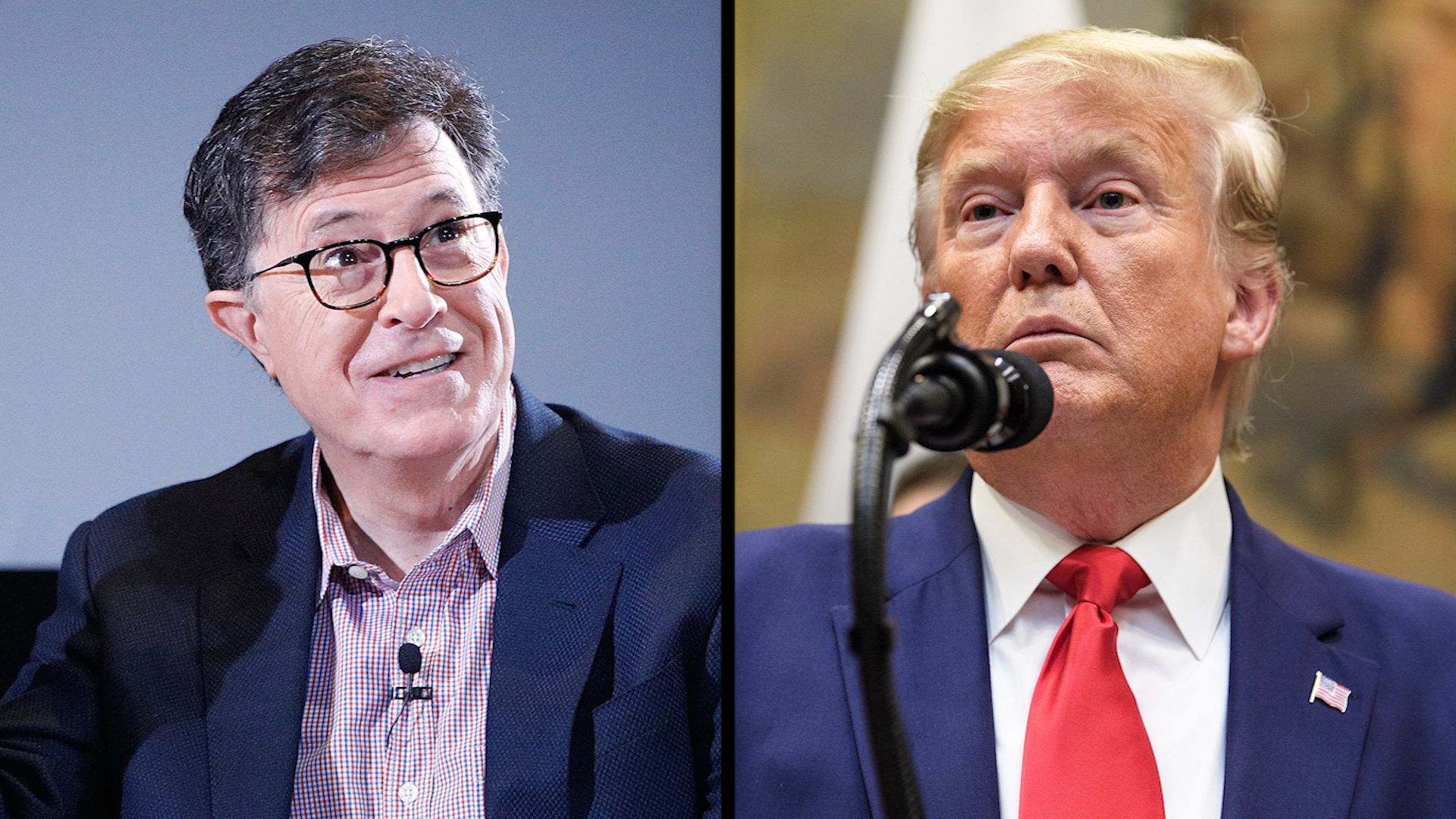
For supporters of the former president, the replays often read as partisan ambushes, stripped of context. Mr. Trump and his allies have frequently argued that critics isolate moments to fit a narrative, ignoring broader explanations or subsequent clarifications. In response, Mr. Colbert has sometimes aired longer excerpts, contending that context, if anything, deepens the impression.
The exchange illustrates a symbiotic tension between political power and televised satire. Mr. Trump, who honed his public persona on reality television, is acutely aware of the camera’s influence. Mr. Colbert, for his part, understands that in a fragmented media landscape, the simplest editorial choice — when to stop and replay — can shape perception as effectively as a punch line.
The viral framing of these segments often emphasizes Mr. Trump’s reactions rather than the clips themselves. Online videos highlight his social media posts following particularly sharp monologues, casting them as evidence of irritation or fragility. Whether that portrayal is fair is a matter of perspective. Mr. Trump’s supporters view his responses as counterpunches in an ongoing cultural contest; critics see them as proof that he cannot ignore mockery.
What is clear is that the replay tactic has become a signature of Mr. Colbert’s tenure. It reflects a belief that some statements require little embellishment. In the absence of added commentary, the words themselves carry weight.
Late-night television remains, at its core, entertainment. Yet as political rhetoric grows more polarized, the boundary between entertainment and civic engagement has blurred. For many viewers, a monologue now serves as both comic relief and a form of informal fact-checking.
By pressing rewind, Mr. Colbert transforms a fleeting remark into a fixed point of reference. The joke, if there is one, lies not in exaggeration but in insistence: listen again. In a political culture saturated with spin and counterspin, that simple gesture can feel, to some, like an act of accountability — and to others, like provocation.
Either way, the sound of a clip played twice has become part of the national conversation.






