Comedy, Credibility and the Politics of the Counterattack
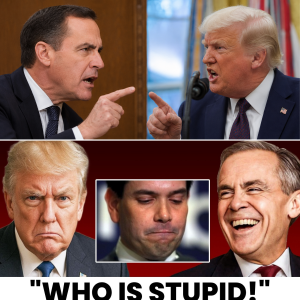
In the modern media ecosystem, where politics and entertainment increasingly overlap, credibility has become a battleground as contested as any campaign trail. The latest clash between President Donald Trump and late-night host Jimmy Kimmel illustrates how accusations, humor and verification now function not merely as rhetorical tools, but as instruments of narrative control.
Trump’s remarks — dismissing Kimmel as a propagandist, alleging scripted commentary and questioning his integrity — were less about disputing specific jokes than about undermining the authority of the narrator himself. In political communication, this is a familiar maneuver. When the content of criticism proves difficult to counter directly, attention shifts to the credibility of the critic. The logic is straightforward: discredit the messenger, and the message loses force.

Kimmel, for his part, appeared to recognize the terrain of the confrontation. Rather than responding immediately online, he waited for the setting he understands best: the stage. Timing, in comedy as in politics, is a form of strategy. A late-night monologue allows for controlled pacing, audience reaction and the careful blending of humor with argument — a format that can transform a personal attack into a broader commentary on accountability.
When he eventually addressed the accusations, the tone reportedly began with routine jokes, a familiar ritual that lowers the audience’s guard. This technique, long embedded in late-night tradition, mirrors a journalistic lead: establish normalcy before introducing tension. Only then did the segment pivot, presenting Trump’s criticism not as a punchline, but as an exhibit — something to be examined rather than merely mocked.
What followed was less a comedic rebuttal than a structured rhetorical exercise. By framing claims alongside sources and verification, the performance adopted the language of fact-checking rather than satire alone. That distinction matters. In an era when political figures frequently accuse media personalities of bias or manipulation, the act of publicly inviting verification signals a different kind of authority — one grounded in transparency rather than personality.
The central device of the segment, as described, was deceptively simple: a demand for specificity. If an accusation of falsehood is made, name the falsehood. Identify the sentence. Provide the correction. This approach reframes the exchange from emotional confrontation to empirical challenge. It transforms a broad allegation into a testable claim, and in doing so, shifts the burden of proof back to the accuser.
Such tactics echo broader trends in political discourse. Vague accusations often travel faster and further than detailed rebuttals because they require less evidence and provoke stronger emotional reactions. Specific corrections, by contrast, demand engagement with facts, timelines and context — elements that slow the pace of viral outrage. By insisting on precision, Kimmel’s approach, whether intentionally or not, mirrored the logic of traditional accountability journalism.
Equally notable was the use of silence and repetition. In televised exchanges, repetition of a single unanswered question can become more rhetorically powerful than a cascade of counterarguments. It highlights avoidance without the need for overt confrontation. The audience, observing the dynamic, becomes an active interpreter, reading hesitation or deflection as a form of response in itself.
Yet it is important to distinguish between dramatized media moments and documented political reality. Late-night television is, by design, a hybrid space — part performance, part commentary, part cultural critique. While it may adopt the aesthetics of evidence and verification, it remains fundamentally a comedic platform rather than an investigative institution. The persuasive power of such segments lies less in formal proof than in narrative framing: the portrayal of one figure as evasive and the other as methodical.
Trump’s rhetorical style has long relied on broad characterizations of critics as biased, corrupt or aligned with unseen interests. This pattern reflects a larger strategy in contemporary populist politics: delegitimize institutions and personalities that shape public perception. In this framework, comedians, journalists and commentators are not merely entertainers but perceived actors within a larger informational struggle.
Kimmel’s closing warning, as described, about unverifiable rumors and unsourced claims touches on a deeper cultural anxiety. In the digital age, credibility is not only earned through accuracy but constantly contested through accusation. Smears, insinuations and sensational narratives can circulate rapidly, often detached from evidence. By cautioning viewers to demand sources and corrections, he positioned himself within a broader discourse about media literacy rather than simply defending his reputation.
Still, the exchange underscores the evolving role of late-night hosts in American political life. No longer confined to cultural commentary, they now occupy a quasi-civic space, interpreting political events for large audiences. This visibility makes them frequent targets of political critique, but it also grants them influence as informal narrators of public discourse.
For the audience, the episode — whether viewed as comedy, confrontation or commentary — reveals less about a single feud and more about the mechanics of credibility itself. Authority in public life is increasingly shaped not only by statements made, but by how those statements withstand scrutiny, repetition and verification.
In that sense, the confrontation was not merely about jokes or insults. It was about the power to define truth in a media environment saturated with competing narratives. When accusations replace specifics and spectacle overshadows substance, the public is left to judge not only what is said, but how it is defended.
And in that quiet space between claim and correction, credibility is not declared. It is tested.