When Spectacle Collides With Verification
In the carnival atmosphere of modern American politics, exaggeration is rarely disqualifying. It is expected. Claims ricochet across rallies and social media feeds with such speed that the public scarcely has time to pause, much less verify. So when former President Donald Trump declared that the federal government was spending $8 million “making mice transgender,” the statement landed not as an isolated oddity but as part of a broader pattern — a flourish designed to provoke disbelief, outrage or both.
The claim, widely circulated in partisan spaces, suggested taxpayer-funded “sex change operations on mice.” Scientists and federal grant records, however, tell a different story. The research in question involved studies on hormonal treatments in laboratory animals, a longstanding practice in biomedical science used to understand disease and medication effects. It did not involve surgical transitions. The leap from technical research language to rally-ready punch line reflects how easily specialized terminology can be repurposed into political theater.
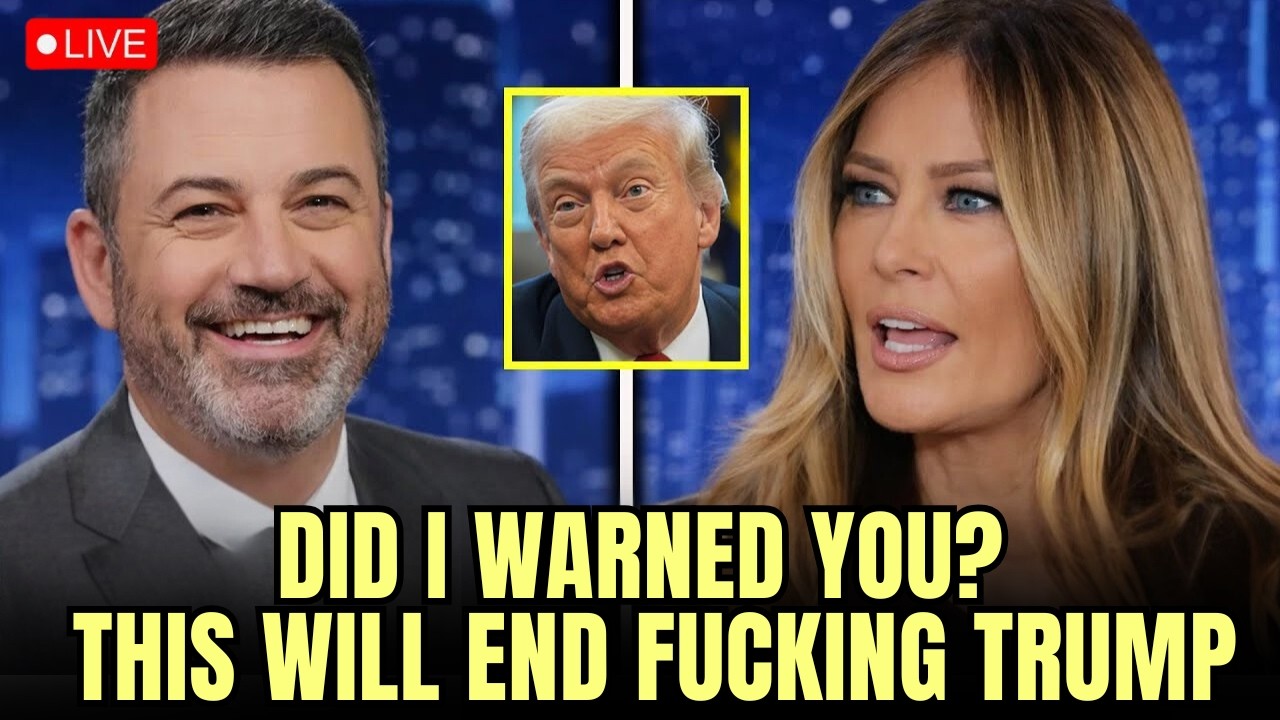
Yet the more revealing episode unfolded not at a podium, but — at least in the dramatized account circulating online — on a late-night stage. There, the spectacle shifted from policy hyperbole to something more intimate: the architecture of personal myth.
The story, as it is told, centers on a prime-time interview in which Jimmy Kimmel abandoned his customary looseness for prosecutorial calm. The premise was combustible: a president who has long framed his marriage as emblematic of traditional stability confronted with documents allegedly contradicting that narrative. In this telling, Kimmel produced public records, travel manifests and scheduling logs obtained through the Freedom of Information Act, presenting them as evidence of separate itineraries and carefully managed optics.
It is a gripping narrative. It is also one that illustrates how contemporary political storytelling borrows from courtroom drama as readily as from campaign messaging. The binder of documents, the reading glasses, the quiet recitation of dates — these are theatrical cues as much as journalistic ones. They signal seriousness. They invite the audience to witness a reckoning.
Whether such a confrontation unfolded exactly as described is less important than what the story reveals about public appetite. Americans are no longer merely spectators of governance; they are consumers of episodic political content. Interviews are framed as showdowns. Fact-checks are staged as climaxes. Even the language of “meltdown” and “detonation” mirrors action scripts more than civic dialogue.
Trump’s rhetorical style has long thrived in this environment. His instinct, honed over decades of media exposure, is to counterattack — to label criticism “fake,” to question motives, to redirect attention. It is a strategy built not on granular rebuttal but on narrative dominance. When confronted with uncomfortable material, the move is often to escalate emotionally, overwhelming detail with force.
Late-night hosts, meanwhile, have evolved from entertainers into hybrid figures: part comic, part commentator, part cultural ombudsman. They wield humor as both shield and scalpel. But they also operate within an entertainment framework. Even when they adopt the trappings of investigative rigor, their primary medium remains performance.
This convergence — politics adopting spectacle, entertainment adopting accountability — creates moments that feel seismic. A raised voice becomes evidence of guilt. A refusal to answer becomes confession. Silence becomes its own headline. The audience, primed for resolution, interprets demeanor as much as documentation.
The deeper question is what happens to democratic discourse when verification itself becomes theatrical. There is value in demanding specificity. There is civic virtue in asking leaders to correct falsehoods line by line. But there is also risk in blurring the boundary between documented reporting and dramatized confrontation. Public trust depends not only on exposing inaccuracies but on maintaining clear distinctions between fact, inference and embellishment.
The episode of the “transgender mice” claim underscores that tension. A misleading phrase, once repeated enough, can acquire the weight of plausibility. Correcting it requires patience and precision — tools less flashy than accusation but more durable. Similarly, allegations about private lives, even when anchored in public records, demand careful contextualization. Logistics do not automatically equal moral indictment. Records require interpretation.
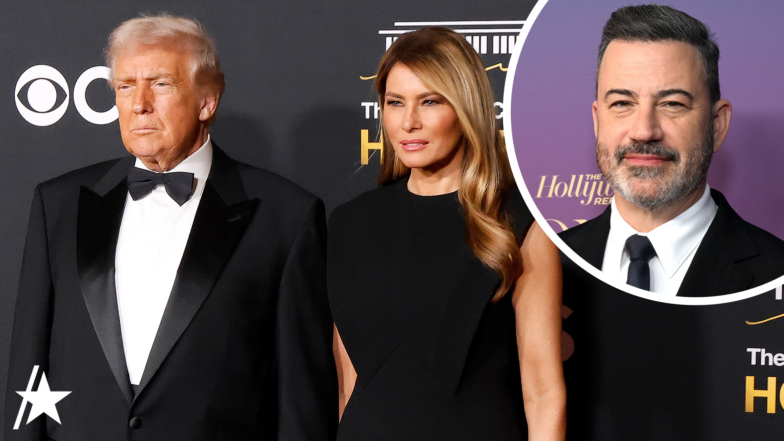
What lingers from these spectacles is not always the data point or the document. It is the image: a flushed face, a steady gaze, a binder opened under studio lights. In an age when politics is consumed visually and virally, imagery can eclipse nuance.
And yet, amid the theatrics, a simple standard endures. Claims should be verifiable. Corrections should be specific. Public officials, like public commentators, should expect scrutiny. Credibility is neither conferred by applause nor destroyed by boos. It is built — or eroded — through the consistent alignment of assertion and evidence.
If there is a lesson in these collisions between power and performance, it is that spectacle may command attention, but only verification sustains trust. The American public, inundated with narratives crafted for maximum emotional charge, is left to navigate between them. The challenge is not merely to watch the show, but to ask, calmly and persistently: What, precisely, can be proven?