WASHINGTON — Thanksgiving messages from sitting presidents are usually exercises in ritual: expressions of unity, gratitude, and national calm delivered regardless of the political weather. This year, however, President Donald Trump chose a different tone. What began as a nominal holiday greeting quickly unraveled into a grievance-filled outburst — one that set the stage for an extraordinary cultural moment in which late-night television, politics, and media power collided.
In his message, Mr. Trump congratulated what he called “great American citizens and patriots,” before pivoting sharply to accusations that Americans had allowed the country to be “divided, disrupted, carved up, murdered, beaten, mugged, and laughed at.” The phrasing was stark and uncharacteristic for the occasion. But the line that resonated most came from the unintended irony: Mr. Trump’s insistence that America was being laughed at even as audiences across the country were laughing at him.
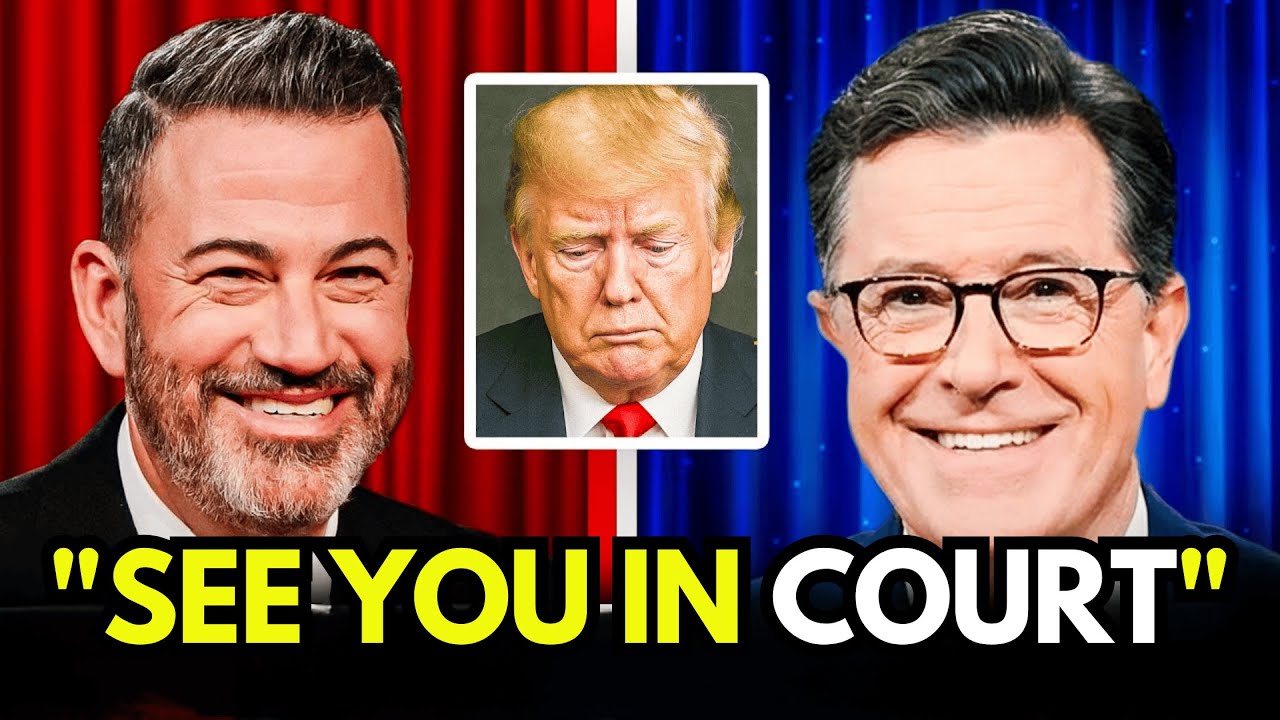
That laughter was loudest on late-night television. Within hours, comedians Jimmy Kimmel and Stephen Colbert, broadcasting from studios in Los Angeles and New York, delivered monologues that went beyond their usual satirical jabs. The two hosts, long-time critics of Mr. Trump, appeared almost synchronized in their focus, dismantling the president’s recent claims and controversies piece by piece.
Mr. Kimmel mocked the president’s fixation on celebrity and talent, joking about a supposed challenge to a contest of abilities and quipping that Mr. Trump might be confusing him with Queen Latifah when referencing the Kennedy Center. Mr. Colbert, for his part, revisited a series of policy failures and legal shadows, weaving them into a broader narrative of a presidency increasingly defined by grievance rather than governance.
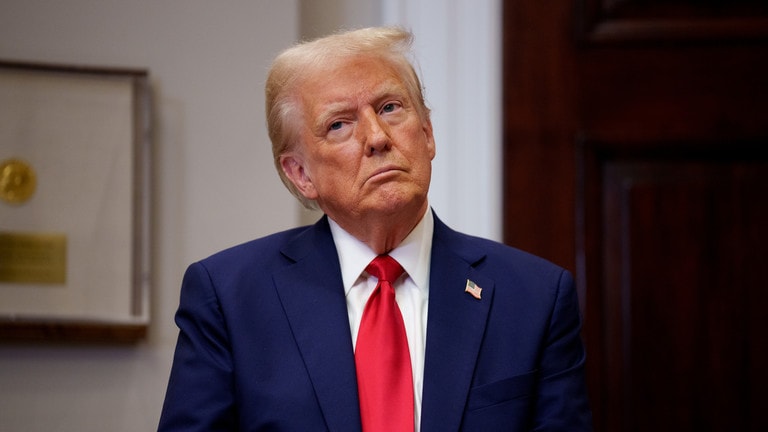
The timing was notable. Polling numbers had been slipping, and new economic data showed a loss of 35,000 private-sector jobs, contradicting optimistic projections. On conservative cable networks, including Fox News, anchors appeared cautious, even uneasy, as they discussed rising costs and affordability — a term some hosts joked they were afraid to say out loud for fear of provoking the president’s ire.
Behind the scenes, the pressure was building. Mr. Trump continued to dominate headlines with erratic press conferences, including one in which he appeared to flirt with rumors of a peace prize nomination, insisting he did not need accolades even as he joked about accepting them. The performance only fueled further ridicule.
What viewers did not immediately see was how coordinated the late-night response had become. On September 30, in studios miles apart, Mr. Kimmel and Mr. Colbert addressed overlapping themes: the Epstein files, trade and tariff failures, and what they framed as threats to free speech. The message was amplified online with a single, minimalist image posted by the comedians: “Hi, Donald.” No punchline was necessary. The acknowledgment alone seemed to provoke a spiral.
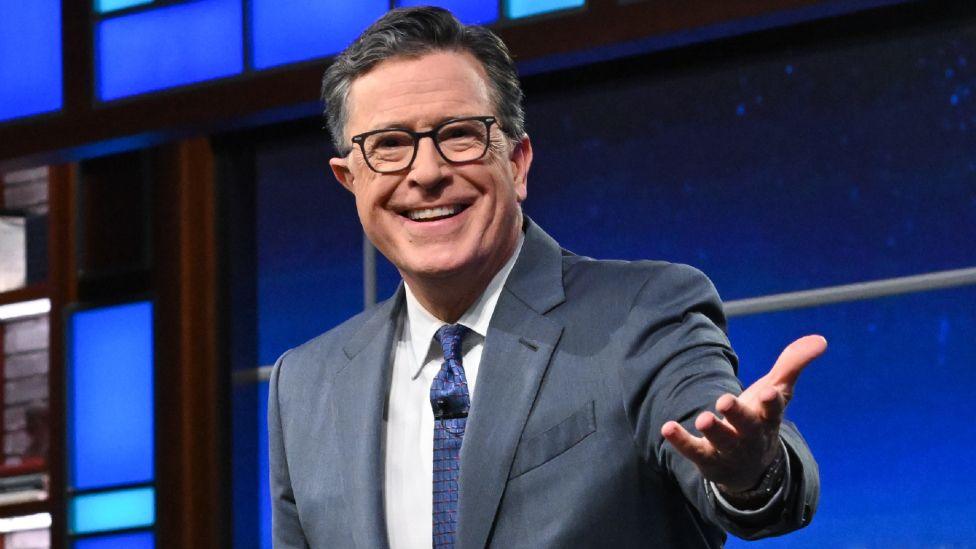
By the following day, Mr. Trump lashed out again, this time targeting Minnesota Governor Tim Walz with a vulgar insult. Even some Republican allies appeared uncomfortable, distancing themselves from the remark as questions mounted about the president’s temperament.
The cultural moment took a sharper turn when the administration’s regulatory power entered the picture. After public threats involving the Federal Communications Commission, led by its Trump-appointed chairman Brendan Carr, ABC announced that it would suspend Mr. Kimmel indefinitely. The decision was framed as a compliance issue, but it was widely interpreted as a response to political pressure. Mr. Trump celebrated the move openly.
For critics, the episode underscored a deeper concern: that satire itself was becoming a target. Late-night comedy, long treated as a peripheral annoyance by politicians, had evolved into a potent cultural force — one capable of shaping narratives, mobilizing audiences, and, in this case, provoking direct retaliation from the White House.
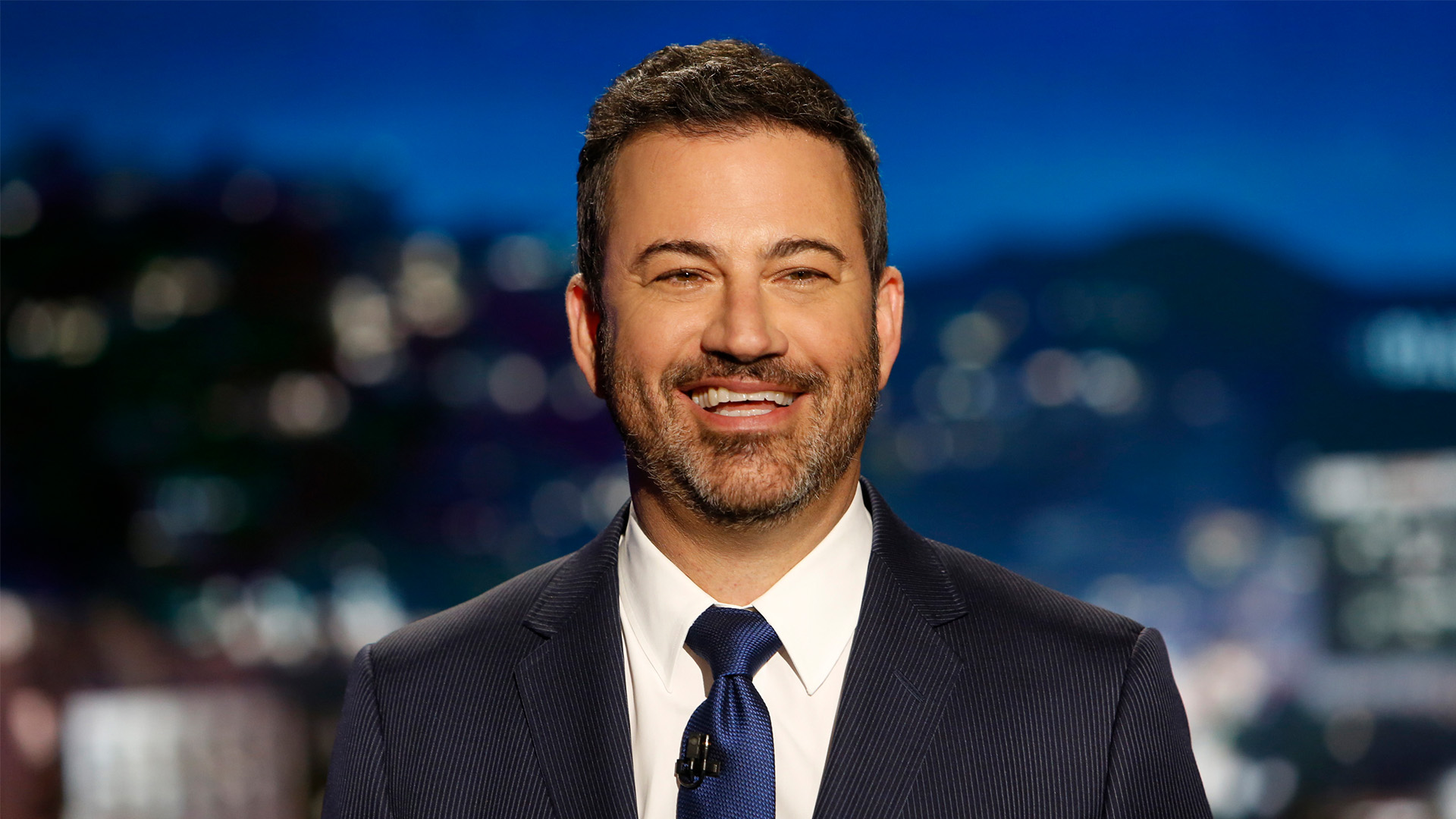
The jokes did not stop. Mr. Trump’s admission that he could not recall what part of his body an MRI scan had been for — though he insisted it was not his brain, citing a cognitive test he said he “aced” — became fodder for another round of mockery. One particularly cutting line suggested that the president “hasn’t been the same since Jeffrey Epstein died,” a remark that drew gasps as well as laughs.
By the end of the night, it was clear that this was no longer just political commentary. It was a form of cultural exposure, revealing how thin the line had become between presidential authority and personal grievance. The counteroffensive — celebrity smears, censorship threats, and a propaganda machine spinning at full speed — suggested a presidency increasingly reactive to ridicule.
Thanksgiving had come and gone, but the aftertaste lingered. In the battle between late-night laughter and presidential rage, neither side appeared willing to back down. The difference was that one was armed with jokes, and the other with power — a combination that left many Americans uneasy about what might come next.