As Boycott Calls Grow, the 2026 World Cup Becomes a Test of Sport’s Political Boundaries
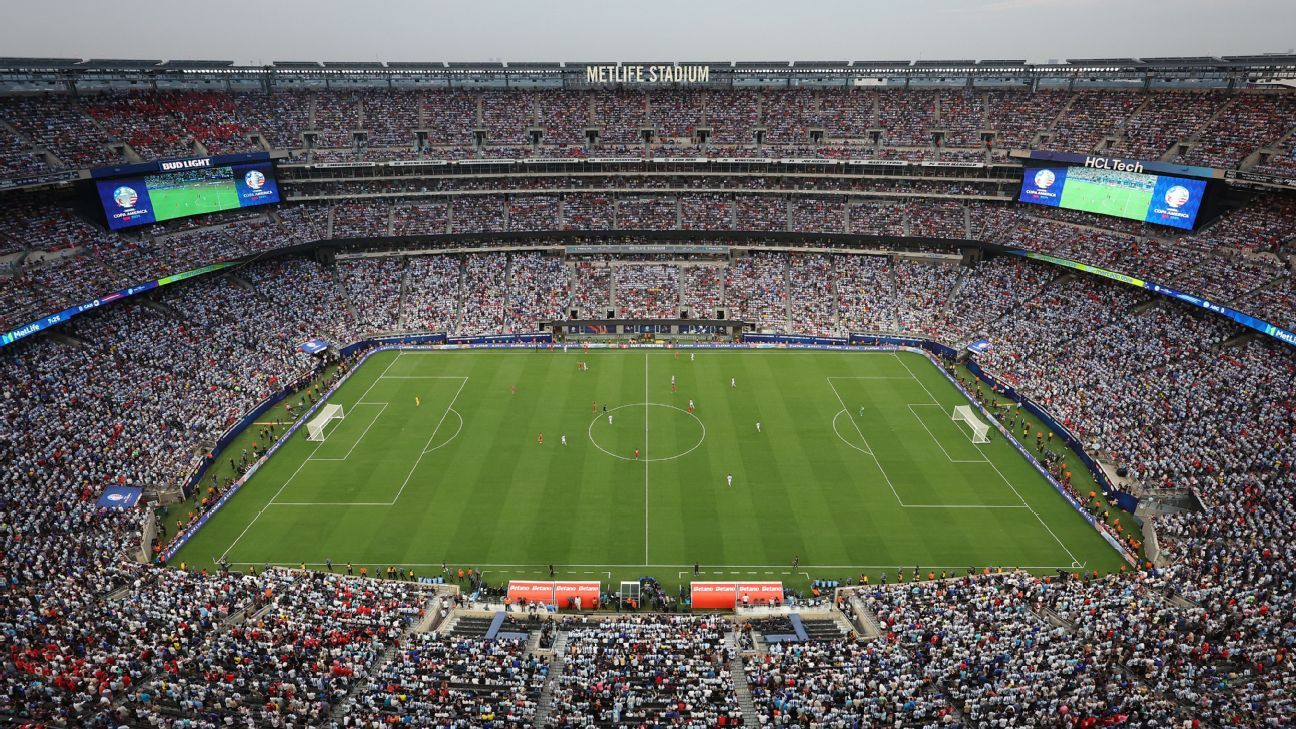
The 2026 World Cup, conceived as the largest and most commercially ambitious tournament in football history, was meant to symbolize continental cooperation and the unifying power of sport. Instead, with five months until kickoff, it has become the focal point of an intensifying debate about politics, sovereignty and the limits of neutrality in global competition.
Co-hosted by the FIFA across the United States, Canada and Mexico, the expanded 48-team tournament will feature 104 matches and is projected to generate roughly $10 billion in revenue. Seventy-eight games are scheduled in American cities, with 13 each in Canada and Mexico. Organizers have long emphasized its scale: new markets, record attendance and a broadcast footprint reaching billions.
Yet in recent months, the conversation has shifted from formations and squad depth to petitions, parliamentary speeches and visa policy.
In the Netherlands, more than 150,000 citizens signed a petition urging their national team to reconsider participation. The document argued that appearing in a tournament hosted primarily by the United States could be interpreted as tacit approval of controversial policies emanating from Washington. The Royal Dutch Football Association has not endorsed a boycott, but the scale of public engagement reflects how deeply political considerations have entered a space once dominated by sport alone.
Germany has experienced similar unease. A member of parliament from the Christian Democratic Union publicly suggested that participation should be reassessed under certain geopolitical conditions. Though the German Football Association has rejected a boycott for now, a national survey indicated that nearly half of respondents would support withdrawal if diplomatic tensions were to escalate significantly.
In Britain, several lawmakers have urged England and Scotland to consider the symbolic weight of competing. In France and Belgium, sports authorities have adopted a steadier tone, emphasizing preparation and competitive integrity. Still, the debate has spilled well beyond sports desks into legislative chambers and civic forums.
At the center of much of the anxiety is immigration enforcement within the United States. Expanded travel restrictions and reports of heightened visa scrutiny have prompted questions among federations and supporters alike. Incidents during preparations for other tournaments, including difficulties faced by certain delegations, have fueled concerns about whether fans from parts of Africa, Asia and the Middle East will encounter unpredictable entry barriers.
Geopolitical developments have compounded those worries. President Donald Trump has publicly floated territorial and trade proposals involving Greenland, Canada and Mexico, generating diplomatic friction with nations directly involved in hosting duties. A January 2026 U.S. military operation in Venezuela further polarized international opinion, prompting debate about how global sporting events are perceived when staged amid heightened tensions.
Institutional symbolism has also drawn scrutiny. A White House task force dedicated to the tournament is chaired by President Trump, with visible coordination between administration officials and Gianni Infantino. Infantino has appeared alongside American political leaders at public events and confirmed that President Trump will present the World Cup trophy to the champions on July 19, 2026. To critics, such imagery blurs the traditional separation between global sport and domestic political theater. To supporters, it reflects routine host-nation ceremony.
History offers precedent for controversy. The 1978 World Cup unfolded in Argentina under a military dictatorship. The 2018 tournament proceeded in Russia following the annexation of Crimea. The 2022 edition in Qatar drew sustained criticism over labor practices. From this perspective, singling out 2026 risks appearing selective.
Economic gravity also weighs heavily against a full boycott. Broadcasters, sponsors and national associations have invested billions. Infrastructure upgrades are underway. Contracts are binding. Analysts widely regard the likelihood of coordinated withdrawal by major European nations as low, given the financial and competitive consequences.
But the debate has already reshaped the tournament’s atmosphere. What was designed as a celebration of North American partnership now doubles as a case study in soft power. Canada and Mexico, navigating sensitive diplomatic terrain, must balance cooperative hosting responsibilities with their own political considerations. Sponsors are calculating reputational exposure alongside projected returns. Fans are assessing visa policies with the same diligence once reserved for ticket lotteries.
For players, the tension is personal. A World Cup is often the pinnacle of a career measured in decades of preparation. To ask athletes to forgo that stage for geopolitical reasons imposes a heavy burden. Yet history also shows that participation and protest are not mutually exclusive. Dutch players expressed solidarity with Argentine activists in 1978. Germany’s team staged a symbolic gesture during the 2022 tournament in Qatar. Such acts suggest that presence on the field can coexist with moral expression beyond it.
Ultimately, the 2026 World Cup may be judged not solely by attendance figures or television ratings, but by whether it can navigate the boundary between spectacle and statecraft. When the opening whistle sounds on June 11, global audiences will see goals and celebrations. They will also see flags, leaders and institutions asserting narratives about cooperation and strength.
Whether those narratives unify or divide remains uncertain. What is clear is that the world’s most popular sporting event now carries a weight that extends well beyond the pitch.






