🔥 BREAKING: TRUMP LOSES IT After JIMMY KIMMEL TAKES AIM AT JD VANCE LIVE — LATE-NIGHT MOMENT SENDS STUDIO INTO UPROAR ⚡
The long-running feud between President Donald Trump and late-night host Jimmy Kimmel escalated this week after Mr. Kimmel devoted a blistering monologue to allegations involving Donald Trump Jr. and a cryptocurrency venture with foreign investors.
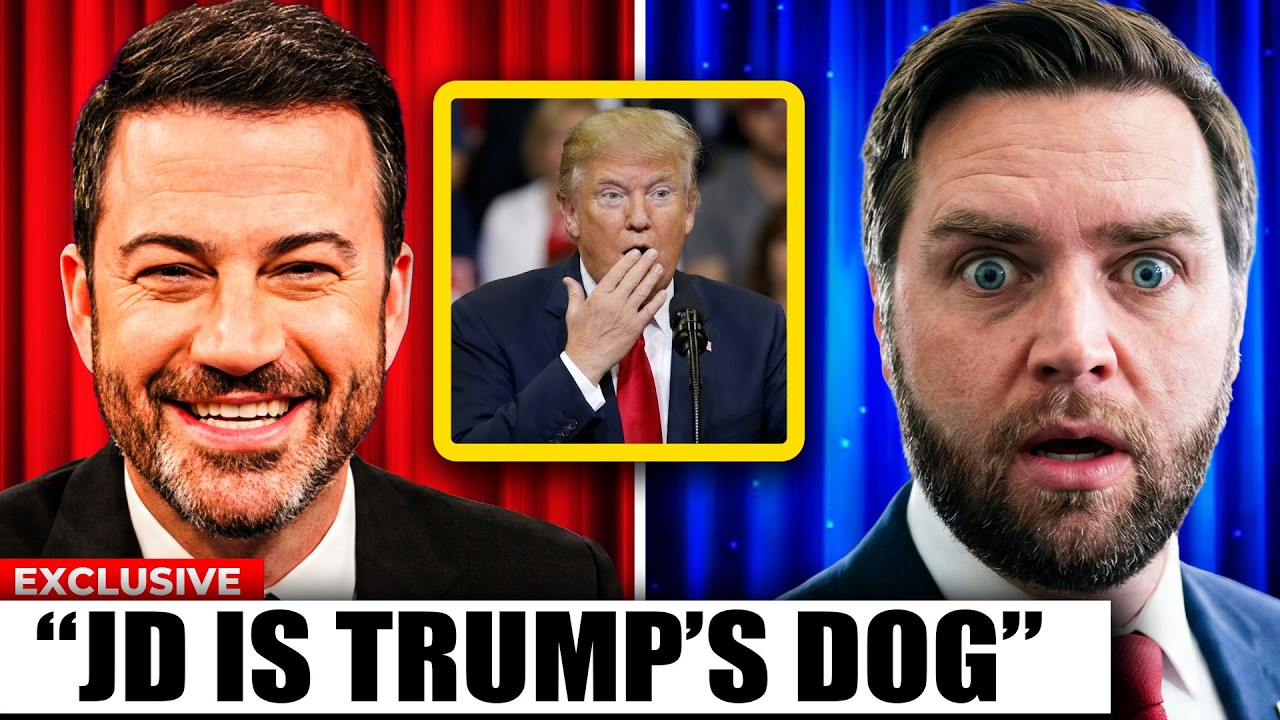
On his ABC program, Mr. Kimmel stitched together recent reporting, cable news interviews and archival clips to argue that the president’s eldest son had become entangled in what critics describe as a significant conflict-of-interest scandal. The segment blended satire with sharp political commentary — a format that has become familiar in the Trump era but remains controversial among viewers who see late-night television drifting ever further from entertainment into advocacy.
At the center of the monologue was a report, first detailed by The Wall Street Journal, that a company co-founded by Mr. Trump Jr. and his brother Eric had received a $500 million investment from a member of the Emirati royal family shortly before Mr. Trump’s return to office. According to the report, a substantial portion of those funds flowed into entities linked to the Trump family. Weeks later, the administration approved the sale of advanced artificial intelligence chips to the United Arab Emirates, reversing restrictions put in place over national security concerns.
Mr. Kimmel presented the timeline as suggestive, if not dispositive, of impropriety. He cited ethics experts who argued that the arrangement could implicate the Constitution’s foreign emoluments clause, which bars federal officials from accepting gifts or payments from foreign states without congressional consent. “It looks like a bribe,” Mr. Kimmel said, quoting one legal scholar.
Representatives for the Trump family have denied wrongdoing, asserting that the investment was a private business matter unconnected to official policy decisions. They have also argued that the administration’s technology approvals followed standard interagency review processes and were consistent with broader diplomatic goals in the region.
The president himself has repeatedly dismissed allegations of corruption as politically motivated attacks. In recent remarks, he insisted that his administration supports free speech and has not used federal power to target critics. “What government action have we engaged in to kick anybody off the air?” he asked during a press appearance, answering his own question: “Zero.”
Mr. Kimmel, however, framed the controversy as part of a broader pattern. He replayed clips of Mr. Trump Jr. defending the family’s business dealings in combative television interviews, including one in which he suggested that critics and financial institutions had “created this monster” by refusing to work with the Trump Organization after the Jan. 6 attack on the Capitol. Mr. Kimmel seized on the remark, characterizing it as an attempt to blame others for ethical lapses.
:max_bytes(150000):strip_icc():focal(756x500:758x502)/Jimmy-Kimmel-JD-Vance-093025-4c052eff4e26473d8c8fe83dd51c7f4b.jpg)
The monologue also veered into other recent flashpoints, including the president’s comments about potentially invoking the Insurrection Act to quell protests and speculation about the political consequences of a possible government shutdown. In doing so, Mr. Kimmel linked the crypto investment story to what he described as a governing style marked by grievance and escalation.
Beyond Washington, the segment touched on tensions between the administration and the Vatican. Pope Pope Leo XIV has reportedly declined invitations to high-profile American political events and used recent homilies to warn against what he called the erosion of law and human dignity in global politics. While the Vatican has not addressed the Trump family’s business dealings directly, some clergy members have expressed concern about the moral implications of close ties between political leaders and foreign financial interests.
The White House has rejected suggestions that its foreign policy decisions are influenced by the private ventures of the president’s relatives. Still, the episode has revived questions that shadowed Mr. Trump’s first term: how to separate public office from private enterprise in an administration led by a businessman with extensive global holdings.
Late-night hosts have increasingly positioned themselves as watchdogs, amplifying investigative reporting for mass audiences. Critics argue that such commentary blurs the line between journalism and entertainment, sometimes oversimplifying complex legal and financial issues. Supporters counter that in a fragmented media environment, satire can highlight stories that might otherwise struggle to break through.
Ratings for “Jimmy Kimmel Live!” have fluctuated in recent years, but viral clips from politically charged monologues routinely garner millions of views online. In the digital ecosystem, outrage — whether from supporters or detractors — often fuels visibility.
For the Trump family, the crypto investment controversy arrives at a delicate political moment. With midterm elections approaching and polls suggesting potential losses for Republicans, Democrats have seized on the story as evidence of ethical laxity. Republicans, in turn, accuse their opponents of weaponizing routine business transactions for partisan gain.
Whether the matter will produce formal investigations remains uncertain. Congressional Democrats have called for hearings, while Republican leadership has shown little appetite for pursuing the issue.
What is clear is that the battle between Mr. Trump and Mr. Kimmel — once a familiar exchange of jokes and social media barbs — has evolved into something more consequential. In an era when comedians dissect financial disclosures and presidents critique Nielsen ratings, the distance between the late-night desk and the Oval Office appears shorter than ever.






