WASHINGTON, February 27, 2026 — 9:15 A.M. ET
BY CUBUI
A swirl of political spectacle, economic confusion and late-night comedy has converged into another volatile week in Washington, as the White House finds itself responding not only to market anxieties but also to a public feud involving late-night host Jimmy Kimmel.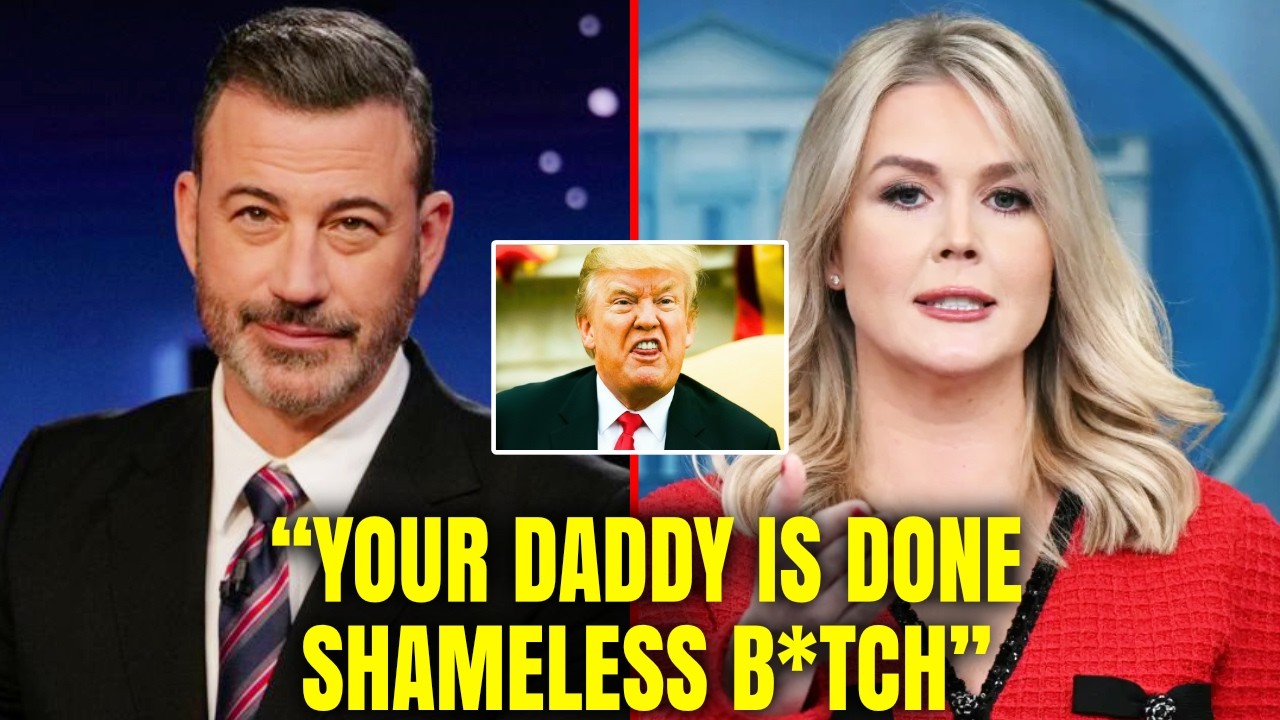
The immediate flashpoint came after reports surfaced that ABC executives had decided to cancel Kimmel’s program. White House Press Secretary Karoline Leavitt addressed the issue directly, insisting the decision was made solely by the network and that “there was no pressure given from the president of the United States.” She added that President Donald Trump was unaware of the development until she informed him during a state visit to the United Kingdom.
The exchange underscores how cultural flashpoints increasingly overlap with political messaging. Leavitt framed the cancellation as a corporate decision tied to what she described as false statements made on air. Critics, however, questioned why the White House podium was used to rebut a late-night comedian, arguing that the administration’s focus appeared misaligned with broader policy concerns.
Those concerns include growing uncertainty around trade policy. Over the past week, the administration’s stated tariff figures on Chinese imports appeared to shift rapidly, fueling confusion in financial markets. Economists say fluctuating signals can complicate business planning and investor confidence, though administration officials maintain that aggressive tariff positioning strengthens U.S. leverage in trade negotiations.
When pressed at a briefing about the mechanics of tariffs — specifically whether costs are borne by foreign exporters or domestic importers — Leavitt pushed back sharply, accusing a reporter of questioning her economic knowledge. The clip circulated widely online, amplifying debate about transparency and clarity in the administration’s economic messaging.
Meanwhile, another viral moment involved footage appearing to show large bags being lowered from a White House residence window. Asked about the video, the president suggested it may have been artificially generated. The White House later characterized the incident as routine maintenance work conducted during a weekend absence.
Beyond viral clips, the president’s remarks about military fitness and showerhead water pressure also drew attention. In one address, Mr. Trump emphasized restoring physical standards in the armed forces. Comedians seized on the comment, with Kimmel offering pointed satire that further escalated tensions between the administration and entertainment figures.
Additional controversy followed comments Mr. Trump made at a public event praising Leavitt’s on-camera presence, including remarks about her appearance and speaking style. Supporters characterized the comments as enthusiastic praise; critics described them as inappropriate for a workplace context.
Political analysts note that such episodes contribute to what some observers describe as a deliberate communications strategy — one that blends policy, personality and provocation. Whether that approach distracts from substantive issues or reinforces the president’s connection with supporters depends largely on partisan perspective.
Internationally, the administration continues to signal assertive positions on trade and security. Domestically, it faces scrutiny over economic volatility and messaging consistency.
As the lines blur between governance and spectacle, the central question remains whether the week’s headline moments will have lasting political impact — or simply fold into the ongoing churn of Washington’s 24-hour cycle.






