Chaos as Strategy: Inside the Kimmel Clash, Tariff Whiplash and a White House Obsessed With Optics
In a week already crowded with market volatility and escalating trade rhetoric, the White House found itself engaged in an unlikely confrontation: a late-night feud.
The decision by ABC to cancel Jimmy Kimmel Live! was, according to network executives, an internal matter. The administration has insisted there was no pressure from President Donald Trump. Yet the White House press briefing that followed — and the president’s own remarks on morning television — ensured that what might have remained a programming decision became something else: a national spectacle.
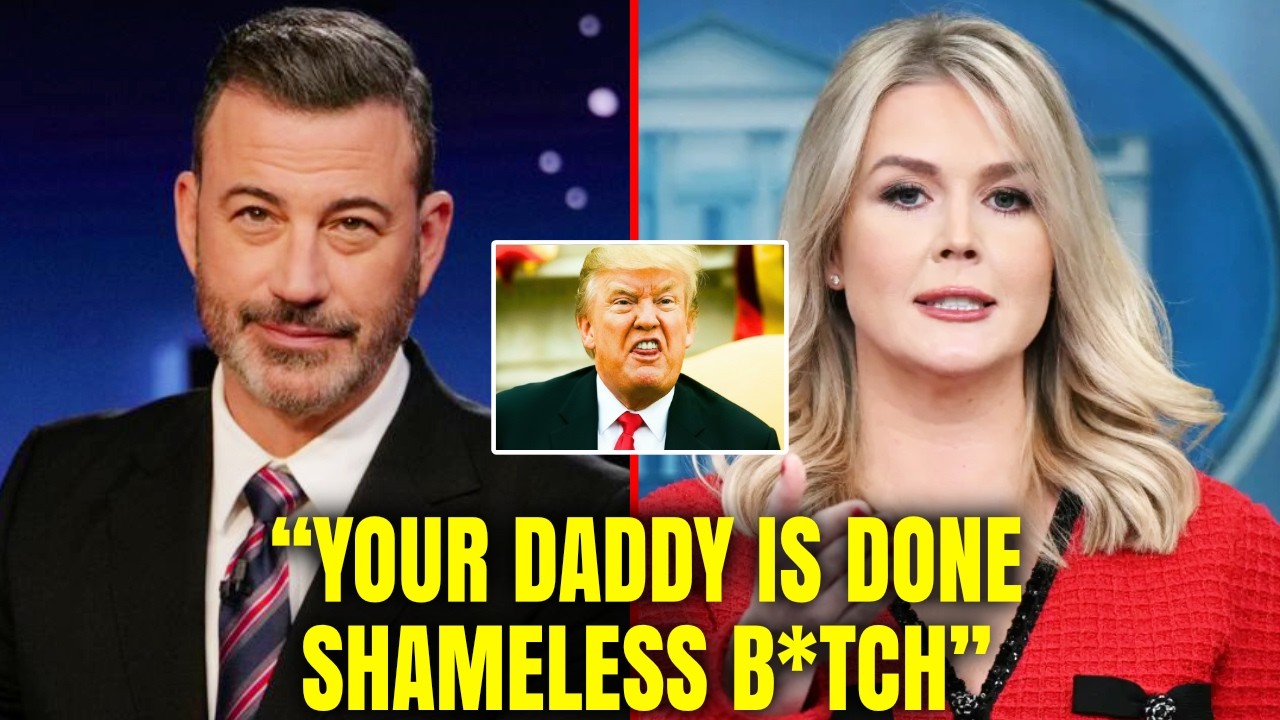
At the podium, Press Secretary Karoline Leavitt, 28, rejected any suggestion of presidential involvement. She said she personally informed the president of the cancellation while traveling in the United Kingdom, where he was attending a state visit hosted by King Charles III and Prime Minister Keir Starmer. The president, she said, “had no idea” the decision was being made.
The official explanation was that Mr. Kimmel had “knowingly lied” about the death of a respected public figure during a period of national mourning. The specifics of that claim were less scrutinized than the larger tableau: a White House briefing devoted in part to rebutting a comedian.
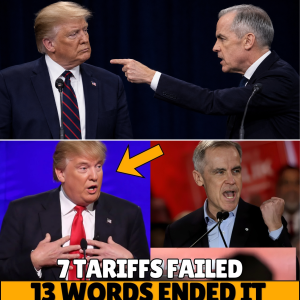
This is not unprecedented. Mr. Trump has long treated late-night hosts as political adversaries. But the episode unfolded against a backdrop of sharper stakes. Over 48 hours, the administration’s proposed tariffs on China reportedly shifted from 20 percent to 104 percent and then to “at least 145 percent,” leaving investors and economists struggling to parse the policy direction.
When pressed by reporters about who ultimately pays tariffs — foreign exporters or American importers — Ms. Leavitt defended the administration’s approach, arguing that “revenues will stay here, wages will go up, and our country will be made wealthy again.” When challenged further, she accused a reporter of attempting to “test my knowledge of economics.”
The exchange circulated widely online, emblematic for critics of what they view as deflection packaged as certainty. Supporters, meanwhile, saw a young press secretary standing firm under hostile questioning.
The economic turbulence was accompanied by another viral moment: a video appearing to show large bags being tossed from a window in the Lincoln Bedroom of the White House residence. The administration described the footage as routine maintenance activity. Asked about it, the president suggested it was “probably AI generated,” a reflexive skepticism that reflects both the proliferation of manipulated media and the broader distrust that now colors official responses.
Layered onto this was the president’s renewed emphasis on military “fitness,” delivered in remarks that drew both laughter and criticism. Mr. Trump has previously faced scrutiny over his own physical health and his avoidance of military service during the Vietnam War era, citing bone spurs. The juxtaposition was not lost on late-night hosts, including Mr. Kimmel, who devoted segments to mocking the rhetoric.
But it was the president’s comments about his press secretary that proved especially combustible. At a public event, he praised Ms. Leavitt’s performance on television, describing her as having a “beautiful face” and lips that “don’t stop, like a little machine gun.” The phrasing, delivered before a cheering crowd, was met with discomfort in some quarters and applause in others.
The remark was followed by renewed scrutiny of Ms. Leavitt’s public persona — her social media posts, her travel photographs, even her wardrobe — an examination that blended political analysis with tabloid curiosity. Such scrutiny underscores a recurring dynamic in the Trump era: the merging of governance and spectacle.

Meanwhile, the president reportedly described Mr. Kimmel as a “loser” in a separate media appearance, while reiterating praise for his press secretary. The language was familiar, combative and personal.
For critics, the cumulative effect of the week’s events — the tariff whiplash, the viral videos, the lip comments, the late-night feud — suggested a pattern. The controversies, they argue, function as a kind of political white noise, dominating headlines and social feeds while more consequential decisions unfold with less attention.
All administrations manage optics. Few have done so with such overt theatricality. Mr. Trump’s defenders contend that his bluntness cuts through media distortion and energizes supporters. Detractors see distraction as design.
The more substantive question may not be whether a comedian was treated unfairly or whether a press secretary fielded questions imperfectly. It may be whether the spectacle itself has become the governing strategy.
Markets continue to react to tariff uncertainty. Allies watch for signs of consistency. Voters weigh their tolerance for turbulence against their hopes for economic revival.
In the end, the week’s defining image may not be a garbage bag at a window or a joke at 11:30 p.m., but a briefing room where the machinery of government and the rhythms of entertainment increasingly occupy the same stage.