Kimmel, Vance and the Politics of Humiliation in Trump’s Washington
In another political era, a president declining to endorse his own vice president as a successor might have dominated a week’s news cycle. In Washington under President Trump, it barely survives a single evening — until a late-night host turns it into a national spectacle.
On Feb. 11, during a friendly post–Super Bowl interview with Fox News anchor Bret Baier, President Trump was asked a seemingly routine question: Did he see Vice President JD Vance as his successor? The president’s reply was brief and unadorned. “No,” he said, before adding, “but he’s very capable.”
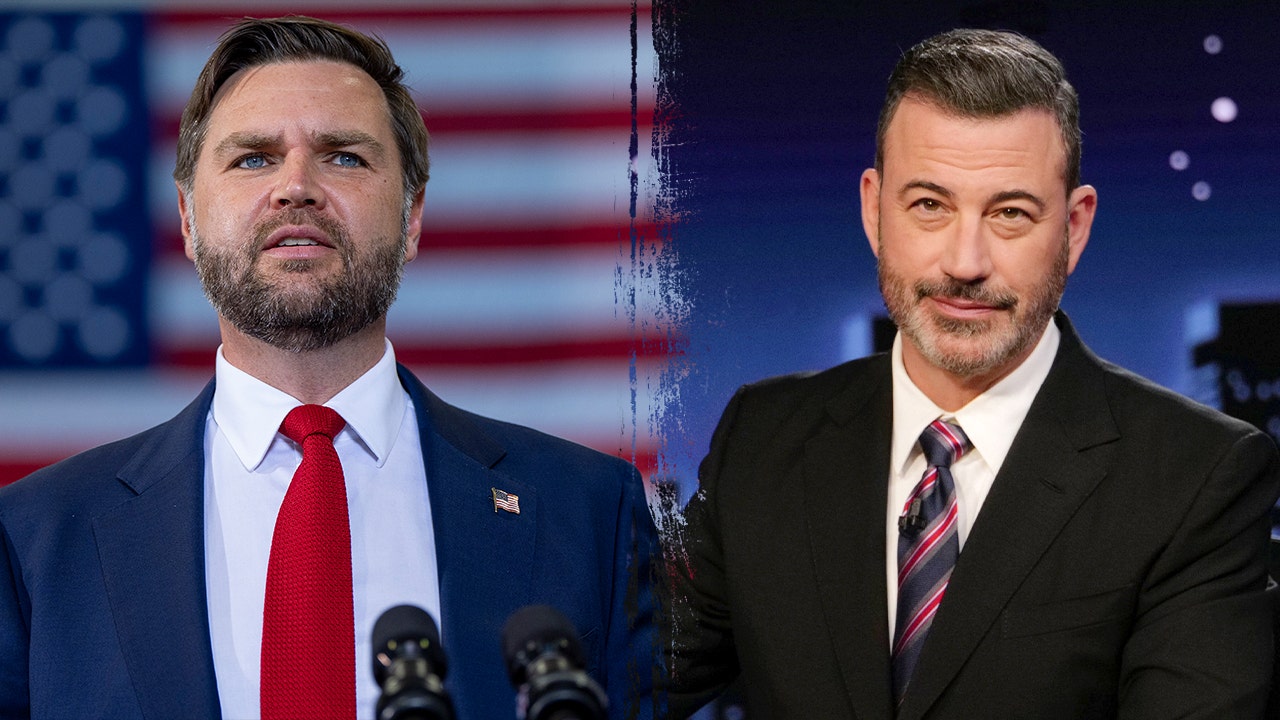
It was a striking answer, not because of its length but because of its clarity. In modern American politics, vice presidents are almost always treated as heirs apparent, at least rhetorically. Public affirmation is part of the compact. Mr. Trump’s refusal to offer it — on friendly terrain, no less — was interpreted by many in Washington as a deliberate distancing.
Within hours, the clip found its way into the monologue of Jimmy Kimmel, who has emerged as one of the president’s most persistent cultural antagonists. “That is colder than Melania’s side of the bed,” Mr. Kimmel quipped, pausing to let the audience reaction crest. The joke was less about policy than about hierarchy. In a capital obsessed with proximity to power, Mr. Trump had publicly shifted the seating chart.
Mr. Kimmel’s broader point, delivered with the cadence of a seasoned political observer cloaked in satire, was that the vice presidency has one central function: succession. If the president will not endorse his vice president as the future of the party, what, then, is the arrangement?
The exchange touched a nerve because Mr. Vance’s political trajectory has been unusually visible. Once sharply critical of Mr. Trump in private messages that later became public, he remade himself as one of the president’s most loyal defenders. His evolution mirrored that of many Republican figures in the Trump era — a movement from skepticism to alliance, from distance to devotion.
Late-night television has long functioned as a parallel arena of political commentary, but under Mr. Trump it has become something closer to a nightly referendum. Mr. Kimmel has devoted sustained attention to Mr. Vance, portraying him as a figure caught between ambition and subordination. In one recurring bit, an actor impersonates the vice president with exaggerated deference, amplifying the perception that loyalty, rather than ideology, is the administration’s primary currency.
The White House has dismissed such commentary as irrelevant entertainment. Administration allies argue that no federal action has been taken against Mr. Kimmel or his network, framing accusations of intimidation as partisan exaggeration. They contrast this with their longstanding claim that social media companies suppressed conservative voices in previous years.
Yet the president himself has blurred the lines between jest and pressure. In recent remarks about broadcast networks, he alluded to past legal disputes that resulted in substantial financial settlements. For critics, the implication — that regulatory scrutiny and monetary consequences can follow unfavorable coverage — contributes to an atmosphere in which media companies must weigh political risk alongside ratings.
The cultural clash has unfolded against a backdrop of heightened political tension. In recent weeks, Mr. Trump has invoked the possibility of deploying federal authority to quell unrest in Minnesota and has renewed his criticisms of “professional agitators” and “insurrectionists.” The language, echoing some of the most charged rhetoric of his previous term, has fueled partisan debate about executive power and escalation.
Congressional hearings have added their own theater. During a contentious session, Treasury Secretary Scott Bessent faced sharp questioning from Democratic lawmakers over prior statements about tariffs and inflation. Exchanges grew heated as members pressed for direct answers, underscoring the combative tone that now defines much of Washington’s oversight process. Clips from the hearing circulated widely online, often stripped of context and framed as proof of either administrative competence or collapse, depending on the viewer’s allegiances.
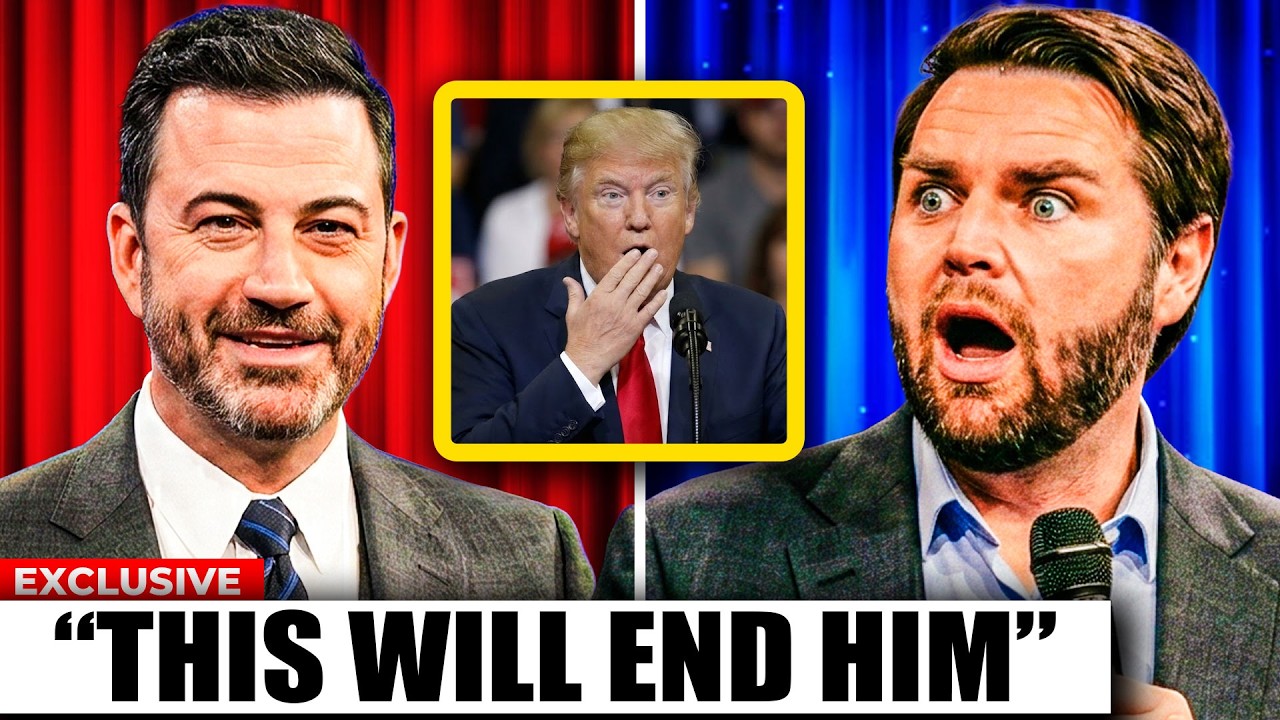
What distinguishes the current moment is not merely the friction between a president and a comedian. It is the degree to which political legitimacy is contested across cultural platforms. Mr. Kimmel’s audience may tune in for entertainment, but they receive, in effect, a running commentary on executive behavior. The president, for his part, responds not with silence but with counterpunches on social media and in interviews, reinforcing the sense that governance and spectacle are intertwined.
For Mr. Vance, the episode raises a subtler question. In American politics, loyalty can be both asset and vulnerability. The vice president has tied his political identity closely to Mr. Trump’s. If the president withholds public endorsement of his succession, the calculus changes. Ambition in the Trump era depends not only on ideological alignment but on remaining in the president’s good graces — a standard that can shift without warning.
Whether the exchange proves consequential will depend less on late-night laughter than on the dynamics within the Republican Party. But as Mr. Kimmel’s monologue demonstrated, in today’s Washington, a single word — “No” — can reverberate far beyond the studio audience.