As U.S.-Canada Tensions Rise, a Dairy Dispute Exposes the Fault Lines of North American Trade
As President Trump intensifies his rhetoric against Canada’s dairy policies, a long-simmering trade dispute is once again testing the resilience of North America’s economic architecture.
Canadian officials have responded with a steady refrain: between 80 and 90 percent of Canadian goods entering the United States are not subject to tariffs. Yet even as they downplay the immediate economic impact, leaders in Ottawa increasingly frame the confrontation as a warning — a reminder that Canada may need to diversify its trading relationships in a world where Washington’s commitments can shift with political winds.
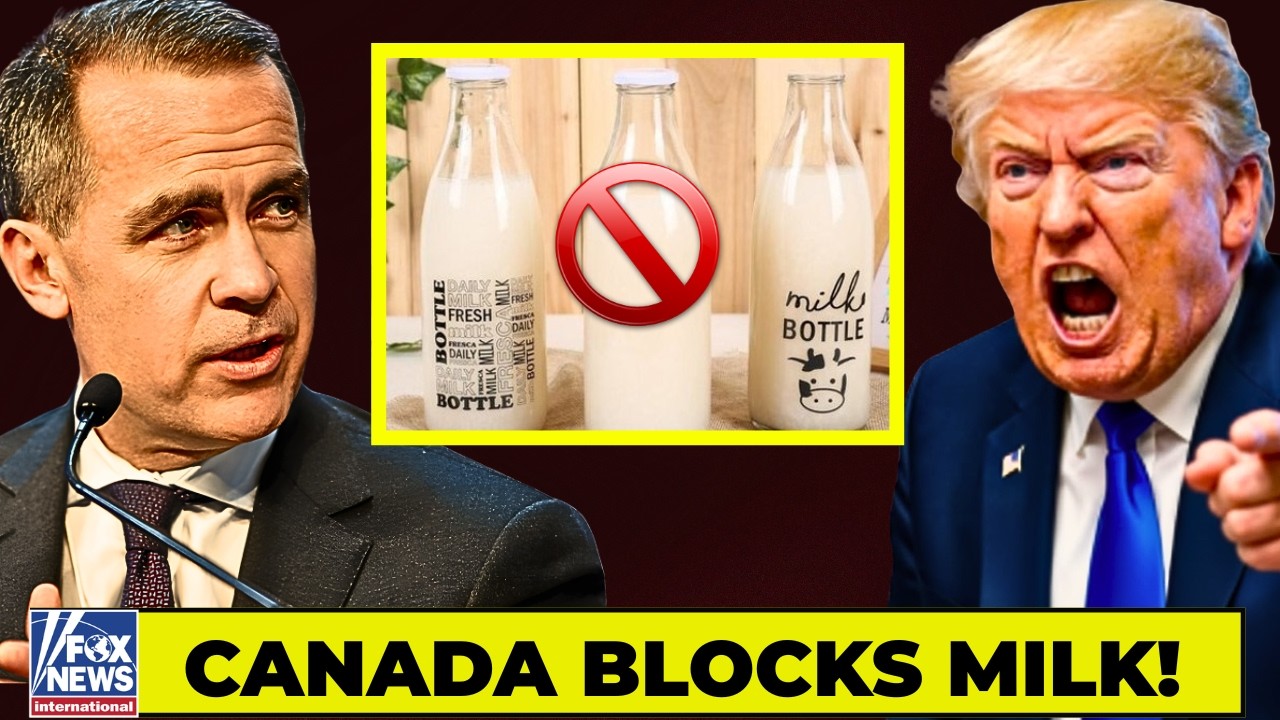
The latest flashpoint centers on dairy. President Trump has publicly condemned Canada’s tariff rates — some ranging from 245 percent to nearly 300 percent — on American milk and dairy products. On social media and in interviews, he has portrayed these tariffs as emblematic of unfair treatment toward American farmers, particularly in politically sensitive states like Wisconsin.
But the dispute is less straightforward than political messaging suggests.
At the heart of the matter lies Canada’s supply management system, a decades-old policy designed to stabilize domestic dairy production. The system operates through tariff-rate quotas, or TRQs, which allow a specified quantity of foreign dairy products to enter Canada tariff-free. Once imports exceed those volumes, steep tariffs apply — effectively closing the door to additional foreign supply.
The framework was preserved under the United States-Mexico-Canada Agreement (USMCA), the trade deal negotiated during Mr. Trump’s first term to replace NAFTA. The agreement granted American dairy producers tariff-free access to roughly 3.6 percent of Canada’s dairy market, up modestly from previous arrangements. It also established 14 dairy categories with gradually increasing quota volumes.
The high tariff rates above those quotas, often cited by Mr. Trump, were not new. They predate the USMCA and were explicitly left intact under the agreement his administration signed in 2018. Canadian tariff schedules show no change in those rates in the years since.
The more consequential question is not the tariff level, but whether American exporters can meaningfully access the quotas at all.
According to data compiled by the International Dairy Foods Association, U.S. dairy exports have consistently failed to fill their allotted quota space. By the end of 2024, average utilization rates hovered below 30 percent for many dairy categories. In some cases — including fluid milk — American exports reached less than half of the zero-tariff threshold.
In practical terms, this means the much-criticized tariffs are rarely, if ever, paid. Exports do not reach the levels where the punitive rates would apply.
American dairy groups argue that the shortfall reflects structural barriers within Canada’s allocation system. Ottawa distributes most quota volumes to domestic processors rather than retailers or food service operators who might import directly from the United States. Industry representatives contend that this arrangement dampens incentives to source American products, even when quota space remains unused.
The United States challenged these practices through USMCA’s dispute resolution mechanism. In 2022, a panel ruled in Washington’s favor, concluding that Canada’s allocation approach improperly restricted market access. Canada amended its policies. But a subsequent panel in 2023 sided largely with Ottawa, determining that the revised system complied with the agreement’s language.
For American producers, the ruling was a setback. Industry leaders estimate that constrained access has cost them hundreds of millions of dollars in lost export opportunities. For Canadian dairy farmers, however, supply management remains politically sacrosanct — a bulwark against volatile global markets and a pillar of domestic food security.
In Canada, support for the system cuts across party lines. Parliament recently passed legislation requiring legislative approval before any government could expand dairy import quotas or lower tariff protections. The measure signals the political sensitivity surrounding even incremental reform.
The dispute arrives at a delicate moment. The USMCA includes a “sunset clause” requiring the three signatories — the United States, Canada and Mexico — to affirmatively extend the pact in 2026. Absent agreement, the framework governing roughly $780 billion in annual North American trade would face uncertainty.
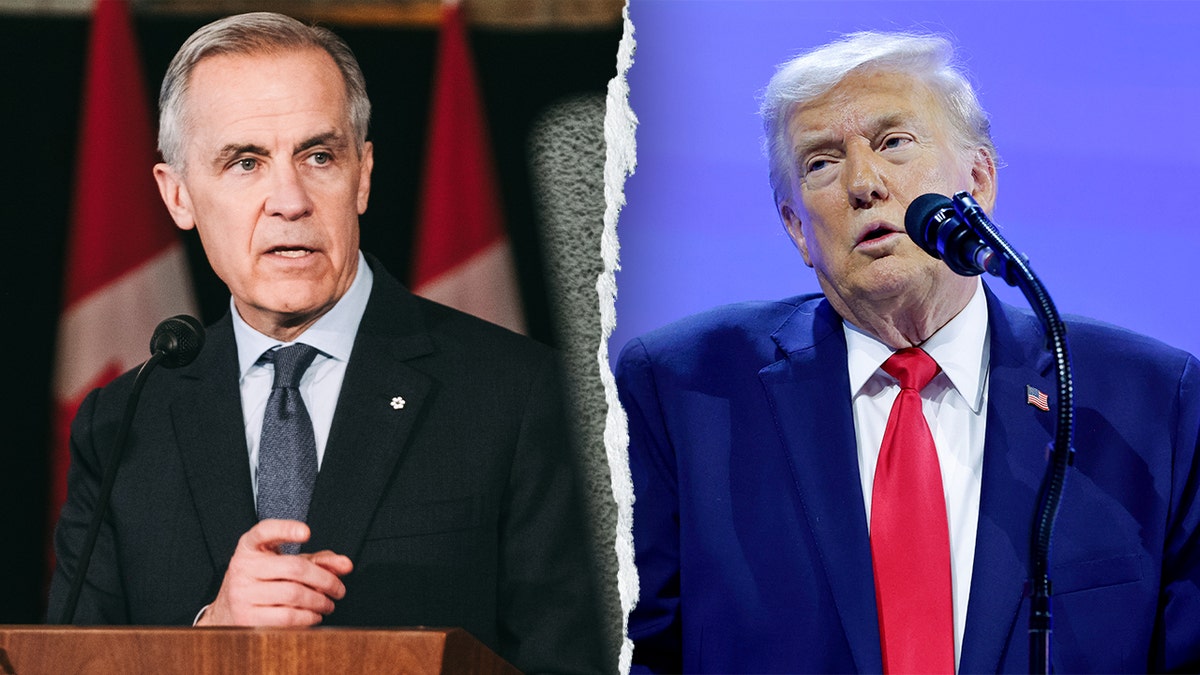
Mr. Trump has signaled that he views the upcoming review not merely as a procedural renewal but as an opportunity for renegotiation. For Canada, the prospect raises broader questions about economic dependency. Prime Minister Mark Carney has acknowledged the turbulence, describing the steady stream of tariff threats — from steel and aluminum to lumber and dairy — as a source of disruption for businesses and workers alike.
The dairy conflict illustrates a deeper tension within modern trade agreements. Political rhetoric often focuses on headline tariff rates, while the practical mechanics — quota allocation formulas, licensing rules, compliance language — shape outcomes in quieter ways.
Mr. Trump’s frustration may resonate with dairy farmers who see limited gains from a deal promised to expand access. Yet the structural compromise embedded in the USMCA reflects a broader reality: trade agreements are negotiated settlements between competing domestic priorities, not unilateral victories.
With the 2026 review looming, neither side appears inclined to yield. Canada continues to defend supply management as foundational policy. The United States maintains that the spirit of market access has not been fulfilled.
What began decades ago as a dispute over milk has evolved into a test of how durable North American economic integration remains in an era of resurgent economic nationalism.