By XAMXAM
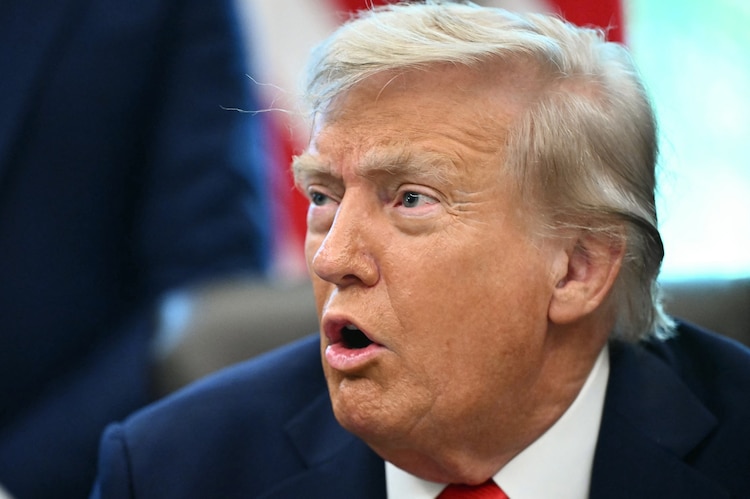
For years, late-night television has functioned as a cultural pressure valve—where politics is filtered through humor, and power is punctured by punchlines. But what unfolded during a recent live broadcast featuring Jimmy Kimmel and Stephen Colbert was something sharper and more consequential. It was not merely comedy. It was a moment of exposure—one that reportedly sent Donald Trump into a visible spiral of rage and retaliation.
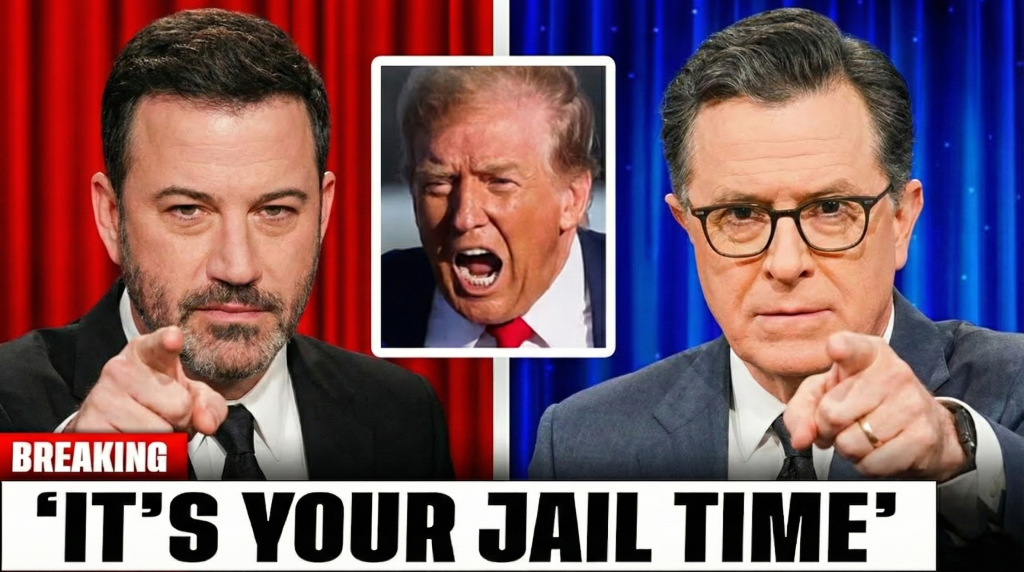
The premise was simple. Neither host raised his voice. Neither relied on insult for its own sake. Instead, they did something far more destabilizing: they let Trump speak for himself. Clips rolled. Statements contradicted one another. Silences lingered just long enough for the audience to connect the dots. The effect was cumulative, almost surgical. Trump was not attacked; he was revealed.
In Kimmel’s monologue, the humor came from restraint. He replayed Trump’s boasts about strength and dominance alongside moments of obvious incoherence and exaggeration. Each clip was allowed to breathe. The laughter that followed was not explosive but uneasy—recognition rather than release. This was comedy built on documentation, not mockery.
Colbert followed with a different rhythm but the same intent. Where Kimmel was dry, Colbert was precise. He framed Trump’s words within a broader narrative about power and insecurity, noting how often authoritarian figures react most violently not to criticism, but to ridicule. When the audience laughed, it was with the unsettling sense that they were watching a pattern repeat itself—one familiar from history, if rarely acknowledged in real time.
What distinguished the segment was its coordination. Kimmel and Colbert appeared on each other’s shows simultaneously, a symbolic act of solidarity after both had faced pressure tied—directly or indirectly—to Trump’s orbit. In an industry where hosts typically compete for attention, the decision to share it was itself a statement: intimidation would be met not with silence, but with unity.
The reaction from Trump was swift and predictable. According to multiple accounts, he watched the broadcasts live and erupted afterward, flooding social media with denunciations, celebrating past attempts to sideline both hosts, and renewing attacks on their networks. The response only amplified the original point. The spectacle of a former president publicly raging at comedians underscored the imbalance of the moment: a man who once commanded the world’s most powerful office now fixated on punchlines.
The irony is that Trump’s counterattack achieved the opposite of its apparent goal. Ratings surged. Clips spread across platforms within minutes. Viewership that might never have tuned in before arrived out of curiosity and stayed out of recognition. Attempts to silence or sideline the hosts transformed them into symbols of resistance, not victims of cancellation.

This pattern is not new. Political scientists and historians have long noted that satire occupies a dangerous space for would-be strongmen. Mockery does not merely criticize; it delegitimizes. It strips away the mystique that power depends on. As one observer noted during the broadcast, “Mockery reveals weakness. It shows the emperor has no clothes.” That, more than policy disagreement, is what provokes authoritarian anger.
What made this episode resonate was its timing. It came amid renewed concerns about the use of government pressure against media organizations, threats toward broadcasters’ licenses, and the blurring of lines between political grievance and state power. In that context, the laughter carried weight. It was not escapism; it was defiance.
Late-night comedy is often dismissed as ephemeral, its impact fleeting. But moments like this suggest a different function. In an era of information overload and partisan silos, humor can cut through where argument cannot. By replaying Trump’s own words without embellishment, Kimmel and Colbert created a shared factual space—one where contradiction was visible, not debatable.
The lasting image from the night was not a joke but a photograph: the two hosts, joined by another late-night colleague, backs turned to the audience, smiling beneath studio lights. It was captioned simply, “Hi, Donald.” No explanation required.
Trump’s anger, by contrast, required many words and still said little. In the end, the episode demonstrated a paradox of modern power. The more aggressively Trump sought to suppress mockery, the more potent it became. By trying to silence comedians, he elevated them. By reacting, he confirmed their point.
Late night did not overthrow a presidency. It did something subtler and, perhaps, more enduring. It reminded viewers that power still fears laughter—and that sometimes, the most effective rebuke is to press play, then pause, and let the truth speak for itself.