Iran’s Supreme Leader Dead: Power Struggle Erupts as IRGC, Clerics and Exiles Vie for Control

TEHRAN — The reported death of Ali Khamenei in a joint U.S.-Israeli airstrike has triggered the most perilous leadership crisis in the Islamic Republic’s 47-year history, setting off an urgent succession battle under the shadow of war.
Iranian state media confirmed that Khamenei, who ruled for 37 years, was killed in coordinated strikes on his official residence in Tehran. Also reported dead were senior security figures, including a top adviser and the commander-in-chief of the Islamic Revolutionary Guard Corps (IRGC), decapitating the upper tier of Iran’s military and intelligence leadership in a single blow.
Within hours, Iran activated Article 111 of its Constitution, initiating the emergency transfer of authority to a provisional three-member leadership council. That body now includes President Masoud Pezeshkian, Judiciary Chief Gholam-Hossein Mohseni-Ejei and Guardian Council cleric Alireza Arafi. Their mandate: stabilize the state and oversee the selection of a new Supreme Leader by the 88-member Assembly of Experts.
But this is no ordinary transition. It is unfolding amid active airstrikes, retaliatory missile launches and rising fears that Iran’s nuclear decision-making chain of command has been severed at its most critical point.
A Succession Plan — and a Power Vacuum
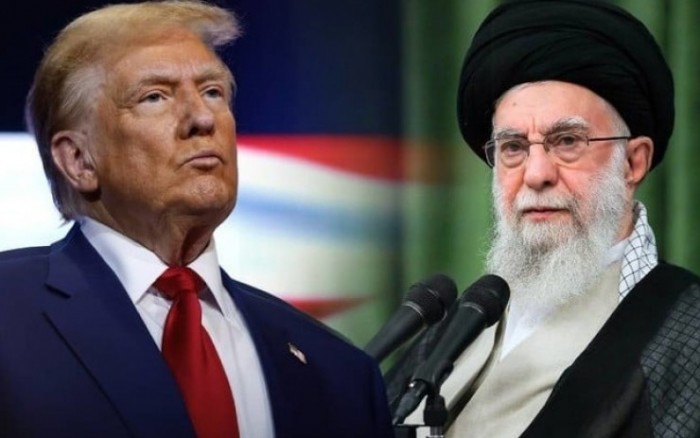
According to reports, Khamenei anticipated the possibility of a “decapitation strike” and left behind a confidential shortlist of preferred successors. The names reportedly include Mohseni-Ejei; longtime aide Asghar Hejazi; and Hassan Khomeini, the grandson of the Islamic Republic’s founder.
Notably absent from that inner-circle list: Khamenei’s own son, Mojtaba Khamenei.
Yet Mojtaba, a mid-ranking cleric with limited formal credentials, has emerged as a leading contender — largely due to his deep ties with the IRGC and its powerful Basij paramilitary network. Analysts say the Guards are the only institution currently capable of enforcing any succession outcome.
That support may come at a cost.
A father-to-son transfer of power in a republic born from the overthrow of a monarchy risks igniting domestic backlash. Iran’s protest movement, already galvanized by economic hardship and thousands of reported civilian deaths in recent unrest, could seize on the optics of dynastic succession as proof that the revolution’s ideals have eroded.
The IRGC Moves First
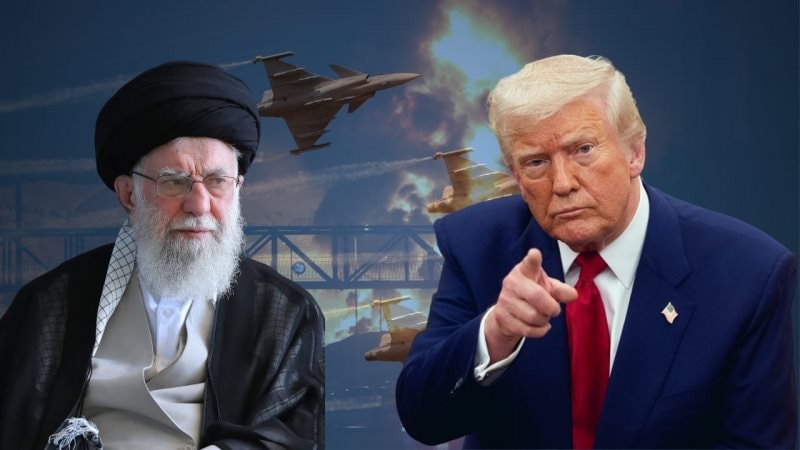
In the hours after Khamenei’s death was confirmed, the IRGC launched a fresh wave of missile attacks against U.S. installations across West Asia — before any new Supreme Leader had been named.
That unilateral action has raised urgent questions about who truly commands Iran’s military apparatus. If the Guards are operating independently of civilian oversight, the next Supreme Leader may inherit authority in name only.
The Council on Foreign Relations has outlined three plausible trajectories for Iran: regime continuity under a new clerical leader, a de facto military takeover by the IRGC, or systemic collapse. Increasingly, observers say elements of all three are playing out simultaneously.
“The Guards have already demonstrated operational autonomy,” one regional analyst said. “The question is whether the Assembly of Experts can select someone who commands their loyalty — or whether the military will simply dictate terms.”
A 48-Hour Deadline
Iran’s foreign minister suggested that a new Supreme Leader could be chosen within 48 hours — an extraordinary timeline for a body that has performed this task only once before, in 1989. That process took months of maneuvering behind closed doors.
Now, clerics must convene under the threat of ongoing strikes and intense foreign pressure. The Assembly may appoint a single leader or — for the first time — establish a collective leadership council.
The latter option could diffuse factional tensions in the short term but risks creating structural paralysis in a system designed around a singular, supreme jurist.
Nuclear Stakes
Perhaps the most dangerous variable is Iran’s nuclear posture. While a 2025 operation significantly damaged enrichment infrastructure, technical expertise and hardened facilities remain intact.
Decisions about resuming enrichment, permitting international inspections or leveraging nuclear capacity in negotiations traditionally rest with the Supreme Leader. In his absence, authority is blurred.
The provisional council lacks the religious legitimacy to make such determinations. The IRGC may hold the operational capability — but not the constitutional mandate.
For Washington and its allies, this succession window represents both opportunity and risk: a moment of vulnerability for Tehran, but also one in which miscalculation could escalate rapidly.
Opposition Senses an Opening
Exiled opposition figures, including Reza Pahlavi, have called for a secular democratic transition. Meanwhile, reports suggest Western intelligence agencies are actively encouraging defections within Iran’s power structure.
Each day without a named successor deepens uncertainty — and strengthens narratives that the Islamic Republic was sustained less by its institutions than by one man.
The Assembly of Experts now faces a stark choice: elevate a consensus cleric, empower an IRGC-backed figure, experiment with collective rule — or risk losing control altogether.
In Tehran, the stakes are existential. The next 48 hours will determine not only who leads Iran, but whether the system built over nearly five decades can survive the loss of its central pillar.
The bombs that killed Iran’s Supreme Leader may have done more than eliminate a man. They may have detonated the future of the Islamic Republic itself.