The Crumbling Pedestal: How the Epstein Fallout Is Re-Evaluating the Legacy of Oprah Winfrey
For decades, Oprah Winfrey occupied a space in the American psyche that was less about celebrity and more about secular divinity. Through her namesake show, she became the nation’s “First Lady of Empathy,” a cultural gatekeeper who could turn a book into a bestseller or a politician into a phenomenon with a single nod. To be in Winfrey’s orbit was to be sanctioned by a higher moral authority. However, as the final tranches of the Jeffrey Epstein files continue to surface in 2026, that halo of untouchability is being tested by a public that is increasingly skeptical of the proximity between elite power and systemic corruption.
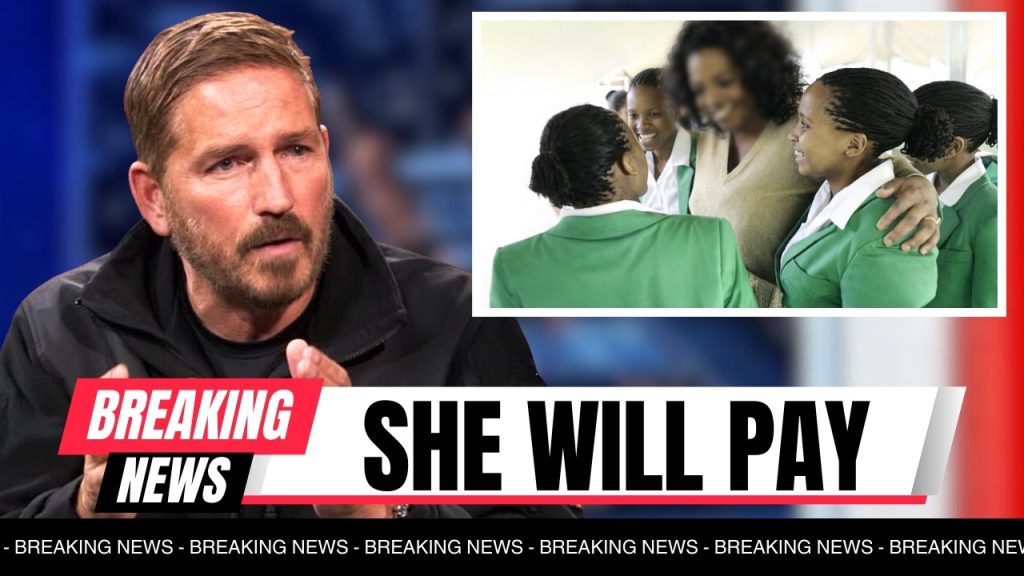
The latest catalyst for this re-examination has come from an unlikely but persistent source: Jim Caviezel. The actor, who has transformed from a Hollywood leading man into a vocal crusader against global trafficking networks, has become the face of a movement demanding accountability from the media elite. Caviezel has publicly framed the Epstein disclosures not as isolated incidents of criminality, but as the “head of an octopus” whose tentacles reach deep into the corridors of Hollywood and Washington. His recent rhetoric specifically targets the “gatekeepers”—those who, through silence or active promotion, allegedly provided the social cover necessary for predators to operate.
At the heart of the current controversy is the uncomfortable frequency with which Winfrey’s name appears in newly unsealed documents and flight logs. While legal experts note that a name on a manifest is not an indictment of a crime, the court of public opinion is operating on a different set of rules. For a woman who built her empire on the “power of knowing,” the defense of ignorance is becoming a harder sell. The public is no longer asking if Winfrey participated in crimes, but rather how a woman with an army of researchers and an unparalleled instinct for character could repeatedly find herself in long-term associations with men like Harvey Weinstein and the Brazilian “faith healer” John of God.
The Weinstein connection, in particular, remains a jagged pill for many to swallow. For years, Winfrey and the disgraced mogul were fixtures at the same elite galas, often photographed in intimate conversation. While Winfrey eventually championed the “Me Too” movement, critics like singer Seal have pointed to the optics of her past friendship as a form of “reputation laundering.” The narrative being pushed by figures like Caviezel suggests that Winfrey’s platform served as a “gold seal of approval” that predatory men used to gain the trust of their younger, less powerful victims. When Winfrey stood on a stage and said, “A new day is on the horizon,” some heard a promise of progress, while others saw an attempt to outrun a complicated past.

This scrutiny is not limited to her domestic associations. The ghosts of the Oprah Winfrey Leadership Academy for Girls in South Africa have returned to haunt the conversation. The 2007 scandal involving a dormitory matron charged with abusing students was a rare moment where the iron-clad Winfrey brand showed a visible crack. Though the legal matters were settled and Winfrey expressed personal devastation, the current climate of 2026 has revived questions about the lack of transparency following the incident. In a digital age where “silence speaks volumes,” the perceived suppression of these stories is being interpreted by skeptics as the calculated move of a media empire protecting its assets.
The phenomenon we are witnessing is a total collapse of the “benefit of the doubt” that once anchored American institutional trust. In the early 2000s, an association with a figure like Epstein or Weinstein could be dismissed as the collateral damage of a high-flying social life. Today, in the wake of Sound of Freedom and the harrowing details of the Epstein files, the public demand is for “radical transparency.” Caviezel’s warnings of a “divine reckoning” or a “storm of storms” may strike some as hyperbole, but they resonate with a demographic that feels the mainstream media has spent decades burying the lead on elite misconduct.
Winfrey’s current strategy—a disciplined, near-total silence—is a double-edged sword. On one hand, it avoids feeding the 24-hour news cycle and prevents legal self-incrimination. On the other, it creates a vacuum that is being filled by increasingly aggressive independent investigators and social media commentators. In the absence of an explanation for her name appearing in the Epstein documents, the internet has constructed its own narrative. The “Queen of Talk” has found herself in a position where her most famous tool—her voice—is the one thing she cannot seem to use effectively to clear the air.
As the Epstein fallout widens, the story is moving beyond the crimes of one dead financier and toward the architecture of the “celebrity shield.” The question is no longer just “What did they do?” but “Who made it possible for them to stay in the room?” For Oprah Winfrey, the coming months represent a defining moment for her legacy. If the documents continue to show a pattern of proximity without accountability, she risks being remembered not as the woman who taught America how to heal, but as the ultimate gatekeeper who watched the gates while the wolves moved freely inside.
Ultimately, the tension between Jim Caviezel’s accusations and Winfrey’s silence reflects a broader American struggle. We are a nation torn between the desire to believe in our cultural icons and the mounting evidence that those icons were part of a system that prioritized access over ethics. As more files are unsealed and more whistleblowers come forward, the insulation provided by billions of dollars and media control is thinning. The pedestal is crumbling, and for the first time in forty years, the woman who had an answer for everything is facing a question she cannot seem to answer.






