A Fractured Nation Confronts the Prospect of War With Iran
WASHINGTON — A sudden escalation in U.S. military action against Iran has set off a fierce political battle at home, with lawmakers divided not only over the strategy but over whether the country is, in fact, at war.
A new poll conducted by Reuters/Ipsos found that only about a quarter of Americans support the military campaign, a strikingly low level of backing for an overseas operation in its early days. At the same time, online searches have spiked for phrases such as “Did Trump get congressional approval?” and “Trump approval rating,” reflecting widespread uncertainty about the legal and political foundations of the action.
President Donald Trump has alternated in his public language, at times referring to the confrontation as a “war” and at other moments describing it as a series of “strategic strikes.” His allies in Congress have largely echoed the latter characterization, arguing that targeted air operations do not constitute a formal war requiring explicit authorization from Congress.
Representative Anna Paulina Luna, a Republican from Florida, said this week that the administration had outlined objectives that were proceeding “according to plan,” while declining to detail those objectives publicly. “Strategic strikes are not war,” she said, emphasizing that there were no plans to deploy ground troops.
Senator Markwayne Mullin of Oklahoma similarly pushed back against the label of war in a television interview, arguing that the United States had not formally declared one. The distinction, however, has done little to calm critics who point out that American service members have already been killed in the operation.
The debate has revived long-simmering tensions over presidential war powers. Under the Constitution, Congress holds the authority to declare war, though presidents of both parties have often undertaken military actions without a formal declaration. A bipartisan group of lawmakers, including Democrats and some Republicans such as Representative Thomas Massie of Kentucky, is working to force a vote on a war powers resolution that would restrict the president’s authority absent congressional approval.
Speaker Mike Johnson and other Republican leaders have resisted those efforts, contending that the president is acting within his constitutional authority as commander in chief to respond to threats.
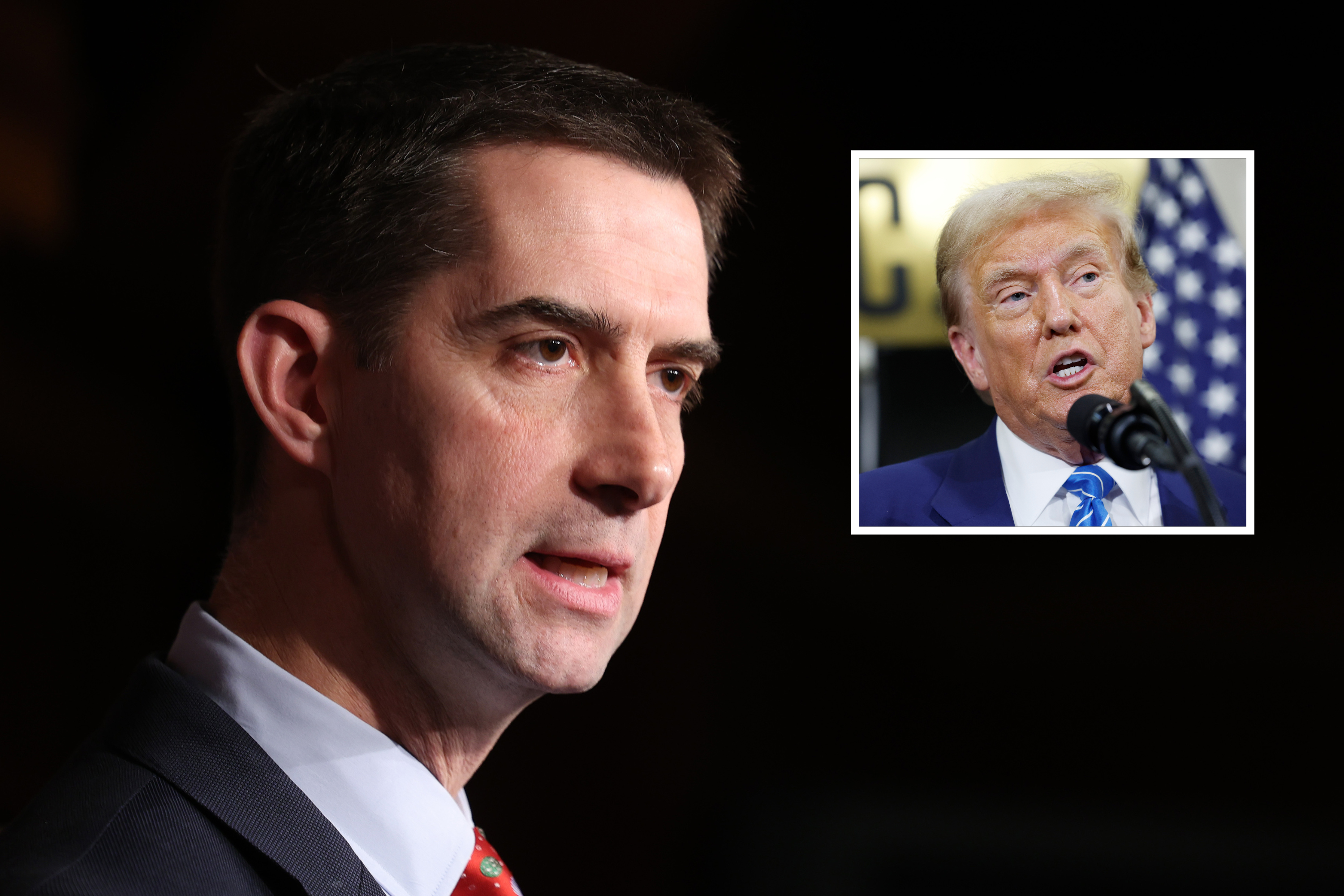
The administration’s justification centers on Iran’s longstanding hostility toward the United States and its support for militant groups across the region. Senator Tom Cotton, the Republican chairman of the Senate Intelligence Committee, argued that Iran’s pursuit of nuclear capabilities and ballistic missile technology posed an intolerable risk. “We’re not going to allow the world’s leading state sponsor of terrorism to obtain a nuclear weapon,” he said, adding that the president had laid out his reasoning in a public address.
Democrats counter that intelligence briefings provided to Congress did not establish an imminent threat to the United States. Senator Mark Warner, the vice chairman of the Senate Intelligence Committee, said there was “no imminent threat to the United States” that required immediate military action, calling the operation a “war of choice.”
Representative Adam Smith, the ranking Democrat on the House Armed Services Committee, described the rollout as reckless. He criticized what he characterized as a lack of detailed consultation with Congress and warned that the risks — including regional retaliation and mounting American casualties — had long been understood.
The political fissures extend beyond party lines. Some prominent conservative commentators and segments of the president’s political base have expressed unease, recalling campaign promises to avoid new foreign entanglements. The prospect of a prolonged conflict — one that Mr. Trump himself has suggested could last weeks — has heightened those concerns.
At the Pentagon, officials have offered limited public detail about operational goals or timelines. Briefings to lawmakers, conducted behind closed doors, have underscored both the capabilities of U.S. forces and the potential for escalation. The administration has warned Americans to prepare for further casualties.
For families of service members, the constitutional debate is secondary to the human cost. The deaths reported in the opening days of the operation have prompted somber tributes from lawmakers of both parties. Yet even those expressing support for the mission have acknowledged the gravity of committing troops to a volatile theater.
Internationally, allies are watching closely. Regional powers have urged restraint, wary that continued strikes could widen into a broader confrontation. Iran, for its part, has vowed retaliation, though the scope and timing remain uncertain.
The coming days are likely to bring a decisive test on Capitol Hill. A vote on a war powers resolution would force lawmakers to go on record, clarifying whether they believe the president’s actions fall within existing authorizations or exceed them. Even if such a resolution fails, the debate has already exposed deep divisions over executive authority and the nation’s appetite for another military conflict in the Middle East.
For now, Americans are left parsing shifting terminology — war or strategic strikes — while confronting the sobering reality that U.S. forces are engaged in sustained combat operations. Whether the administration can build broader public support may determine not only the trajectory of the conflict abroad, but also the political landscape at home.






