The Unblinking Eye: How a Single Photograph Upended a Senate Hearing
WASHINGTON — In the cavernous, marble-lined chambers of the Senate Judiciary Committee, where bureaucratic jargon usually goes to die, silence is rarely a product of peace. It is, instead, the sound of a trap snapping shut. For nearly four hours on Tuesday, Attorney General Pam Bondi had navigated the treacherous waters of her confirmation oversight with the practiced ease of a seasoned litigator. She spoke in the rhythmic, distancing language of federal protocols and inter-agency reviews, parrying questions regarding the Jeffrey Epstein investigation with the cool detachment of a woman who believed the past had been successfully filed away.
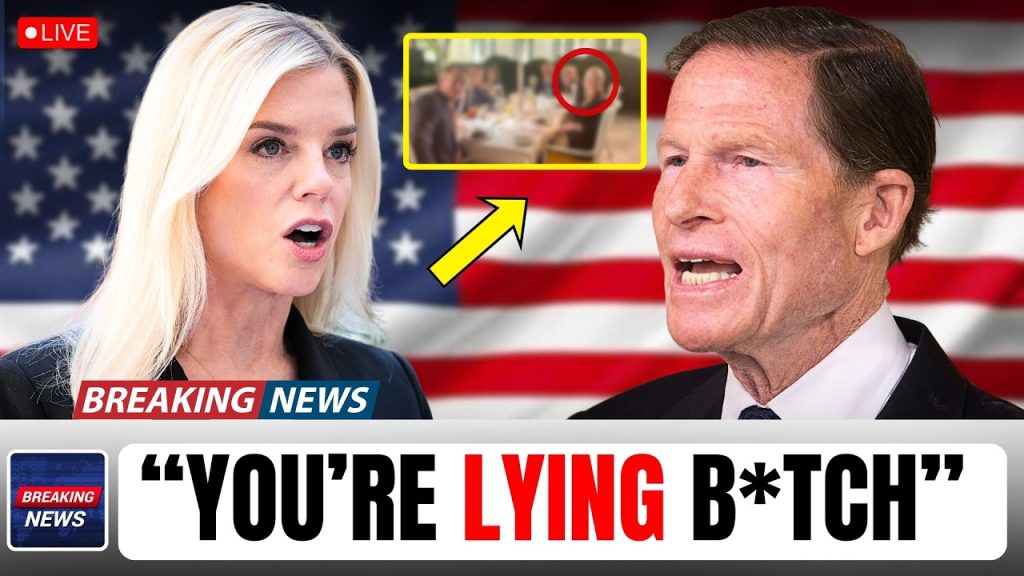
The narrative of the Epstein saga has long been managed by Washington’s elite as a series of unfortunate overlaps—brief encounters in crowded ballrooms or coincidental presence at high-society galas. Proximity, the defense argued, was not complicity. But that carefully constructed wall of procedural distance crumbled in a matter of seconds when Senator Richard Blumenthal reached into a manila folder and pulled out what he termed a “secret” piece of history. It was not a classified document or a transcript of a wiretapped call. It was a photograph.
The image, dated from a 2018 private dinner in Palm Beach, did not require a translator or a legal scholar to interpret. It featured Bondi seated at an intimate table, two seats away from an individual whose name appears dozens of times in the Epstein investigative files. The power of the moment lay not just in the visual evidence of social intimacy, but in the timing. Only fourteen minutes prior, Bondi had testified under oath that she maintained “no personal connection” to any individuals referenced in the ongoing investigation.
As the photograph was turned toward the cameras, the atmosphere in the room shifted from the procedural to the visceral. Observers noted an instantaneous change in Bondi’s composure—a fleeting flicker of recognition that transformed into a rigid, calculated stillness. In the architecture of congressional oversight, a photograph is a permanent witness that cannot be cross-examined or coached. It sat on the desk, undeniable and unchangeable, rendering the previous four hours of rehearsed testimony suddenly, jarringly hollow.
“This wasn’t in your capacity as a government official,” Blumenthal noted, his voice cutting through the sudden vacuum of the room. “This was 2018. You were a private citizen at a private dinner.” The distinction was surgical. By establishing the event as social rather than professional, the Senator bypassed the usual defenses of “official duties.” He highlighted a gap in Bondi’s confirmation disclosure—a legal obligation that is not optional. The absence of this dinner from her prior records raised a question that no amount of bureaucratic rhythm could answer: why hide a seat at a table if the seat meant nothing?
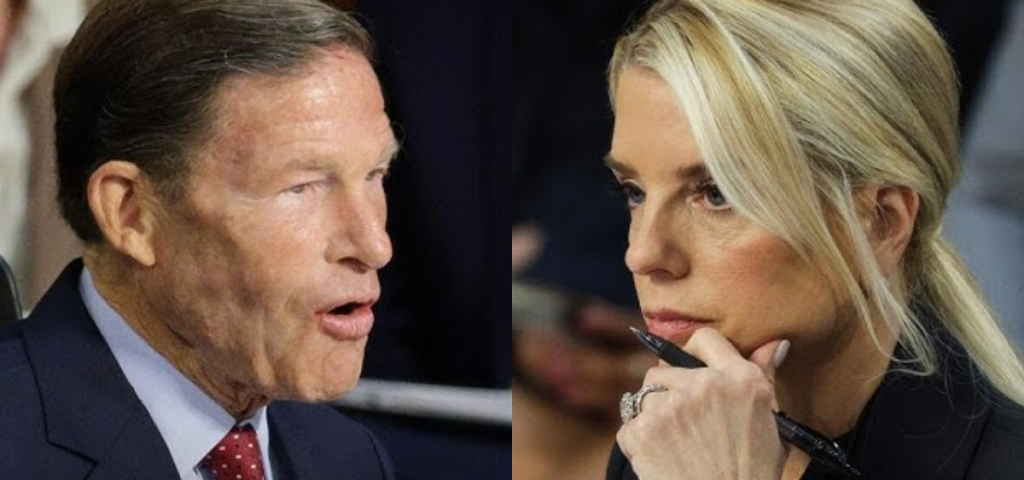
The ensuing seven-second silence felt like an eternity in the fast-paced theater of cable news and digital algorithms. In that window, the Attorney General was forced to calculate a path between two disappearing options: contradict the photograph or contradict her own sworn testimony. When she finally spoke, suggesting she may have attended “social events where various individuals were present,” the defense felt thin. Proximity at a dinner table may not constitute a crime, but in the court of public opinion and the rigors of federal oversight, the denial of that proximity often suggests a consciousness of guilt.
This flashpoint arrives at a time when visual documentation is proving more combustible than testimony alone. As more archival material from the Epstein era surfaces in 2026, the era of comfortably dismissing association as mere coincidence is rapidly narrowing. For years, the public has been told to look at the “context” and the “bigger picture,” but as Blumenthal’s Exhibit 19 proved, sometimes the smallest picture is the one that tells the most devastating story.
Supporters of the Attorney General were quick to dismiss the event as strategic political theater, arguing that a single meal does not equal a conflict of interest. They maintained that elite circles in Florida are small and that social overlap is an inevitable byproduct of a high-profile legal career. However, the damage was not necessarily in the dinner itself, but in the sequence of events. A sworn denial followed by photographic proof of the opposite creates a pattern of obfuscation that is difficult to erase from the record.
As the hearing adjourned, the photograph remained entered as a part of the public record, a silent testament to the idea that some patterns only reveal their shape when seen from end to end. Whether this moment leads to substantive policy shifts or remains a high-stakes moment of political drama is yet to be seen. But for one afternoon in Washington, the carefully managed narrative of distance was replaced by the cold, hard reality of a camera lens. The optics, it seems, have finally become impossible to ignore.






