Trump Cuts Canada From “Board of Peace,” Carney’s Six-Word Defiance Signals Historic Shift in North American Relations

Washington — In a move without precedent in modern Canada–U.S. diplomacy, President Donald J. Trump has formally withdrawn Canada’s invitation to join his newly created “Board of Peace,” a global mediation initiative introduced earlier this year. The decision came just weeks after Prime Minister Mark Carney publicly warned of what he described as a “rupture in the U.S.-led global order,” setting off a chain reaction that may permanently alter the political and economic architecture of North America.
The rupture did not begin in January 2026. Its roots trace back to early 2025, when tensions first escalated between Donald Trump and Mark Carney — a former central banker chosen by Canadian voters for his economic expertise during a period of mounting uncertainty.
In March 2025, during a phone call described by Trump as “extremely productive,” the president raised the prospect of Canada joining the United States as the 51st state. Carney’s response was immediate and unequivocal: Canada was “not for sale.” Weeks later, in a face-to-face Oval Office meeting on May 6, Trump repeated the suggestion, adding his now familiar refrain, “Never say never.”
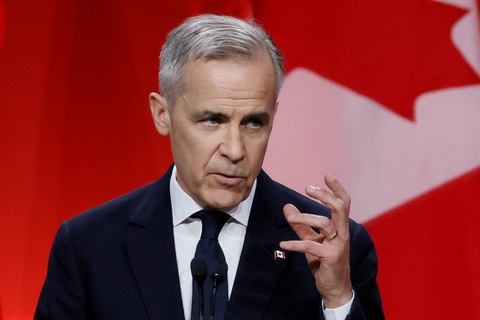
Carney did not blink.
“And I want you to catch every single word,” he said, looking directly at the president on camera. “It’s not for sale. Won’t be for sale ever.”
Those six words — simple, direct, and deliberately undiplomatic — broke from the careful phrasing typically employed by allied leaders in Washington. They also reshaped the domestic political terrain in both countries. In Canada, the declaration strengthened Carney’s standing and reinforced a growing wave of economic nationalism. In the United States, the episode barely registered beyond diplomatic circles — an asymmetry that has since defined the dispute.
The immediate trigger for Canada’s removal from the Board of Peace came after Carney delivered a speech warning that the U.S.-led international system was fracturing under sustained economic pressure. Shortly thereafter, Trump announced via social media that Canada’s invitation had been revoked. No formal explanation followed.
The symbolism was unmistakable. Withdrawing a diplomatic invitation from a G7 and NATO ally signaled more than policy disagreement. It suggested a recalibration of strategic expectations.
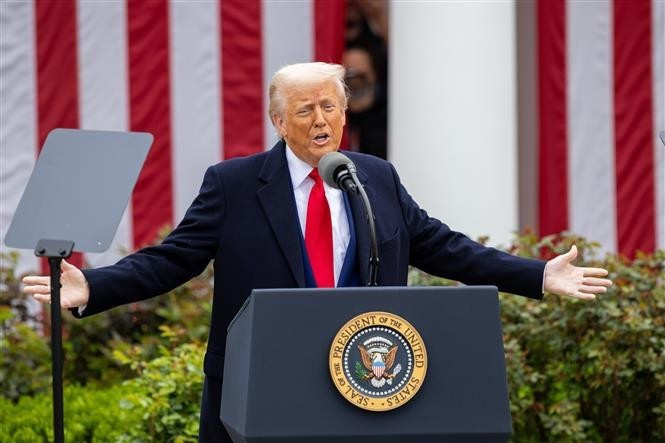
Economic friction has been building for over a year. In early 2025, the Trump administration imposed sweeping tariffs on Canadian exports, measures that the Bank of Canada warned could depress profitability in key sectors, particularly energy. Canada’s Department of Finance projected rising consumer costs and job losses. By late 2025, public opinion surveys showed that roughly half of Canadians favored pursuing alternative trade partnerships.
The economic stakes are vast. Annual bilateral trade between the United States and Canada approaches $800 billion, with deeply integrated supply chains — especially in automotive manufacturing, where parts routinely cross the border multiple times before assembly. Any sustained disruption reverberates across factories, households, and financial markets on both sides.
Yet Washington has applied escalating pressure. In the same week Canada lost its seat at the Board of Peace, Trump threatened 100 percent tariffs on all Canadian goods should Ottawa deepen trade ties with China. The leverage is clear: roughly 75 percent of Canadian exports flow south. The United States, by contrast, is less dependent.
Carney’s response has not been confrontation, but diversification.
In recent weeks, he has traveled to India, Australia, and Japan, seeking to strengthen what policymakers call “middle power” coordination — democratic economies capable of shaping global rules without singular reliance on Washington. Trade between Canada and India currently stands below 15 billion Canadian dollars, but even incremental growth would signal structural change.
The strategy echoes an earlier era. In 1971, when President Richard Nixon imposed a 10 percent surcharge on imports, Prime Minister Pierre Trudeau quietly explored trade diversification. That crisis lasted four months. Today’s tariffs have persisted for more than a year.
There are more recent parallels. During the renegotiation of the United States–Mexico–Canada Agreement, or United States–Mexico–Canada Agreement, the Trump administration levied steel and aluminum tariffs on Canada, prompting retaliatory measures before a negotiated resolution emerged. But no modern president had publicly floated the absorption of Canada into the United States.
That rhetorical shift has altered the political calculus in Ottawa. Carney’s firm stance on sovereignty now constrains his negotiating flexibility. Backtracking would carry domestic costs. Meanwhile, the issue remains peripheral for most American voters, creating an imbalance in political urgency.
Complicating matters further, Canada has maintained alignment with Washington on security. On February 28, Carney publicly supported U.S. military action aimed at Iran’s nuclear program — a move analysts described as selective engagement: resistance on economic sovereignty, cooperation on defense.
The next 90 days will prove decisive. A scheduled review of the USMCA looms, offering either a pathway to tariff relief or a stage for deeper confrontation. One scenario envisions a negotiated rollback in exchange for concessions on energy or border policy. Another sees continued escalation, accelerating Canada’s pivot toward alternative coalitions and risking friction within longstanding security frameworks such as NORAD and Five Eyes.
At its core, the dispute transcends tariffs. It tests whether the mutual trust underpinning the world’s longest undefended border can withstand sustained political pressure from one side.
For now, the six-word declaration delivered in the Oval Office continues to reverberate: not for sale, not ever. In that phrase lies both the defiance and the uncertainty shaping the future of North American partnership.






