Lady Louise Windsor and the Quiet Calculus of Royal Inheritance
When Queen Elizabeth II died in September 2022, public attention settled, as expected, on the grand transfers of crown and castle. Her eldest son became king. King Charles III inherited Balmoral and Sandringham, the private estates that anchor the monarchy’s emotional geography. The line of succession held firm. Continuity, in other words, appeared intact.
But royal inheritance has always involved more than acreage and jewels. It also carries the subtler language of personal bequests — objects that signal affection, trust and, at times, quiet endorsement. In that more intimate sphere, one beneficiary has drawn increasing attention: Lady Louise Windsor.
For much of her life, Lady Louise has occupied the periphery of public fascination. The daughter of Prince Edward and Sophie, Duchess of Edinburgh, she grew up largely outside the glare that followed her cousins William and Harry. Though entitled at birth to the style of princess under the 1917 letters patent, her parents chose that she be known simply as Lady Louise. Upon turning 18, she retained that choice.
In a royal family often defined by spectacle and strain, restraint can be its own form of distinction.
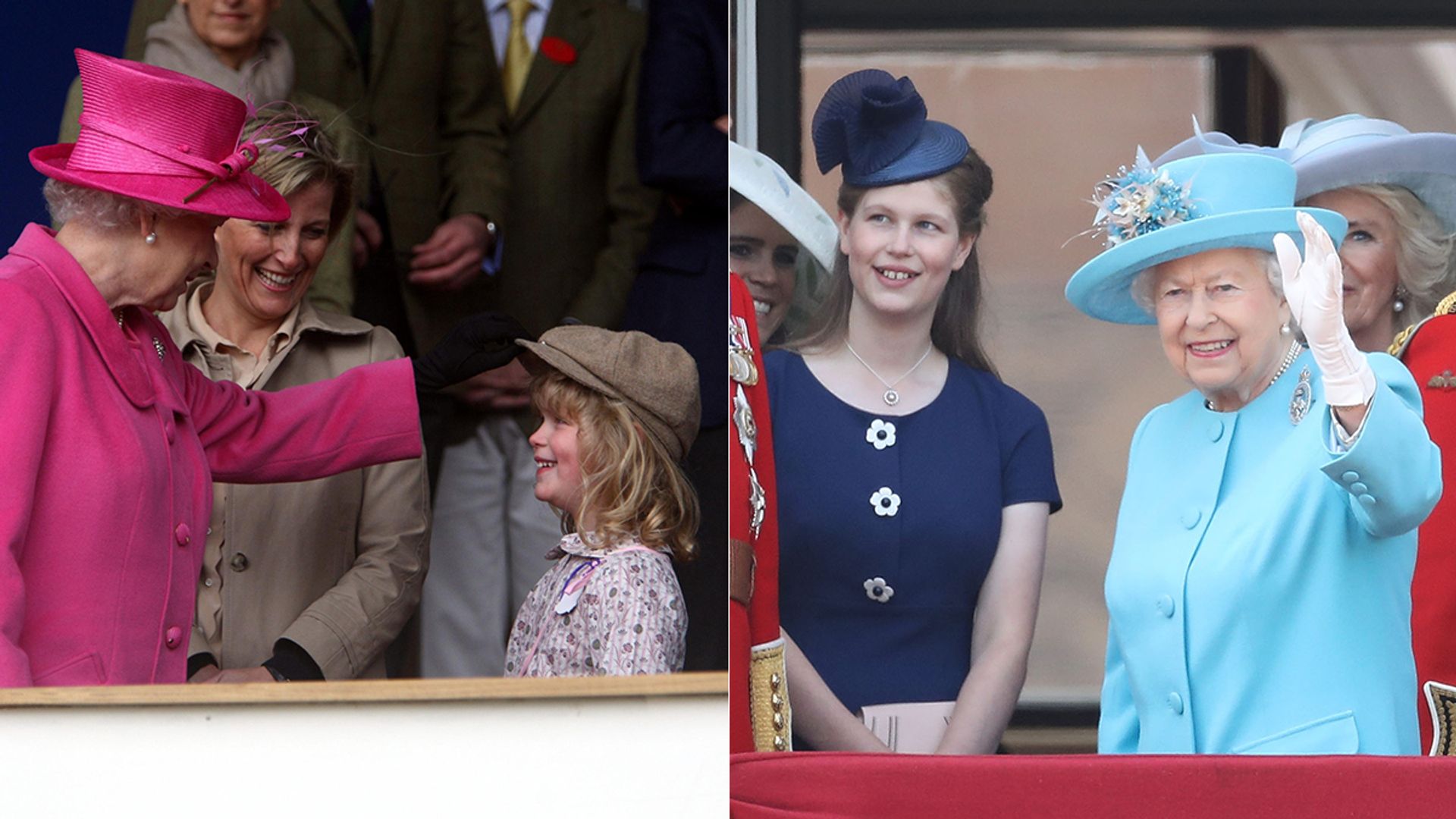
Her bond with her grandparents, particularly the late Queen Elizabeth II and Prince Philip, was by many accounts unusually warm. Royal observers have long noted that the Queen, who balanced statecraft with stoicism, appeared especially at ease in the company of her youngest grandchildren. At Balmoral, the Scottish estate she cherished, Louise and her brother were said to share in the informal rhythms of family life — walks, ponies, and evenings unburdened by ceremony.

The connection between grandfather and granddaughter was perhaps most visible in the world of carriage driving. Introduced to the sport by Prince Philip, Louise developed a serious interest, competing publicly while still in her teens. When Philip died in 2021, reports indicated that he had left her his specially designed dark green carriage and two of his Fell ponies. In royal symbolism, such items are not trivial. They represent the passing of a private passion — and an implicit wish that it continue.
After the Queen’s death, attention once again turned to material legacies. While the major estates passed in predictable fashion to the sovereign, accounts from royal correspondents suggested that Louise received selected personal items tied to her grandparents’ shared love of horses and rural life. The details remain, as is customary, largely sealed. Yet even limited disclosures were enough to fuel commentary.
The subtext, for some, lay not in what Louise gained but in who did not.
Queen Camilla’s children, Tom Parker Bowles and Laura Lopes, have never occupied a formal place within the line of succession. They are present at family milestones — most notably the coronation — but remain constitutionally separate from the machinery of monarchy. That distinction, long understood, can nonetheless feel sharper when heirlooms pass decisively along bloodlines rather than marital ones.
Inheritance in royal contexts is rarely only about wealth. It is about narrative. The monarchy endures not merely through law but through carefully tended continuity — of values, of symbolism, of perceived legitimacy. When cherished possessions move from one generation to the next, they help define who embodies that continuity.
Lady Louise’s position is, on paper, modest. She is far from the throne and, unlike the Prince and Princess of Wales, does not carry the daily burden of constitutional duty. She studies, works summer jobs and has undertaken military training at university. In declining to adopt the title of princess, she has signaled a preference for a measured life.
Yet in the monarchy’s evolving calculus, such figures can assume quiet importance. With the working royal cohort slimmer than in decades past, future sovereigns may look beyond the immediate line for support. Commentators have speculated that when Prince William ascends the throne, trusted cousins could be called upon to shoulder select responsibilities.
Whether that prospect materializes remains uncertain. The House of Windsor has repeatedly demonstrated its capacity for adaptation, sometimes abruptly. But the pattern of recent bequests suggests that Elizabeth and Philip saw in Louise a custodian of certain traditions — rural, equestrian, understated — that defined their private world.
For Queen Camilla’s family, the boundaries are clearer. Affection and inclusion do not translate into institutional inheritance. The monarchy’s architecture still rests on bloodline and succession, not proximity or personal loyalty.
In the end, the story of Lady Louise’s inheritance may say less about rivalry than about the monarchy’s long memory. Objects, like titles, carry stories forward. In entrusting some of theirs to a granddaughter who has chosen discretion over display, the late Queen and Prince Philip may have offered a subtle lesson: that in a family shaped by history, influence often moves most effectively in silence.






