Pope’s Appeal for Diplomacy Reverberates Amid Debate Over U.S. Policy Toward Iran
ROME — As tensions in the Middle East continue to dominate international headlines, remarks from Pope Leo calling for restraint and renewed diplomacy have drawn attention in Washington and beyond, where policymakers and analysts are increasingly debating the trajectory of U.S. policy toward Iran.
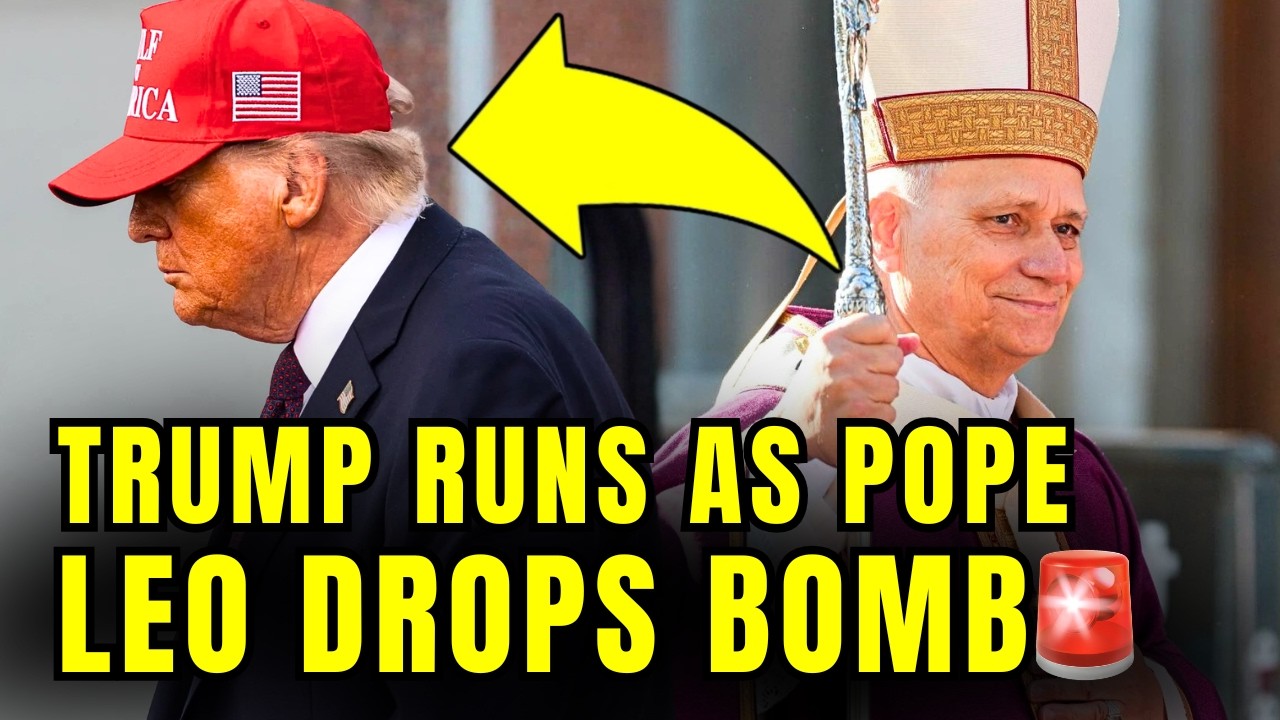
Speaking during a recent Mass and in public remarks from the Vatican, the pontiff expressed concern about what he described as a broader global shift toward force as a primary tool of international relations. While his comments did not focus exclusively on the United States, they came at a moment when American actions in the region — particularly those associated with former President Donald J. Trump’s approach to Iran — remain the subject of political and legal debate.
“Peace is not built with threats and arms,” the pope said in remarks that circulated widely after they were delivered. Instead, he urged nations to pursue “reasonable dialogue” and emphasized the moral responsibility of political leaders to prevent violence from escalating into deeper and more destructive conflict.
The comments arrive during a period of renewed discussion in Washington about the role of diplomacy, military power and congressional oversight in shaping U.S. foreign policy. Although the Vatican has long positioned itself as an advocate for negotiation and conflict resolution, papal interventions can carry symbolic weight in moments of geopolitical tension, particularly when they intersect with ongoing political debates inside major powers.
Pope Leo’s message reflected a theme that has appeared repeatedly in Vatican diplomacy over the past several decades: that global stability depends not only on military deterrence but also on sustained diplomatic engagement. In his remarks, he warned that international norms established after the Second World War — including the principle that nations should not violate the territorial sovereignty of others through force — are increasingly under strain.
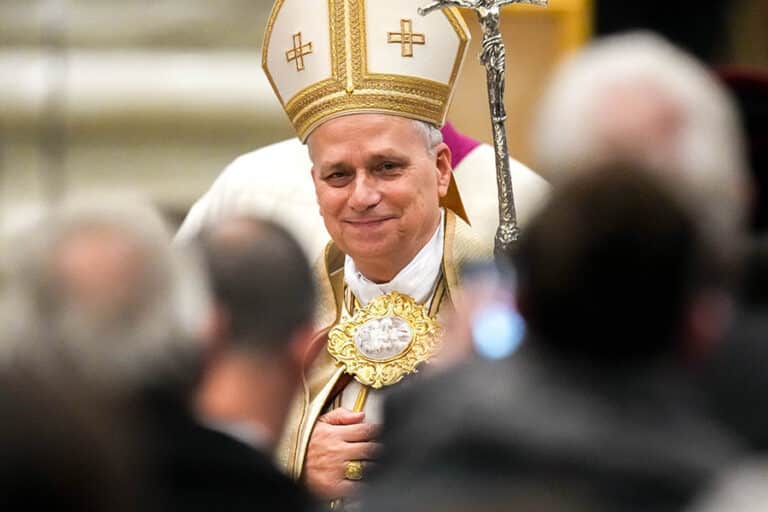
“The rule of law,” he said, “is the foundation of peaceful civil coexistence.”
Although the Vatican did not directly mention any specific military operation, observers noted that the timing of the statement coincided with heightened scrutiny of American strategy toward Iran. During Mr. Trump’s presidency and in the years since, debates have persisted about the balance between deterrence and diplomacy in the region.
Critics of more aggressive policies argue that military actions risk fueling cycles of retaliation that are difficult to contain. Supporters, by contrast, contend that forceful responses are sometimes necessary to counter perceived threats and maintain strategic stability.
The pope’s comments have therefore been interpreted less as a direct critique of a particular administration and more as a broader appeal for caution during a volatile period in international relations.
Still, the remarks quickly became part of the American political conversation. Some lawmakers and policy experts cited them as a reminder of the humanitarian consequences that can accompany armed conflict. Others framed them as an example of how moral voices outside government institutions can influence debates about war and peace.
At the center of that discussion is a long-standing question in American governance: who has the authority to initiate military action. Under the U.S. Constitution, Congress holds the power to declare war, while the president serves as commander in chief of the armed forces. In practice, modern conflicts have often blurred the lines between those roles, leading to recurring disputes about oversight and authorization.
Several members of Congress have argued in recent years that military operations involving Iran or other regional actors should be subject to more explicit legislative approval. Others maintain that the executive branch must retain flexibility to respond quickly to emerging threats.
For the Vatican, however, the debate ultimately returns to a moral principle rather than a constitutional one. In his remarks, Pope Leo emphasized the human cost of prolonged conflict, noting that resources devoted to weapons and military technology could instead be directed toward protecting life, health and social stability.

The pontiff also broadened his appeal beyond the Middle East, referencing conflicts in other regions and warning that global inequalities and unresolved grievances can fuel cycles of violence if left unaddressed.
“Only peace,” he said, “can heal the wounds of peoples.”
Whether papal statements will influence the strategic decisions of world leaders remains uncertain. Historically, the Vatican’s diplomatic interventions have served more as moral guidance than as direct policy prescriptions.
Yet in an era when geopolitical rivalries and domestic political debates often unfold simultaneously, even symbolic appeals can resonate across multiple arenas.
For now, Pope Leo’s message stands as a reminder that while governments argue over strategy and authority, religious and humanitarian leaders continue to frame international crises through a different lens — one centered not on power or deterrence, but on the long-term pursuit of peace.






