Trump Lashes Out as Jimmy Kimmel and Stephen Colbert Turn His Attacks Into Viral Comedy Gold
LOS ANGELES — President Donald Trump erupted on social media after late-night hosts Jimmy Kimmel and Stephen Colbert transformed his own words into scathing on-air humiliation, highlighting how entertainment platforms continue to challenge his narrative dominance in real time. The exchanges, broadcast to millions and amplified across digital platforms, underscore the ongoing cultural and political clash between the White House and Hollywood’s most prominent critics.
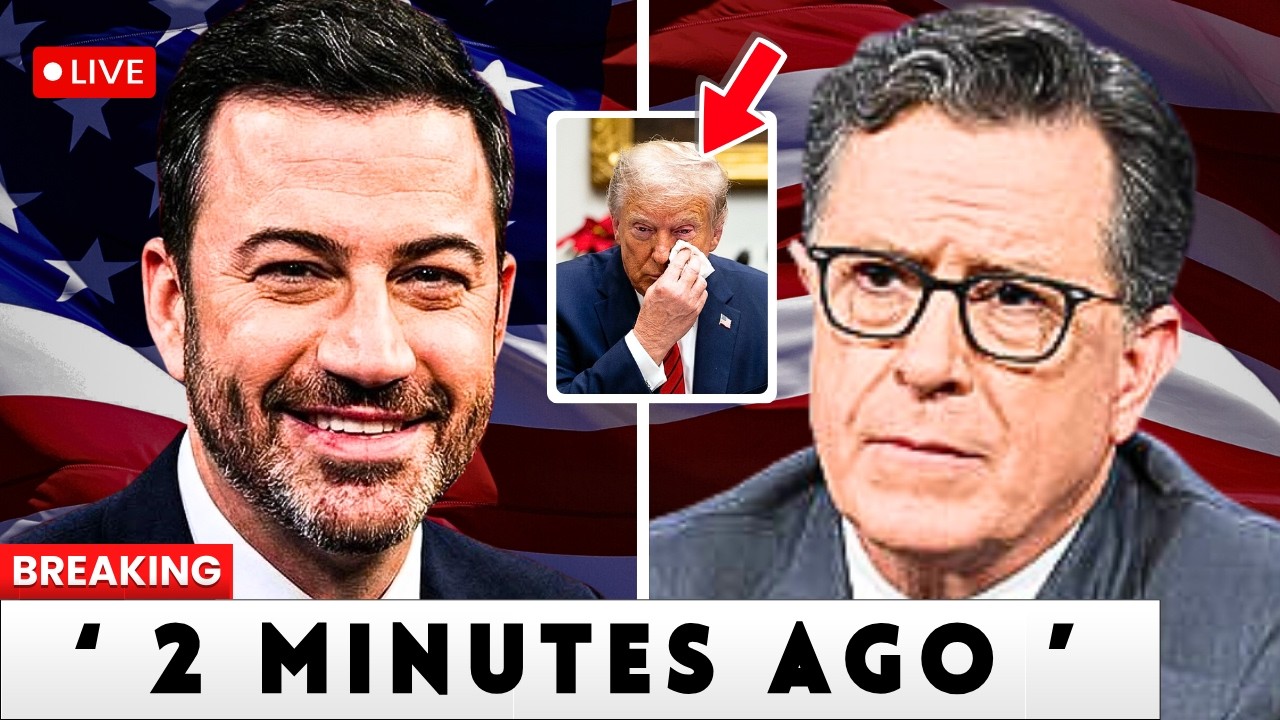
At the 96th Academy Awards, Kimmel seized on a Trump post that attacked his hosting and ratings, reframing it into a viral punchline. Reading the president’s message aloud — which called him “less than average” and suggested replacing him with “another washed up but cheap ABC talent” — Kimmel invited the audience to laugh along. “On behalf of all of us, welcome to the crappy ratings club, Mr. President,” he quipped, turning Trump’s attempt to diminish him into a moment of collective mockery. The Dolby Theatre erupted; clips spread instantly online, generating headlines before the ceremony ended.
The moment was emblematic of Kimmel’s approach: surgical, immediate, and reliant on Trump’s own statements for maximum impact. Throughout Trump’s presidency, Kimmel has woven polling data, policy controversies and public statements into monologues that blend humor with pointed critique. When approval numbers dip or controversies dominate, he juxtaposes them against Trump’s past boasts — from healthcare promises to infrastructure pledges — to highlight perceived inconsistencies.
Stephen Colbert, on “The Late Show,” employs a complementary strategy of thematic inversion. He frequently revisits Trump-era slogans and rhetoric, mirroring them back with altered context to expose contradictions. In one segment, Colbert took a Trump policy announcement and reframed it as an absurd, self-aggrandizing boast: “We’re building an arc like the arc to triumph. It will be like the one in Paris, but to be honest with you, it blows it away.” The audience laughter came from recognition — the original phrasing, once delivered with conviction, now sounded hollow under satirical scrutiny.
Colbert’s monologues often explore broader themes: executive overreach, legal investigations, transparency and international relations. When Trump makes controversial remarks, Colbert responds with structured satire that layers humor atop factual references, turning policy rollouts into punchlines. The effect is theatrical: viewers recall the source while absorbing the reversal, amplifying the critique without needing new revelations.
Trump’s responses follow a familiar pattern. He has repeatedly targeted both hosts on social media, dismissing them as partisan entertainers with “no talent and no ratings.” The attacks often escalate after particularly sharp segments, fueling further coverage and viewership spikes for the shows. Critics see the pattern as evidence of sensitivity to mockery; supporters view it as justified pushback against perceived bias.
The feud traces back to Trump’s first term, when late-night satire intensified alongside political polarization. Kimmel and Colbert became consistent voices, framing their work as accountability through humor rather than mere celebrity commentary. Kimmel has tied critiques to threats against democratic institutions and free speech; Colbert has emphasized thematic continuity, linking current events to earlier controversies.

Broader context adds weight. Economic pressures — including hotter-than-expected producer price inflation and stock-market dips — have dominated recent headlines, with polls showing disapproval of Trump’s economic stewardship near 60 percent in multiple surveys. Against this backdrop, late-night monologues serve as parallel commentary, reaching audiences that may not follow traditional news.
The dynamic reflects a structural shift in American political culture. Once official statements dominated news cycles with limited immediate rebuttal, now a monologue can travel faster than a press conference. A single post can be reframed within hours, turning presidential messaging into comedic fodder. In an attention-driven ecosystem, exposure can rival institutional authority.
Public reaction remains deeply divided. Trump supporters often view the satire as elite hostility; critics see it as necessary accountability. Yet both sides recognize the moments’ inescapability: viral clips accumulate millions of views, segments replay across platforms, and attention shifts from briefing rooms to studio stages.
As controversies accumulate, the cycle persists. New statements spark new monologues; new monologues provoke new responses. The 2024–2025 exchanges between Trump, Kimmel and Colbert illustrate a central truth of contemporary politics: narrative control is contested not only in government halls but on television stages and social feeds. When late-night hosts turn the camera toward the president, the stage itself becomes a battleground for perception — and no side has yet claimed decisive victory.