Questions Mount Over President Donald Trump’s Health as White House Offers Limited Details
WASHINGTON — President Donald Trump appeared before a group of veterans this week in what was meant to be a ceremonial event honoring military service. Instead, the appearance has prompted a new wave of scrutiny about his physical health, communication style, and the transparency of medical information released by the White House.
During the event, cameras captured visible redness on the right side of the president’s neck. The mark, which some observers described as a rash, quickly became a topic of speculation online. The White House later issued a brief statement from the president’s physician, Dr. Shawn Barbarella, saying Mr. Trump was using “a common topical cream” for a preventive skin treatment and that redness could persist for several weeks. No further details were provided.
Dermatologists note that topical medications are frequently prescribed for precancerous skin lesions, particularly in older patients. Such treatments are routine and typically not considered alarming. Yet the limited disclosure — without specifics about diagnosis or prognosis — has revived broader questions about how much the public is told regarding the president’s health.
The issue is not new. In previous instances, confusion surrounded reports of imaging tests conducted at Walter Reed National Military Medical Center. Initial statements referred to a “preventive MRI,” which were later clarified in differing terms. The White House maintained that the procedures were precautionary and unrelated to serious concerns, but the shifting explanations fueled skepticism among critics who argue that presidents owe the public clear and consistent medical reporting.
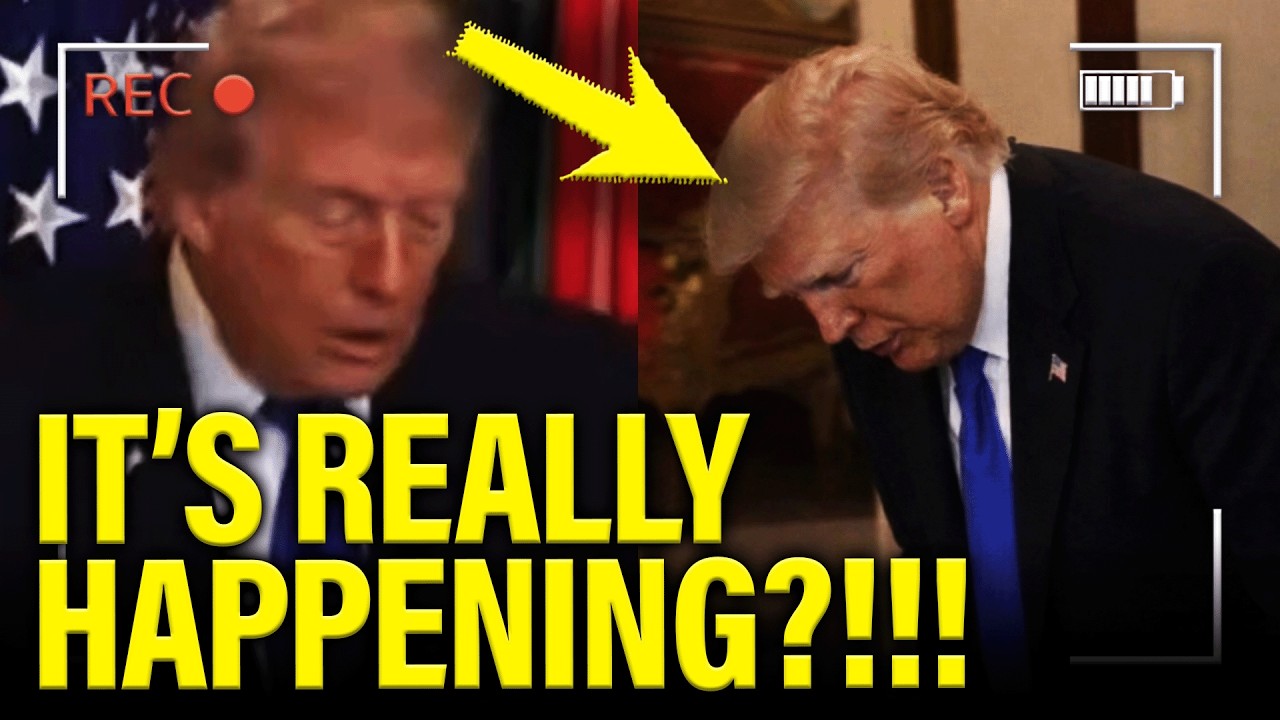
Beyond the dermatological issue, video footage from recent public appearances has drawn commentary from supporters and detractors alike. At the veterans event, Mr. Trump appeared to struggle briefly while placing a ceremonial ribbon around a service member’s neck. The moment was fleeting, but in an era when every gesture is dissected frame by frame, it became fodder for renewed debate about his coordination and stamina.
In separate appearances abroad earlier this year, clips circulated on social media showing the president walking with what critics described as an uneven gait. Medical experts caution against diagnosing from afar, noting that lighting, camera angles, and ordinary fatigue can create misleading impressions. Still, in the absence of detailed health briefings, speculation fills the void.
More striking than any physical detail, however, has been the president’s rhetoric. In multiple speeches over recent weeks, Mr. Trump has made repeated references to heaven and his uncertainty about reaching it. “I don’t think I’m going to make it,” he said at a rally in Georgia, before adding that he was speaking in a lighthearted manner. A similar comment surfaced during remarks aboard Air Force One.
Allies say the statements were delivered jokingly, a reflection of Mr. Trump’s characteristic improvisational style. Yet even some conservative commentators have publicly wondered about the tone and frequency of such remarks. Representative Marjorie Taylor Greene, a staunch supporter, questioned in an interview what the repeated references might suggest about the president’s state of mind as he navigates a complex international crisis.
That crisis looms large. The United States is now engaged in an escalating conflict with Iran, a development that has reshaped Washington’s political landscape. Secretary of State Marco Rubio defended the administration’s posture, arguing that preemptive action was necessary amid heightened tensions in the region. Israeli Prime Minister Benjamin Netanyahu has also spoken forcefully about the strategic rationale behind the confrontation.

Mr. Trump himself has offered uneven messaging on the possibility of deploying ground troops. In comments to The New York Post, he said he did not “have the yips” about the idea, while suggesting such measures might not be necessary. The phrasing, colloquial and unscripted, stood in contrast to the carefully calibrated language typically employed during wartime briefings.
At the veterans gathering, the president veered into extended observations about drapery and architectural improvements to the building where he spoke — a detour that some viewers found charming and others viewed as tangential given the gravity of global events. Such improvisations have long been a hallmark of his public style.
Presidential health has historically been treated as both a private matter and a public concern. From Franklin Roosevelt’s concealed disability to Ronald Reagan’s later cognitive decline, the nation’s experience has shaped expectations of transparency. In the modern era, where high-definition cameras capture every detail and social media amplifies each anomaly, the pressure for clarity is unrelenting.
The White House insists the president remains in strong health and fully capable of discharging his duties. Absent a comprehensive medical briefing, however, public debate is likely to persist.
For now, questions about Mr. Trump’s condition exist alongside the far weightier questions of war, diplomacy, and leadership. In moments of uncertainty, the presidency carries not only constitutional authority but also symbolic reassurance. Whether the administration chooses to provide more detailed information may determine how much of the current conversation remains grounded in fact — and how much continues to drift into conjecture.






